Minnesota Blueberry Buckle
A summer buckle built on northern Minnesota wild blueberries, which are smaller and better than the cultivated kind.
Published May 29, 2026
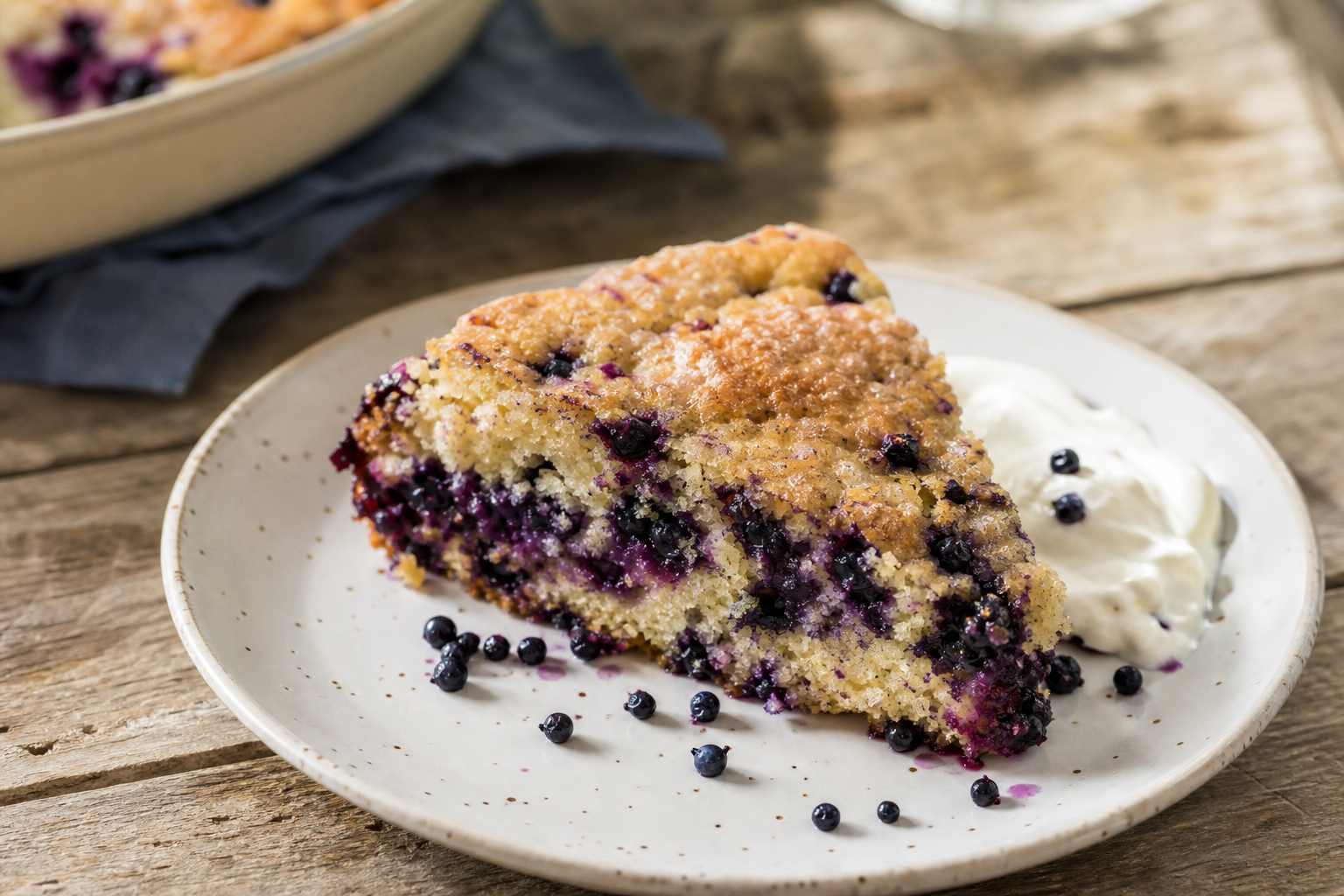
The wild lowbush blueberry that grows in the pine barrens and the boreal forest of northern Minnesota is a different fruit from the cultivated highbush blueberry that dominates American grocery stores. The lowbush species — Vaccinium angustifolium and Vaccinium myrtilloides, depending on local conditions — produces a small, intensely flavored berry that grows on plants only six to eight inches tall, often in old burn scars and along the sandy edges of jack pine stands. The plants are perennial and rhizomatous, spreading through underground runners to form large clonal colonies that can be a hundred years old or more. The fruit ripens in late July through August, and the colonies that bear most heavily are often the ones in areas that burned ten to thirty years ago and have not yet been overtaken by encroaching forest.
The flavor difference between wild and cultivated blueberries is dramatic. The wild berry has perhaps two to three times the flavor concentration, with more acidity, more tannic complexity, and a smaller, denser flesh that holds its shape better during cooking. The cultivated blueberry has been bred for size, transportability, and yield rather than flavor; it is larger, sweeter, and considerably blander, with a thinner skin and a wateriness that becomes obvious when you have eaten the wild fruit alongside it. The Boundary Waters, the Superior National Forest, the jack pine stands across the Iron Range, and much of the public land in the northeastern third of the state all support wild blueberry populations.
Picking and the Mosquito Tax
Picking wild blueberries in northern Minnesota in late July is a slow activity. The plants are short, the berries are small, and you are crouching in low brush for hours at a stretch. The yield per hour of picking is far lower than for cultivated berries — perhaps a quart or two of cleaned berries from a productive morning of work. The mosquitoes are aggressive. The deerflies are worse. A picker without bug repellent and a head net will not last long enough to fill a container. This is not a complaint; it is the price of the fruit, and anyone who has eaten a pie made from properly picked wild blueberries understands the bargain.
If you cannot get wild blueberries — which is the case for most people most of the time — the next best option is small cultivated blueberries from a Minnesota grower. Some of the U-pick farms in the central part of the state have small-berry cultivars that are closer in size and intensity to the wild fruit than the standard supermarket varieties. Add a few extra berries to compensate for the lower flavor concentration. Frozen wild blueberries from a reliable source — there are several Minnesota and Maine operations that sell IQF wild berries through co-ops — are a respectable substitute and work fine in a baked application like this one. Do not thaw them before folding into the batter; they will bleed less and hold their shape better if added frozen.
The Buckle as Form
The buckle is a humble American cake form that predates most of the more elaborate fruit dessert vocabulary. The name refers to the way the crumble topping buckles the cake's surface as it bakes — the heavier streusel pushes down on the rising batter, creating an uneven, slightly sunken top that becomes the buckle's structural signature. The form has roots in nineteenth-century New England baking, particularly in Maine, where the wild blueberry crop produced both the inspiration and the volume of fruit that justified inventing a cake to use it. The Minnesota version is essentially the same cake with the same berries from the same forest type a thousand miles further west.
The batter is a basic creamed-butter cake — butter and sugar creamed together, eggs and vanilla added, flour and buttermilk alternated in the standard mixing pattern. The buttermilk is important; it provides acidity that reacts with the baking powder to lift the cake and tenderizes the crumb through its action on the gluten. Whole milk will work if you do not have buttermilk, but the result will be slightly denser. The blueberries are folded in at the end, gently, to avoid crushing them. Toss them in a tablespoon of flour before folding; the flour coating helps suspend them in the batter rather than letting them sink to the bottom during baking.
The Crumble and the Cardamom
The crumble is the visual and textural counterpart to the soft cake beneath. It is built from cold butter, flour, brown sugar, and a small amount of spice — in this case a pinch of cardamom, which echoes the Scandinavian baking tradition that has shaped so much of Minnesota's sweet baking vocabulary. The cold butter is essential. Warm or softened butter produces a crumble that runs together into a uniform layer rather than holding its discrete clumps. Cut cold butter into the flour-and-sugar mixture with a pastry blender or two forks, or rub it in with your fingertips, working quickly to keep the butter cold. The finished crumble should hold together when squeezed but break apart into pea-sized pieces when crumbled.
Cinnamon is the more common American spice for a streusel; cardamom is the Minnesota choice. The slight floral, slightly camphorous note of the cardamom plays against the blueberries in a way that cinnamon does not. Use it sparingly — a pinch, not a teaspoon. The spice should be present in the background, not the foreground.
The Bake
Pour the batter into a buttered nine-inch square pan or a nine-inch round cake pan. Scatter the crumble evenly across the top. Bake at 375 degrees for forty to fifty minutes, until the cake is set in the middle and a tester inserted into the center comes out clean — or with a small amount of melted blueberry on it, which is fine. The crumble should be deeply golden and crisp on top. The cake will look slightly buckled where the topping has pushed it down; this is correct, and indeed the namesake feature.
Cool the buckle in the pan for at least thirty minutes before serving. It is best warm but not hot, with the structure set enough to slice cleanly. Serve with a small pour of cold cream or a scoop of vanilla ice cream. The buckle keeps at room temperature for two days, loosely covered, and the flavor improves slightly overnight as the blueberry juice integrates further into the cake. This is what summer baking in Minnesota should taste like — fruit-forward, restrained, built on the specific berry that the state's forests produce in their good years.
Independent criticism takes time
No advertising, no sponsored content. Reader support keeps this publication going — and keeps us beholden to no one but you.