Pan-Fried Walleye With Brown Butter and Capers
The state fish, cooked the way the lake cabins taught us.
Published May 20, 2026
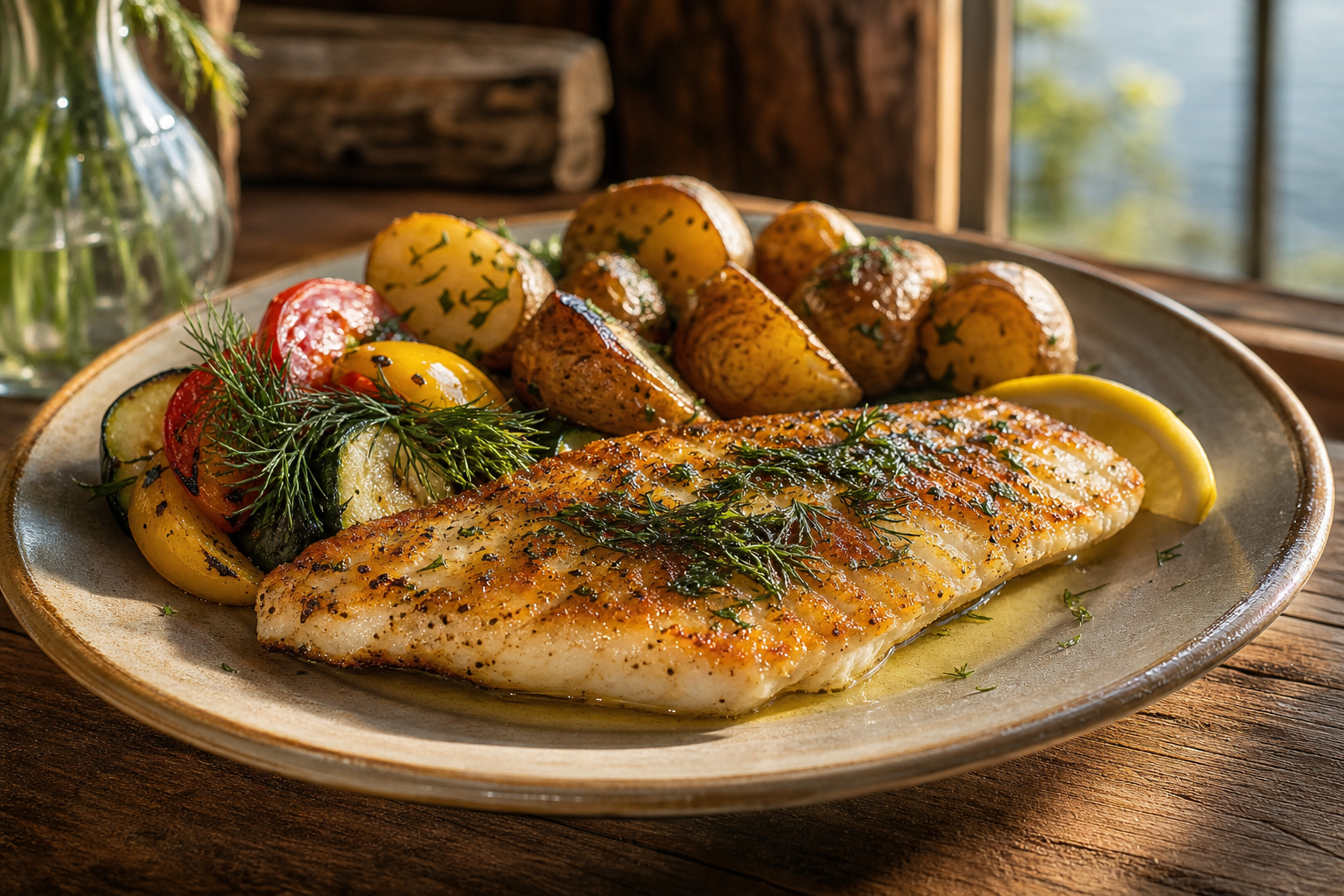
Walleye is the Minnesota state fish, designated by the legislature in 1965, and that designation is not casual. The walleye is the fish that Minnesotans actually fish for, eat, and care about in a way that defines the state's relationship to its lakes. The Department of Natural Resources publishes annual size and bag limits for walleye that are followed with the seriousness of a religious observance. Mille Lacs, Leech Lake, Vermilion, Winnibigoshish, Rainy, Lake of the Woods, the Boundary Waters lakes — these are walleye waters, and the fishing economies that surround them are built on the species in a way that no other freshwater fish supports. The shore lunch — fillets cooked in butter over a small fire at the edge of the lake you just caught them in, with maybe some potatoes and beans on the side — is the canonical Minnesota outdoor meal, and it is almost always walleye.
The walleye is also a delicate fish. Its flesh is white, mild, slightly sweet, and it carries a fine flake that breaks apart easily when it is overcooked or overhandled. The fish rewards restraint. The best preparation is also the simplest: a hot pan, a light dredge, a minute or two per side, and a finishing sauce that supports without overwhelming. The brown butter and capers approach has been the right answer for as long as anyone has been writing down lake-country recipes, and it remains the right answer.
Fresh Matters
The difference between a walleye fillet cooked the day it came out of the lake and one that has been in a freezer for three months is not subtle. Fresh walleye has a translucent, almost shimmery quality to the raw flesh and a clean, slightly sweet smell. The flake is firmer. The cooked result tastes of the fish rather than of the freezer. Frozen walleye, even properly frozen and properly thawed, loses some of the textural integrity and gains a subtle muddiness in flavor that no amount of butter will quite cover.
If you are working with frozen fish — which is most of the time for most people, since the commercial walleye market is dominated by Canadian-caught frozen fillets — pat the fish completely dry before dredging. Excess water on the surface will steam in the pan rather than sear, and you will end up with a soft crust instead of a crisp one. A clean kitchen towel works better than paper towels for this; the towel will absorb without leaving fibers behind. If you can get fresh walleye from a Minnesota fishmonger or directly from a lake trip, do that. The difference will be evident.
The Hot Pan
Walleye wants a hot pan and a quick cook. The ideal pan is heavy — cast iron or a well-built carbon steel skillet — and the fat is clarified butter, which is butter that has had its milk solids removed and can therefore be heated to a higher temperature without smoking. Standard butter, with its milk solids intact, will burn before the fish is properly seared. Clarified butter will not. The fat should be visibly shimmering and just starting to smoke when the fish goes in.
Dredge the fillets in seasoned flour — flour with a generous amount of salt and a small amount of black pepper and, if you like, a pinch of cayenne — and shake off the excess. The dredge should be a thin coating, not a thick crust. The point is to give the butter something to brown against, not to deep-fry the fish. Lay the fillets in the pan skinned-side up (or if the skin is on, skin-side down) and do not move them for two or three minutes. The crust forms during this still period. Flip once, finish for another ninety seconds or two minutes depending on thickness, and lift to a warm plate.
Brown Butter Chemistry
The brown butter sauce is built in the same pan, immediately after the fish comes out. Wipe the pan if there is too much dredging flour stuck to it, but leave the fat. Add a few tablespoons of fresh butter — this time the whole butter, with the solids — and swirl the pan over medium-high heat. The butter will foam, then settle, then begin to brown as the milk solids caramelize. This is the Maillard reaction proceeding through the milk proteins, producing the nutty, slightly sweet compounds that give brown butter its characteristic flavor. Watch for a deep amber color and a smell that shifts from buttery to nutty to almost popcorn-like. Pull the pan from the heat just before the butter goes from brown to black; the residual heat will carry it the rest of the way.
Add the capers off-heat. They will pop and crisp slightly in the hot butter. Add a squeeze of fresh lemon juice — the timing matters here, because the acid hits the hot butter and produces a small burst of aroma. Spoon the sauce immediately over the fish. Serve right away. The brown butter is at its best in the first thirty seconds after it leaves the pan.
The Capers and the Lemon
The capers and the lemon are the structural counterweights to the butter's richness. Brown butter on its own would be too rich for the delicate fish; the capers' brine and the lemon's acid bring the dish back into balance. Use the smaller nonpareil capers if you can find them, packed in brine rather than salt. The salt-packed capers need rinsing and soaking and are more work; the brine-packed ones go straight from the jar to the pan. Quality matters. The supermarket brands are fine; the imported Italian or French capers are slightly better and worth the additional dollar or two.
The lemon should be fresh, juiced just before it goes into the pan. A wedge served on the plate so the eater can add more if they want is a nice gesture but not strictly necessary; the sauce should be balanced as it leaves the kitchen. Serve the walleye with a starch that absorbs the butter — boiled small potatoes are traditional, a simple wild rice pilaf is more interesting — and a green vegetable that does not compete: blanched green beans, a quick sauté of spinach, the spring asparagus if you are cooking this in May. The walleye is the point. Everything else is in service.
Independent criticism takes time
No advertising, no sponsored content. Reader support keeps this publication going — and keeps us beholden to no one but you.