Smoked Whitefish Chowder
Lake Superior smoked whitefish in a not-too-thick chowder that respects the fish.
Published May 29, 2026
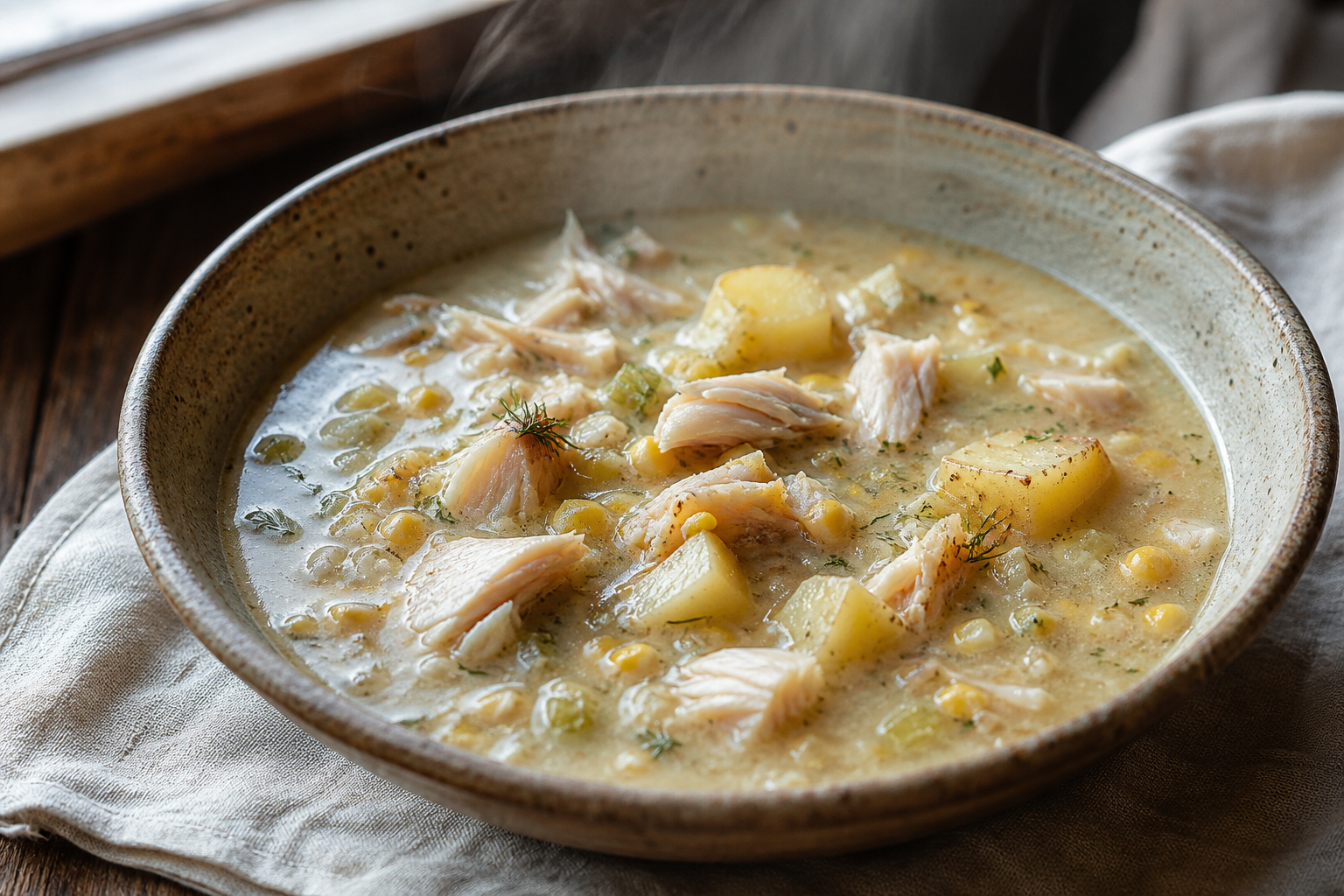
Lake Superior whitefish is a specific fish and worth understanding as such. The Great Lakes whitefish — Coregonus clupeaformis, sometimes called the common whitefish or the lake whitefish — is a deep, cold-water species that has been the commercial mainstay of Lake Superior's fisheries for more than a century. It is related to but distinct from the cisco, also called the lake herring, which is a smaller, oilier fish in the same family that supports its own fishery and is often used for smoked products as well. The two are sometimes labeled interchangeably in retail markets, but they are different fish. The lake whitefish is larger, leaner, and milder. The cisco is smaller and richer. Both smoke beautifully. Both are central to the North Shore food culture.
The Duluth farmers' market is the institution where most casual Lake Superior whitefish shoppers in Minnesota encounter the fish. The market runs on Saturdays from May through October at the Sister Cities International grounds, and the smoked fish vendors — operations like Northern Waters Smokehaus, which has a permanent shop in Canal Park, and a handful of smaller smokers who work out of trucks and stalls — show up consistently across the season. Buy whole smoked whitefish when you can find them. The bones make a stock that improves this chowder considerably, and the cost per pound is lower for whole fish than for fillets.
What Smoking Does to Whitefish
Smoked whitefish is not smoked salmon. The two products come from different fish, are smoked with different techniques, and produce different results. Salmon-style hot smoking produces a fish with a firm, flaky texture and a deeply smoky flavor that can dominate whatever it is added to. Whitefish, because it is leaner, takes the smoke more delicately. The traditional Great Lakes smoking — which has been practiced commercially in Duluth and Bayfield and the smaller ports along the North Shore since the late nineteenth century — uses lower temperatures and shorter times. The fish ends up with a moist, tender flesh and a smoke flavor that is present but restrained. The flake is delicate. The flesh comes off the bones in clean pieces.
The right preparation for this fish in a chowder is one that respects its delicacy. The fish does not need to be cooked further. It needs to be warmed through and integrated into the broth at the last moment, not simmered along with the rest of the ingredients. Overcooking smoked whitefish is the single most common error in this dish; it produces a tough, dry, slightly bitter result that nobody wants to eat. The deliberate without boiling instruction in the method is not optional. Protein toughens at high temperatures, and the gentle warming through that the fish needs is below the simmer point.
Why Thin Rather Than Thick
The American chowder tradition has two dominant streams. The New England version, which is the more widely known, is cream-thickened, often with a roux or with starch from potatoes deliberately mashed into the broth. The Manhattan version, mostly tomato-based and clear, is a different animal. The North Shore tradition — which evolved in the lake communities of the upper Midwest in parallel with the New England tradition but never imitated it directly — sits closer to the European fisherman's soup model: a clear broth, vegetables, and fish, with only a small amount of dairy to round out the finish. This is the more honest version for Lake Superior whitefish. The fish has enough character on its own. Drowning it in cream is an act of misplaced generosity.
The structural element here is the fish stock. If you have the bones from a whole smoked whitefish, simmer them with an onion, some celery, a few peppercorns, and a bay leaf for forty-five minutes to an hour, strain, and use the resulting stock as the base for the chowder. If you do not have bones, a light vegetable stock or a clean fish stock from another source will work. Avoid chicken stock; it competes with the smoke flavor in ways that muddy the finished soup.
Celery Root and the Vegetable Counterweight
Celery root, also called celeriac, is the right primary vegetable for this chowder. The root has a sweetness that potato alone cannot provide, and a celery-adjacent flavor that gives the broth structural complexity without competing with the fish. The flesh is denser than potato, slightly nuttier, and it holds its shape during the simmer rather than breaking down. Peel it aggressively — the skin is gnarled and tough and needs to come off in a quarter-inch layer rather than a thin paring — and dice the interior into half-inch cubes.
Sweat the diced celery root with the leek and the potato in butter until everything is soft but not browned. Add the stock and simmer until the potato is nearly tender — fifteen to twenty minutes. Flake the smoked whitefish into clean pieces, removing any small bones, and add to the pot. Pull the pot off the heat or reduce to the lowest possible flame and let the fish warm through for two or three minutes. Stir in the cream, add a generous handful of fresh dill, season with salt and black pepper, and serve immediately. The dill is not optional; it is the herb that completes the Scandinavian-inflected logic of the dish and provides a fresh green note against the smoke and the cream. Use a good bread to mop the bottom of the bowl, which is where the best of the broth ends up.
Independent criticism takes time
No advertising, no sponsored content. Reader support keeps this publication going — and keeps us beholden to no one but you.