Swedish Meatballs With Lingonberry
The version your Swedish-American relatives made, before it became a furniture-store menu item.
Published May 29, 2026
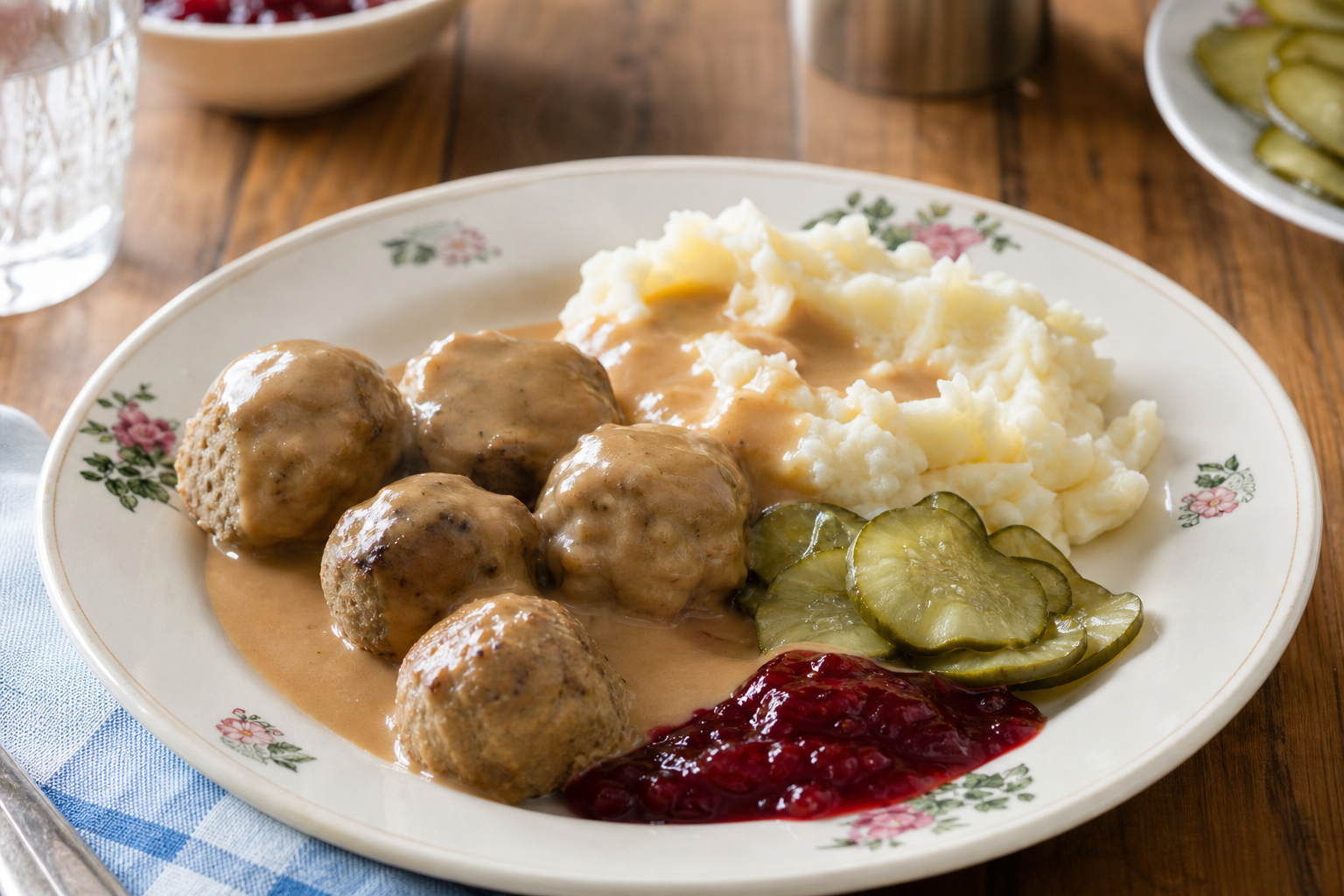
The Swedish meatball predates the global furniture company that has done more than any other single force to define the dish in the American imagination. The kottbullar has been a Swedish home cooking standard since at least the eighteenth century, with the modern form — small balls of mixed ground meat in a cream gravy, served with lingonberry — taking shape during the late nineteenth century when refrigeration and reliable cream production made the gravy practical for everyday cooking. The Minnesota version arrived with the Swedish immigrants who settled the eastern and central parts of the state between the 1860s and the 1910s, mostly from the rural provinces of Dalarna, Smaland, Vastergotland, and Skane. They came in numbers large enough that Minnesota was, by 1900, home to more Swedish-born residents than any state other than Illinois.
The immigrant kottbullar tradition has held up remarkably well across the four or five generations since. Walk into any Lutheran church basement in the eastern Minnesota counties during a midwinter dinner — Chisago, Isanti, Kanabec, the area sometimes called the Swedish Triangle for its concentration of Swedish-descended residents — and you will find Swedish meatballs on the buffet table, made by women whose grandmothers made them, served alongside boiled potatoes and pickled cucumbers and a substantial bowl of lingonberry jam. The recipe has been tested across more meals than any restaurant could survive. It works.
The Pork-and-Beef Blend
The traditional kottbullar uses a mixed-meat blend, almost always pork and beef in roughly equal proportions, sometimes with a small addition of veal. The pork provides moisture and fat; the beef provides flavor and structural integrity. Either meat used alone produces a meatball that is missing something. All beef is too dry. All pork is too soft and lacks the necessary depth. The combination is calibrated and should be respected.
Buy ground pork and ground beef separately rather than buying a pre-mixed meatloaf blend if you can. The pre-mixed blends are often built with low-quality trimmings and uneven proportions, and the meatballs come out lesser. Look for ground pork that is roughly twenty to twenty-five percent fat — not the very lean pork that some markets push as the default — and ground beef that is around eighty to eighty-five percent lean. The total fat content of the finished meatball should be around twenty percent. Lower than that and the meatballs cook up dry; higher and they fall apart in the pan.
The Bread and the Binder
The soaked breadcrumbs are not a filler in the modern American sense. They are a structural component that holds the meatball together and keeps it tender during cooking. The technique is to soak fresh breadcrumbs — or torn pieces of day-old bread with the crusts removed — in milk for ten minutes before mixing. The bread absorbs the milk and swells. When it is incorporated into the meat mixture, the moisture from the bread creates small pockets of liquid throughout the meatball that produce a more tender, juicier finished texture than meat alone would have.
The egg is the second binder, providing protein coagulation that holds everything in shape during the cook. One egg per pound of meat is the right proportion. Mix the egg into the milk-soaked breadcrumbs before combining with the meat, which distributes it more evenly than adding it directly to the meat would. The onion — finely diced and lightly sweated in butter before going into the mixture — adds moisture and a sweet aromatic background. Raw onion in the mixture produces a sharp, slightly metallic note that is not what you want.
Allspice as Defining Flavor
Allspice is the spice that makes a Swedish meatball recognizable as a Swedish meatball. The spice — Pimenta dioica, the dried berry of a Caribbean evergreen — was adopted by Scandinavian cooks in the eighteenth century, when colonial trade routes made it widely available in northern Europe, and it has been a defining flavor in Swedish meatball tradition ever since. It tastes of clove and cinnamon and nutmeg simultaneously, which is why it earned the name allspice in English. A half teaspoon for a pound of meat is the standard. Some Scandinavian cooks add a small amount of nutmeg as well; this is optional and acceptable. Black pepper goes in generously. The salt should be assertive — the lingonberry on the side provides the sweet counterweight, and the meatballs themselves need to taste properly seasoned.
Form the meatballs small — about an inch in diameter, a heaping teaspoon's worth of mixture — and brown them in butter in a heavy skillet over medium-high heat. Do not crowd the pan. Brown all sides, which takes about five minutes per batch, then remove to a plate. They will not be cooked through yet; the gravy will finish them.
The Cream Gravy and the Lingonberry
The gravy is built in the same pan after the meatballs come out. Deglaze with a cup of good beef broth, scraping up the browned bits, then reduce by half. Add a half cup of heavy cream and a pinch of allspice. Whisk in a small slurry of flour and water if the gravy needs thickening; otherwise let the cream and the reduction do the work. Return the meatballs to the pan and simmer gently for ten minutes until they are cooked through and the gravy has coated them.
Lingonberry jam on the side is not garnish. It is structural. The tart, slightly bitter, intensely red jam is the foil to the rich cream gravy and the salty meat, and a Swedish meatball without lingonberry is half a dish. Imported Swedish lingonberry jam is widely available at Scandinavian specialty stores and at some Twin Cities supermarkets; the imported product is usually better than American-made substitutes. Serve with boiled small potatoes dressed with butter and chopped fresh dill, and a small pile of pickled cucumber if you want the full traditional spread. This is a winter Sunday supper, slow and satisfying, the kind of meal that has been feeding Minnesota families through cold months for more than a century.
Independent criticism takes time
No advertising, no sponsored content. Reader support keeps this publication going — and keeps us beholden to no one but you.