Wild Rice Soup, Without Apology
A non-cream wild rice soup that respects the grain.
Published May 20, 2026
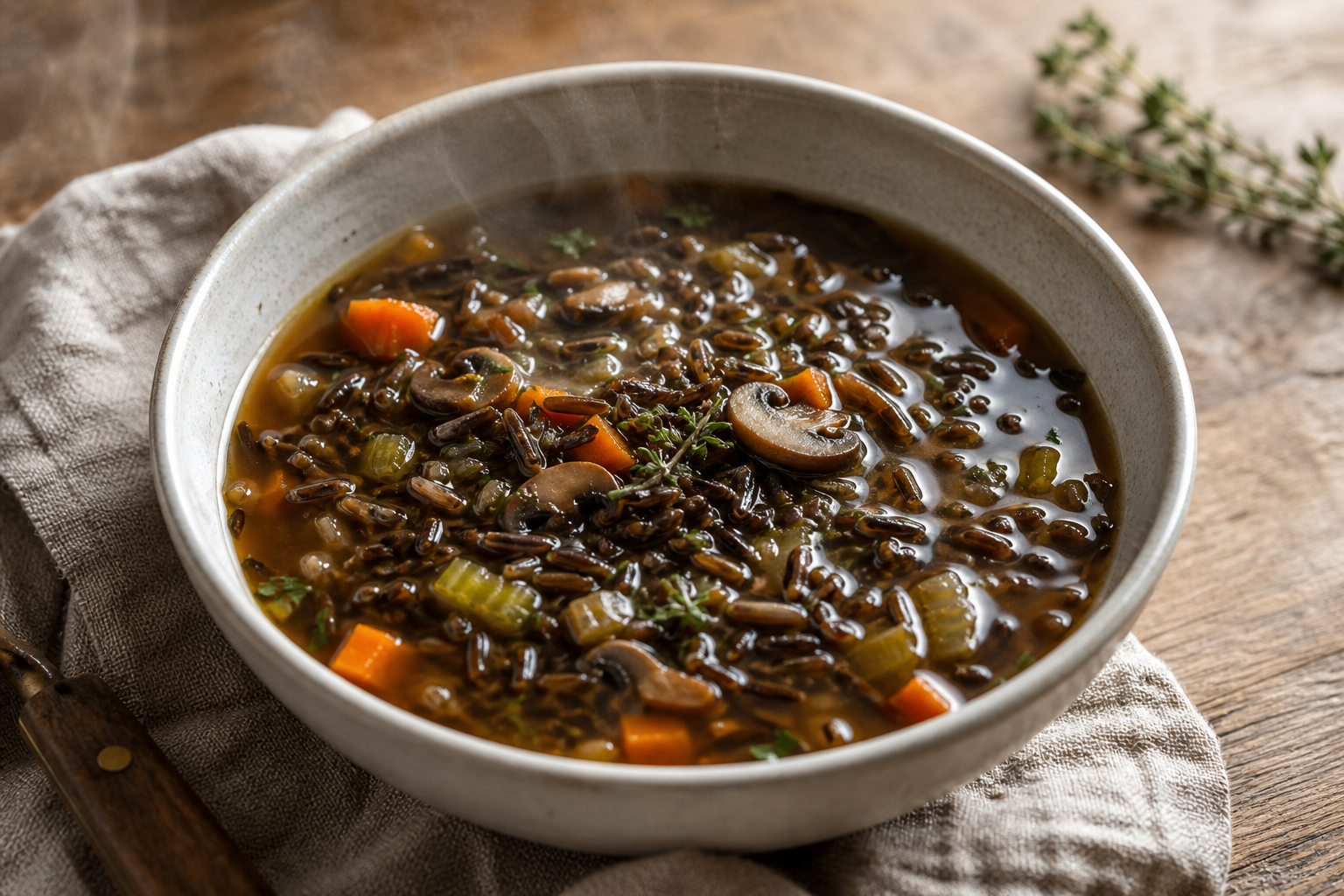
Wild rice — Zizania palustris, the grain that grows in the shallow lakes and slow-moving rivers of the Great Lakes region — is the most culturally specific food in Minnesota's pantry. It is not a rice in any meaningful botanical sense; it is the seed of a tall aquatic grass that has been harvested in the lakes of what is now northern Minnesota for at least a thousand years. The Ojibwe word for it is manoomin, which translates as the good berry or the good seed, and it is one of the foods that the Ojibwe migration story identifies as the reason the people moved west from the Atlantic coast — the prophecy that they would find the food that grows on the water. Manoomin is not a metaphor in Ojibwe culture. It is a specific plant in specific waters, and the relationship to it is ongoing.
The White Earth Nation in northwestern Minnesota has been doing significant ongoing work to protect the wild rice waters from agricultural runoff, sulfate pollution from upstream mining, and the introduction of genetically modified strains that could cross-contaminate the native populations. This work is not abstract. The wild rice ecosystem is fragile, dependent on water levels and water chemistry that can be disrupted by activities decades removed from the lakes themselves, and the legal and political battles over the rice waters have been one of the defining environmental fights in Minnesota for the last forty years.
The Distinction That Matters
The wild rice you buy at most supermarkets is not what the Ojibwe harvest. It is paddy-cultivated wild rice, grown in flooded fields mostly in California, machine-harvested, and kiln-dried at high temperatures. The grain is darker, harder, and longer-cooking than the real thing, and it lacks the subtle smokiness that hand-parched lake-harvested wild rice carries. The lake-harvested rice is shorter, often a mottled tan-and-brown rather than the uniform black of the paddy product, and it cooks in roughly half the time. The flavor is nuttier, more delicate, more identifiably grass-like. The two products are sold under the same name and they are not the same thing.
For this soup, source the real article if you can. A number of tribal enterprises in northern Minnesota — the Native Harvest project from White Earth, several smaller operations on Leech Lake and around the Mille Lacs and Vermilion lake country — sell hand-harvested wild rice through their own distribution channels and through co-ops in the Twin Cities. The price is higher than the paddy rice. The product is not interchangeable. If you cannot find the real thing, the paddy rice will work; just plan for the longer cooking time and accept that you are making a different soup.
Why Not Cream
The cream of mushroom and wild rice soup that has become the suburban Minnesota default is a relatively recent invention. It dates roughly to the post-war period, when canned cream soups became a kitchen staple and the church-cookbook recipe writers started building around them. The cream version is a fine soup. It is not a wild rice soup, in the sense that the rice is incidental to the texture rather than central to it. The cream covers the grain's actual flavor and turns the soup into a vehicle for the dairy.
The lake country tradition is different. The wild rice soup that has been made in the fishing-camp kitchens and farm kitchens of northern Minnesota for a hundred years is broth-based, with the rice as the structural element and the aromatics in a supporting role. Let the grain do the work means giving the rice the room to be tasted. The broth needs to be good but unobtrusive. The aromatics need to be present but not assertive. A small finish of crème fraîche or sour cream at the table, if you want it, is fine — but it should be a finishing spoon, not the body of the soup.
The Technique of Proper Hydration
Wild rice is easy to overcook, and overcooked wild rice is a sad thing. The grain splits open, the texture goes from chewy and resilient to mushy, and the flavor disperses into the broth in a way that flattens the whole soup. Cook the rice until the grains have just butterflied open at one end — you will see a small white split appear in the dark hull — and stop there. For hand-harvested rice this is about twenty-five to thirty-five minutes in simmering broth. For paddy rice it is closer to forty-five to sixty minutes. Test frequently in the last ten minutes. The rice should be tender but with a slight resistance, the same kind of resistance that a properly cooked grain of farro or barley has.
The aromatic base is simple. Sweat diced leek, carrot, and celery in butter until soft. Add a few sprigs of thyme. Pour in good stock — chicken, vegetable, or a mushroom stock if you have made one — and add the rinsed wild rice. Simmer gently until the rice is done, season with salt and black pepper, and serve. Add a small spoon of crème fraîche to each bowl at the table if you want it. The soup will taste of the rice and the broth and the long history of harvesting grain from the water, which is what it should taste of.
Independent criticism takes time
No advertising, no sponsored content. Reader support keeps this publication going — and keeps us beholden to no one but you.