The Boundary Waters Canoe Area Wilderness sits about a hundred and twenty miles north of Duluth and occupies a particular space in the imagination of Minnesotans who have spent time there and those who have not. The wilderness is a real place — a million acres of lakes and forest along the Canadian border, accessed primarily by canoe and portage, with a permit system that limits the number of people who can enter on any given day. It is also a brand. The phrase Boundary Waters attaches itself to products of varying quality and varying connection to the actual wilderness, and in the brewery category the use of the name has typically signaled marketing rather than substantive engagement. Boundary Waters Brewing, which opened two years ago in a former marine-supply warehouse on the western edge of Duluth's harbor district, is the first brewery in the metro to use the name and back it up with brewing decisions that actually reflect a working relationship to the wilderness it references.
The relationship shows up most concretely in the brewery's foraged-ingredient program. The brewery has a contract with a Cook County forager who supplies spruce tips in early summer, sumac drupes in late summer, and Labrador tea leaves in autumn, all collected from the BWCA's edges and processed within forty-eight hours of harvest. These ingredients appear in specific beers — a spring spruce-tip pale ale, a late-summer sumac-and-grain saison, an autumn dark ale with Labrador tea — and each of these beers tastes meaningfully of its ingredient in a way that demonstrates the brewery is using the foraged elements as substantive flavor components rather than as marketing touches. The spruce-tip pale, in particular, carries the resinous character of fresh spruce needles in the nose and on the finish in a way that the standard juniper-and-pine-derived hop combinations cannot reproduce.
The Core Beers and What They Argue
The brewery's flagship is a dark lager called Portage, and the name is doing more work than it appears to do at first reading. The portage in canoe-country usage is the carry between two lakes — the part of the trip that requires actual effort, that defines the route, that distinguishes serious BWCA trips from casual paddles. The beer is named for this in a way that the brewery does not explain on the label and that a guest familiar with the wilderness will pick up on without prompting. The beer itself is a dark lager brewed to a Bohemian tmavé pivo specification, with a long cold-conditioning period that produces a properly clear dark beer with a roasted-malt character that carries chocolate and coffee notes without sweetness. The beer is poured at the correct temperature and carbonation. It is the kind of beer that rewards multiple pours over the course of an evening, which is the appropriate brewing argument for a beer with this name.
The saison is the brewery's second-most-developed beer. The saison is a notoriously difficult style to execute well — the yeast is temperamental, the fermentation requires careful temperature management, the resulting beer can easily become either too dry or too funky if the fermentation goes slightly off — and most American craft breweries either avoid the style or produce versions that miss the point. The Boundary Waters saison is dry, with a properly attenuated finish, a faintly herbal character that comes from a careful hop selection rather than from added botanicals, and a carbonation level that is appropriate for the style. The beer drinks as a session beer despite the higher alcohol content that the style requires, which is what a well-executed saison is supposed to do.
The wild-fermented table beer is the brewery's most ambitious offering and is poured from a single dedicated tap. The beer is brewed at a low alcohol content — about three and a half percent — and is fermented with a house culture that includes both standard saccharomyces and a small amount of brettanomyces. The beer is conditioned in oak for several months before being put on tap, and the resulting beer has a complex sour-and-funky character that is layered without being aggressive. The price is five dollars for a sixteen-ounce pour, which is the kind of pricing that the brewery has set deliberately to make the beer accessible rather than treating it as a premium product. This is the beer to order if you are visiting only once. It is the most interesting beer on the tap list.
The Room and the Harbor View
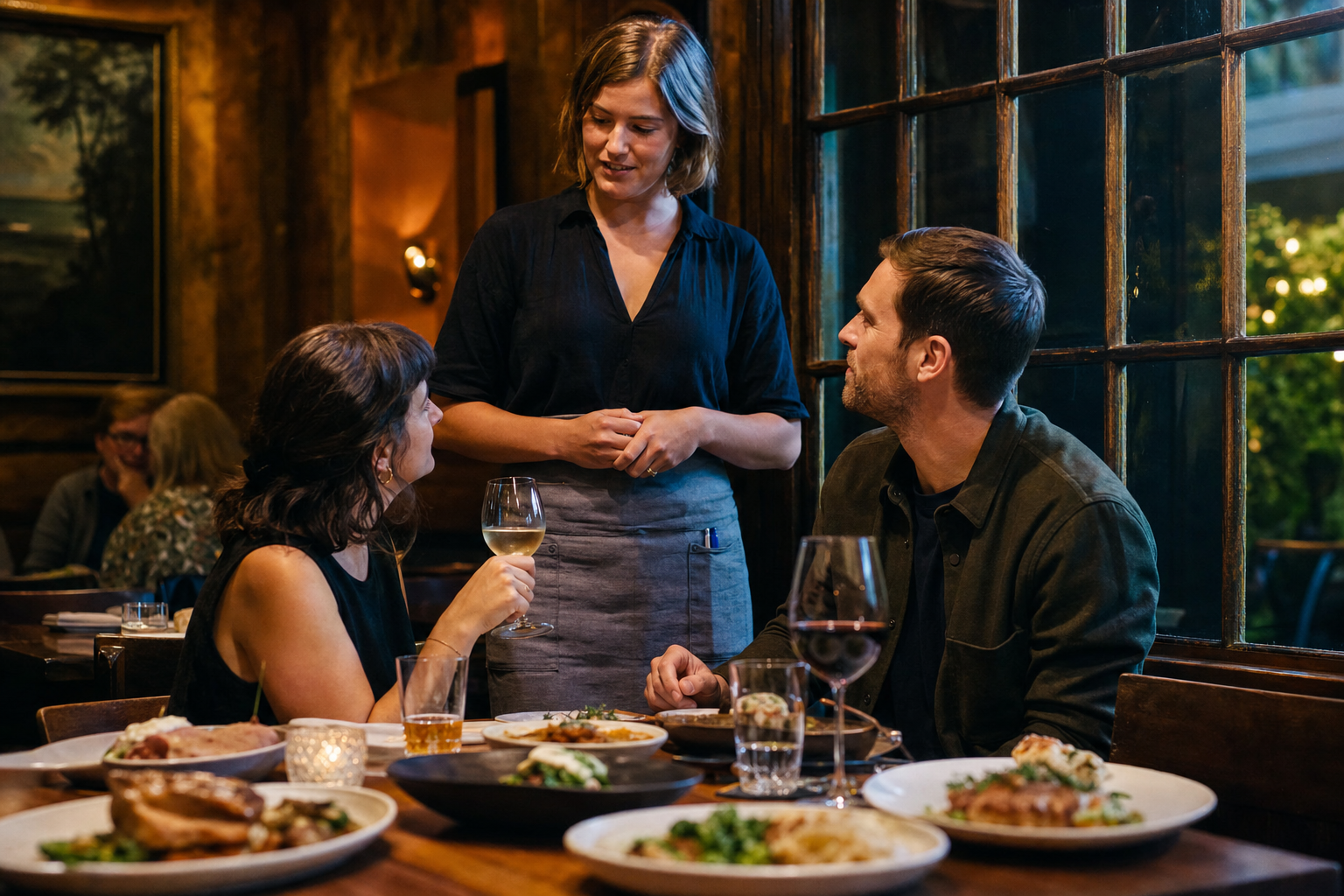
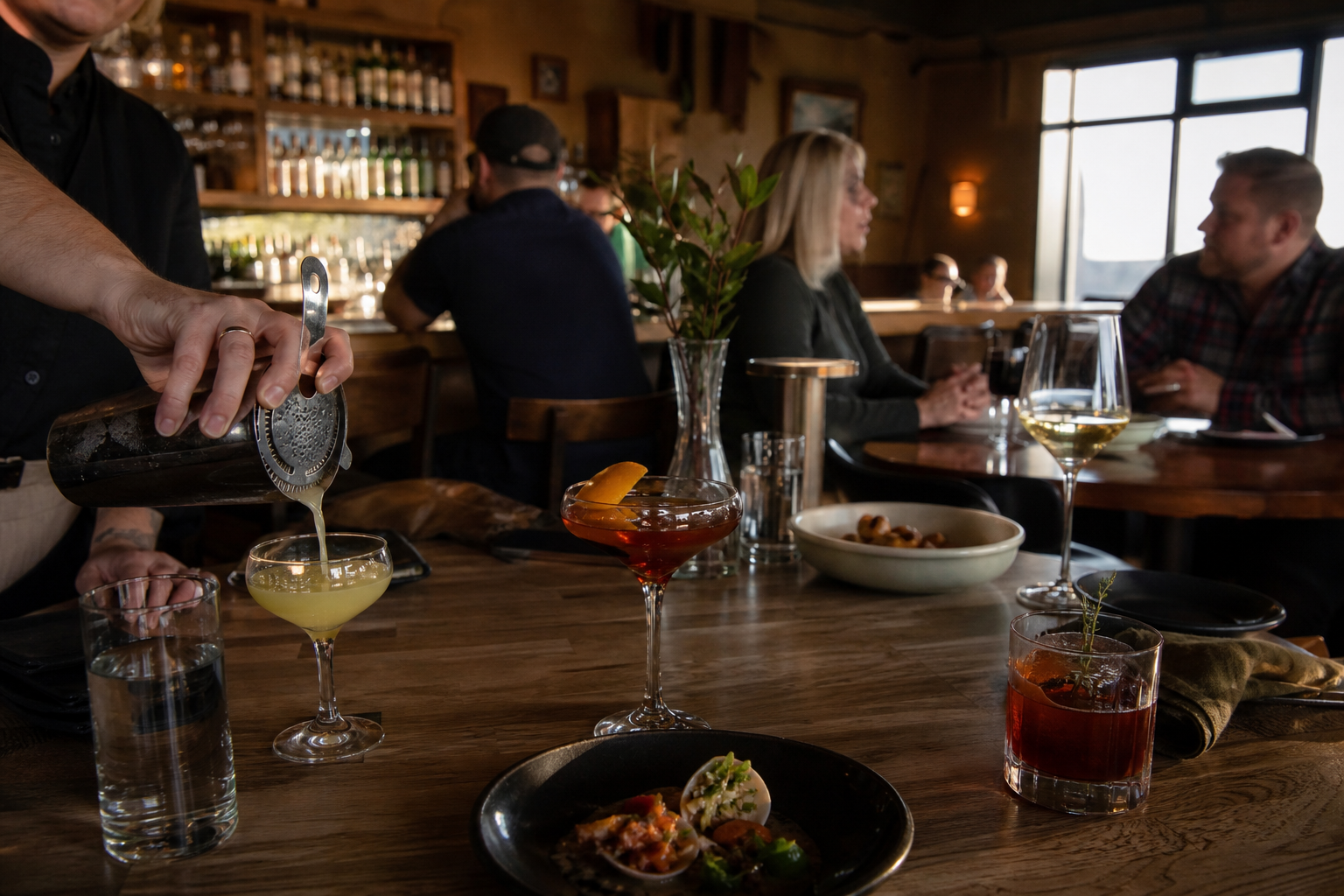
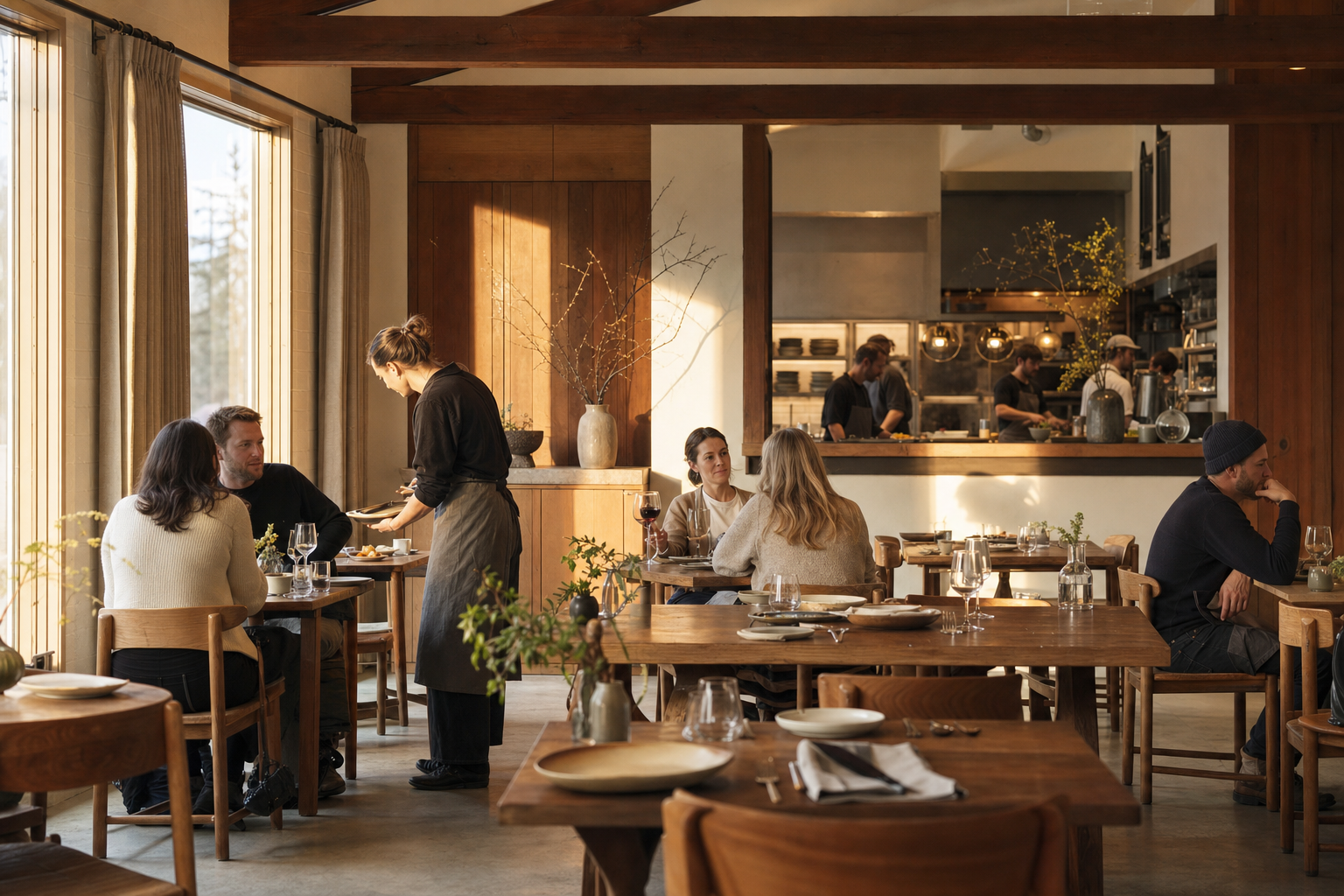
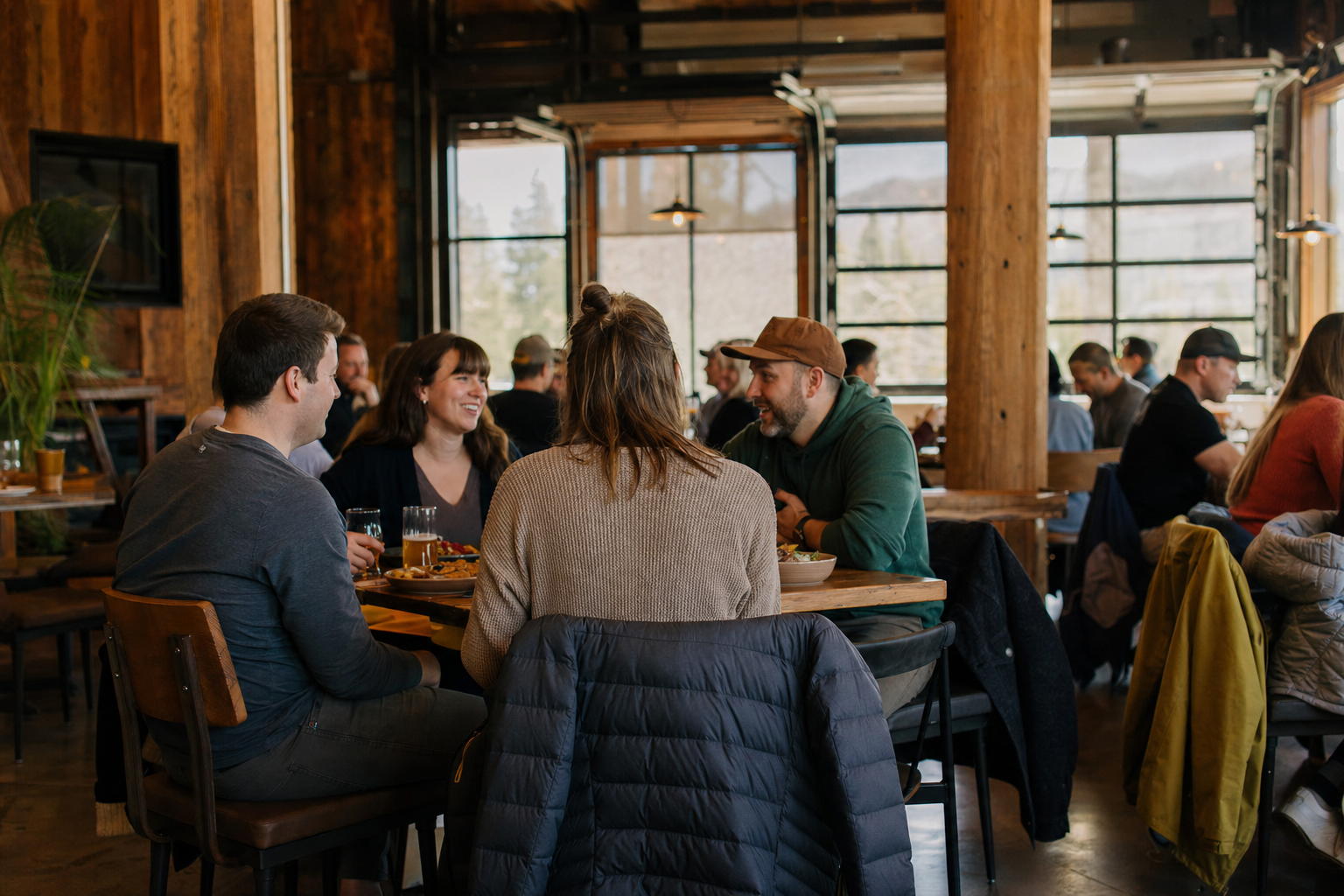
The taproom occupies the main floor of a former marine-supply warehouse that has retained its original interior architecture — high ceilings, exposed beams, large windows along the harbor-facing wall — with the brewing equipment visible through windows along the back wall. The room is large, with capacity for about a hundred and fifty at full occupancy, and is configured with a combination of bar seating, communal long tables, and a few smaller tables along the perimeter. The lighting is dim without being dark, the sound level is conversational at most hours, and the harbor view from the windows along the south wall is the kind of view that justifies the address. On a clear evening in late summer, with the harbor reflecting the western sky, the view through the windows is among the better restaurant views in Duluth.
The food program is the brewery's structural limitation. The kitchen is small and produces a short menu of pretzels, sausages, sandwiches, and a few warm small plates. The food is not bad but it is not the reason to come, and the kitchen has not yet figured out how to scale up its operations in a way that would let the food program match the beer program's ambition. The food score reflects this — the pretzels are correctly made, the sausages are sourced from a Duluth-area butcher and are properly prepared, but the warm small plates are inconsistent across visits and the overall food experience does not clear the threshold the rubric requires for a loon designation.
What the Wilderness Reference Earns
Boundary Waters Brewing has done the work that the name implies. The foraged-ingredient program is substantive, the core beers are well-executed, the wild-fermented program demonstrates an ambition that few breweries at this scale attempt, and the room is configured to take full advantage of the harbor address. The brewery has avoided the temptation that has destroyed several other wilderness-themed breweries — the temptation to treat the reference as marketing while making generic beer — and has instead organized its production around an actual relationship to the place the name references. This is not a small accomplishment.
The food score prevents the brewery from clearing the food gate required for a loon designation, which is the rubric doing what the rubric should do. A guest visiting Boundary Waters Brewing for the beer will find one of the more interesting brewery programs in the state. A guest visiting expecting a full-service restaurant experience will find that the food does not match the beer. The recommendation, in the language the publication uses for sub-loon rooms, is strongly recommended for the beer program. The Portage dark lager is the structural beer to order. The wild-fermented table beer is the experimental beer to order. The spring spruce-tip pale, when it is in season, is the beer that demonstrates what the foraged-ingredient program is capable of. The harbor at sunset is the bonus. Fictional for illustration.