Northfield is a particular kind of small Minnesota city. It sits forty miles south of the Twin Cities on Highway 35 with a population of about twenty thousand, two small liberal arts colleges that together enroll roughly four thousand students, a downtown organized around a town square that includes a cattle statue commemorating the city's agricultural history, and a meaningful tension between the academic culture of Carleton and St. Olaf and the working-class agricultural culture that the colleges share the city with. The downtown commercial corridor has to serve all of these constituencies — students, parents visiting students, faculty and staff, longtime residents who have been buying their groceries on the same block for forty years, and the agricultural businesses that ring the city. Most of the restaurants on this corridor have made the decision to lean toward one of these audiences at the expense of the others, which is the structurally easier business model. Cascade Falls Café, on the south side of the square in a converted bank building, has made the harder decision to serve all of these audiences without pandering to any of them. The result is a café that works.
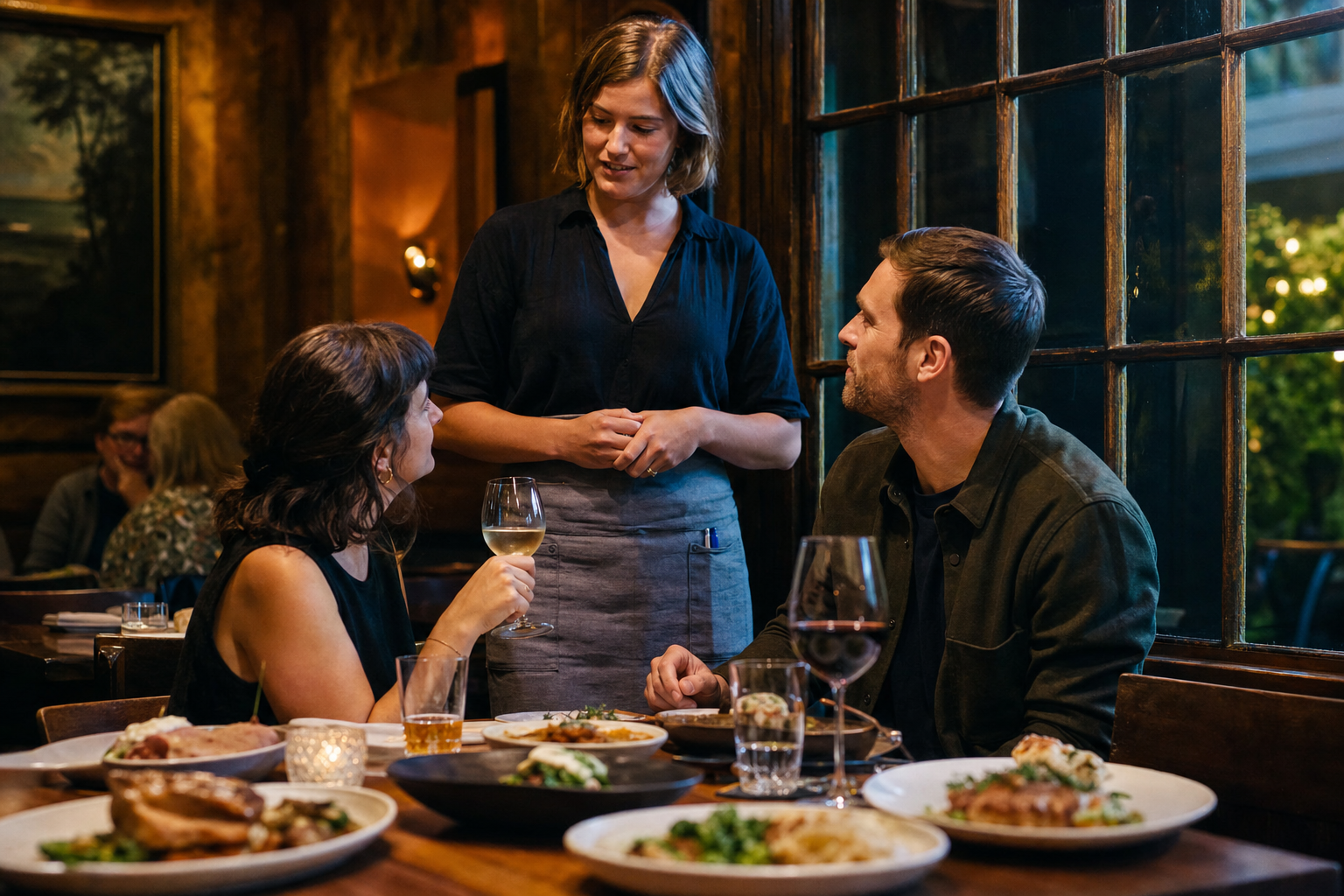
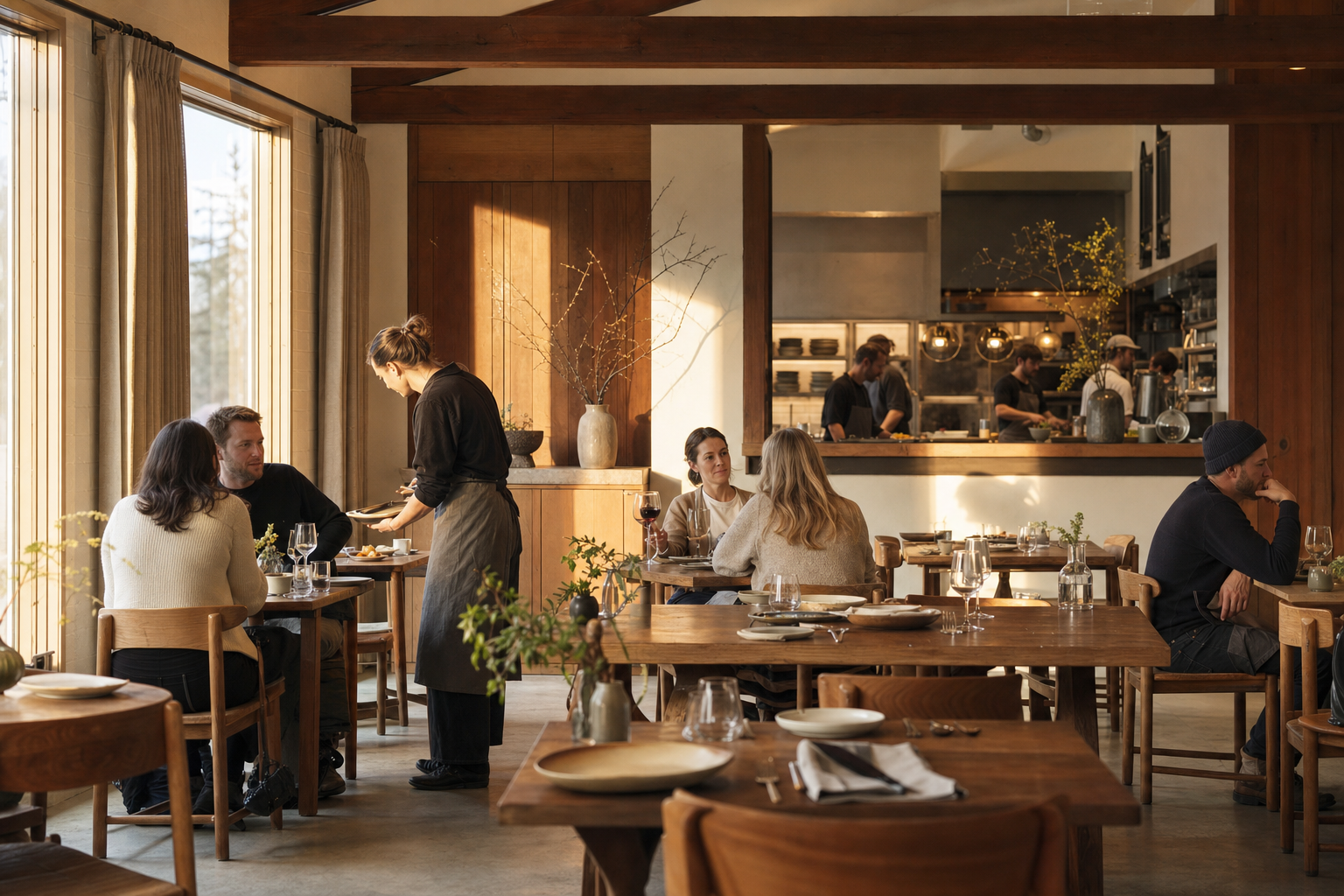
The room reads as deliberately calibrated for its mixed audience. The seating is a combination of small tables, a few larger tables for groups, a counter facing the prep area, and two booths near the front windows. The lighting is bright in the morning, when the front windows pull in the eastern light, and softer in the afternoon when the café's own lighting takes over. The sound level is conversational without being institutional. There is no music playing during morning service and a low-volume jazz playlist after one. The staff includes both college-age workers and longer-term employees in roughly equal numbers, which is a staffing decision that affects the room's tone in subtle ways. The customer mix at any given hour reflects the constituency that hour serves: parents and students at mid-morning on parents-weekend days, longtime residents at the after-church hour on Sunday, students at the late-morning hour on weekdays, and a mix of agriculture and academic at the lunch hour.
The Egg Sandwich Habit
The egg sandwich is the morning anchor. The sandwich is built on a brioche bun baked in-house each morning, with a fried egg cooked over-medium with a yolk that runs but does not pool, a thick slice of bacon from a Cannon Falls producer that the café has been buying from since opening, a slice of cheddar from a Wisconsin maker, and a small dollop of a house-made tomato jam that adds a touch of sweetness and acid without dominating the sandwich. The sandwich is priced at nine dollars. This is enough for the café to make a small margin on the production cost — the bread is labor-intensive, the bacon is sourced rather than commodity, the egg is from a Rice County operation — and it is also the price that a college-town café needs to maintain to remain in the daily-habit category for both students and longer-term residents. A more expensive egg sandwich would lose the student business; a cheaper egg sandwich would have to compromise the ingredients and would lose the resident business that has the disposable income to pay for quality.
The lunch menu runs to grain bowls, sandwiches, and a daily soup. The grain bowls are organized around a base of farro or barley, a roasted vegetable, a protein, and a dressing. The current version uses a farro from a Wisconsin grain producer, a roasted squash from a Northfield-area farm, a smoked chicken from a regional producer, and a brown-butter-and-cider vinaigrette. The bowl is correctly assembled — the grain is properly seasoned, the squash is roasted to the right texture, the chicken is not dry, the dressing is applied at the moment of service rather than absorbed into the grain in a warming station — and it eats as a complete meal rather than as an assembly of ingredients on top of a base. The soup of the day on the visit was a wild-rice-and-mushroom preparation with smoked turkey, served with a slice of the café's own sourdough. The soup was correctly seasoned, the wild rice was treated as a structural ingredient rather than a garnish, and the bread was the kind that you ask for a second slice of without thinking about it.
The cured meats and cheeses are sourced from a network of small producers within about fifty miles of Northfield, and the café displays the producer names on a chalk board above the counter. The board includes the name of each producer, the specific item, and the date the café received it. This is the kind of transparency that distinguishes a serious sourcing program from a marketed one, and it is something that the café has been doing since opening rather than something added in response to current food-culture expectations.
The Decision Not to Have a Cocktail Program
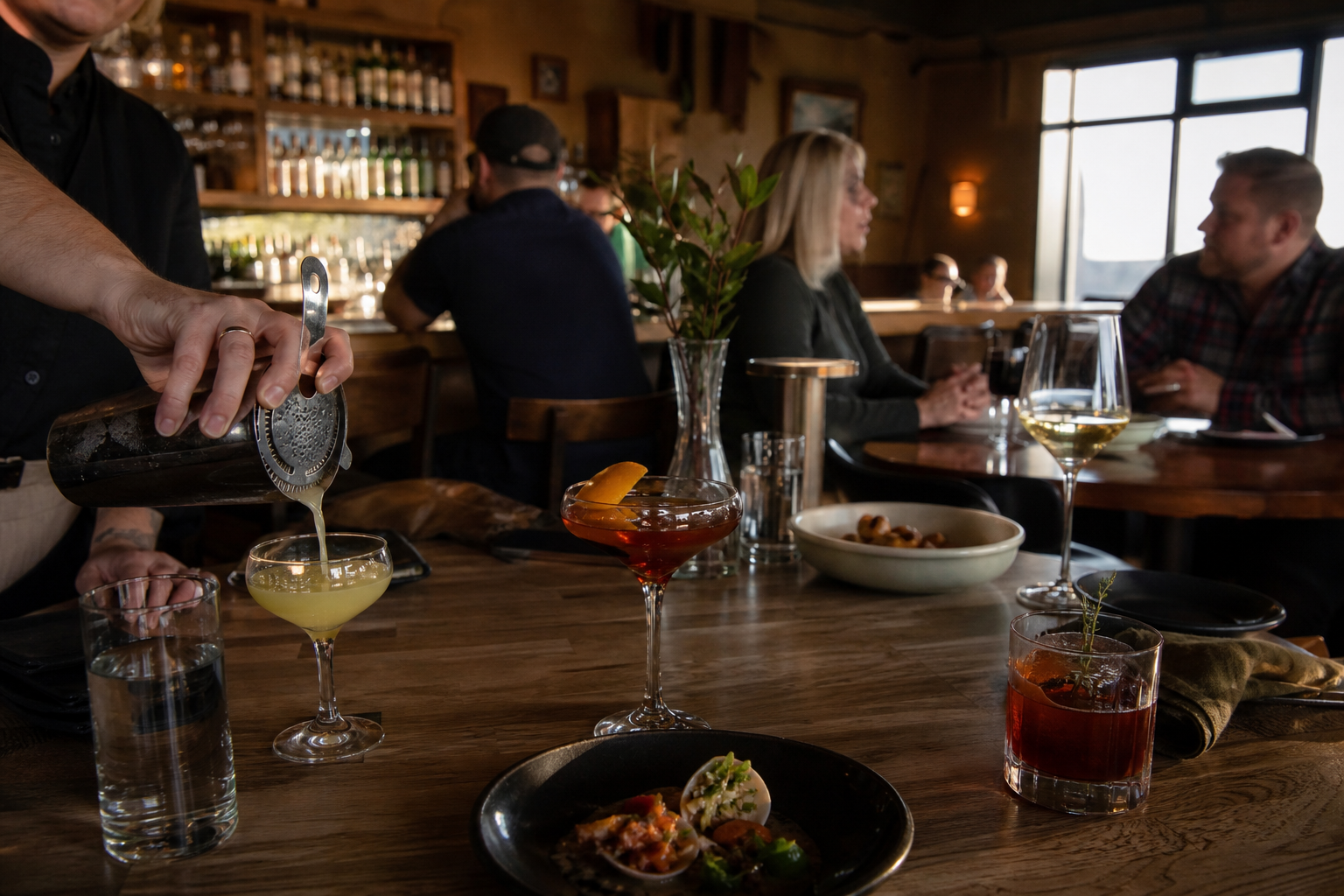
Cascade Falls Café does not have a cocktail program, and the decision is correct for the room. The café serves wine — a short list of about a dozen bottles, with an emphasis on producers from the Driftless region and Northern Wisconsin — and a few local beers, and the beverage program ends there. A cocktail program at this café would require either an expansion of the staff and the bar equipment that the room cannot accommodate, or a compromised cocktail offering that would not match the kitchen's standards. Either choice would damage the café's coherence. The current beverage program is appropriate for what the café is and the food it serves, and the absence of cocktails is not a gap but a deliberate scope decision.
This decision has a rubric consequence. The Four Loons rubric scores all dimensions including cocktails, and a venue without a cocktail program receives a low score in that dimension that prevents the venue from clearing the floor required for a loon designation. The rubric is doing what the rubric should do — it is identifying that a guest expecting a multi-dimensional restaurant experience including a beverage program will not find one here — and the appropriate categorization for Cascade Falls Café is therefore sub-loon with a strong recommendation for the food. This is the honest outcome.
The College Town Without Pandering
The difficult thing about a college-town restaurant is the temptation to cater to the student audience at the expense of the longer-term residents. Students are a more vocal audience, more visible on review platforms, more likely to drive immediate traffic, and more likely to make a restaurant feel busy in a way that reads as success in the short term. The trade-off is that catering to students typically requires lowering prices below what quality ingredients can support, simplifying the menu to items that fit student preferences, and developing a room aesthetic that reads as student-oriented in a way that pushes away the longer-term residents who have the disposable income that sustains a restaurant through summer when the students leave.
Cascade Falls Café has refused this trade-off, and the discipline is visible in every operational decision. The prices are fair for what the ingredients cost rather than discounted to student levels. The menu serves students who want a quick grain bowl and longtime residents who want a properly built sandwich with equal seriousness. The room reads as a café for the city of Northfield rather than for either of its colleges specifically. The result is a café that earns the loyalty of the full mixed audience that Northfield actually contains, and that is sustainable across the summer months when the colleges empty out. The food is the argument. The kitchen has built it correctly. Fictional for illustration.