The autumn menu at Foundry & Field reads like a kitchen that has fully claimed its pantry. The first visit, in early summer, found a restaurant that had a clear point of view and the technique to support it; the second visit, in mid-October, finds a kitchen operating at a stride that puts it among the most serious rooms in Whittier and in the conversation for the most serious rooms in Minneapolis. The difference is not in ambition. The kitchen was always ambitious. The difference is in the depth of the relationship between the menu and the actual sourcing — the way the autumn card reads as the inevitable consequence of decisions made in March about what to put in the cellar and what to commit to from which farms in which months. This is what a mature Upper Midwest kitchen looks like, and Foundry & Field has arrived at it faster than most.
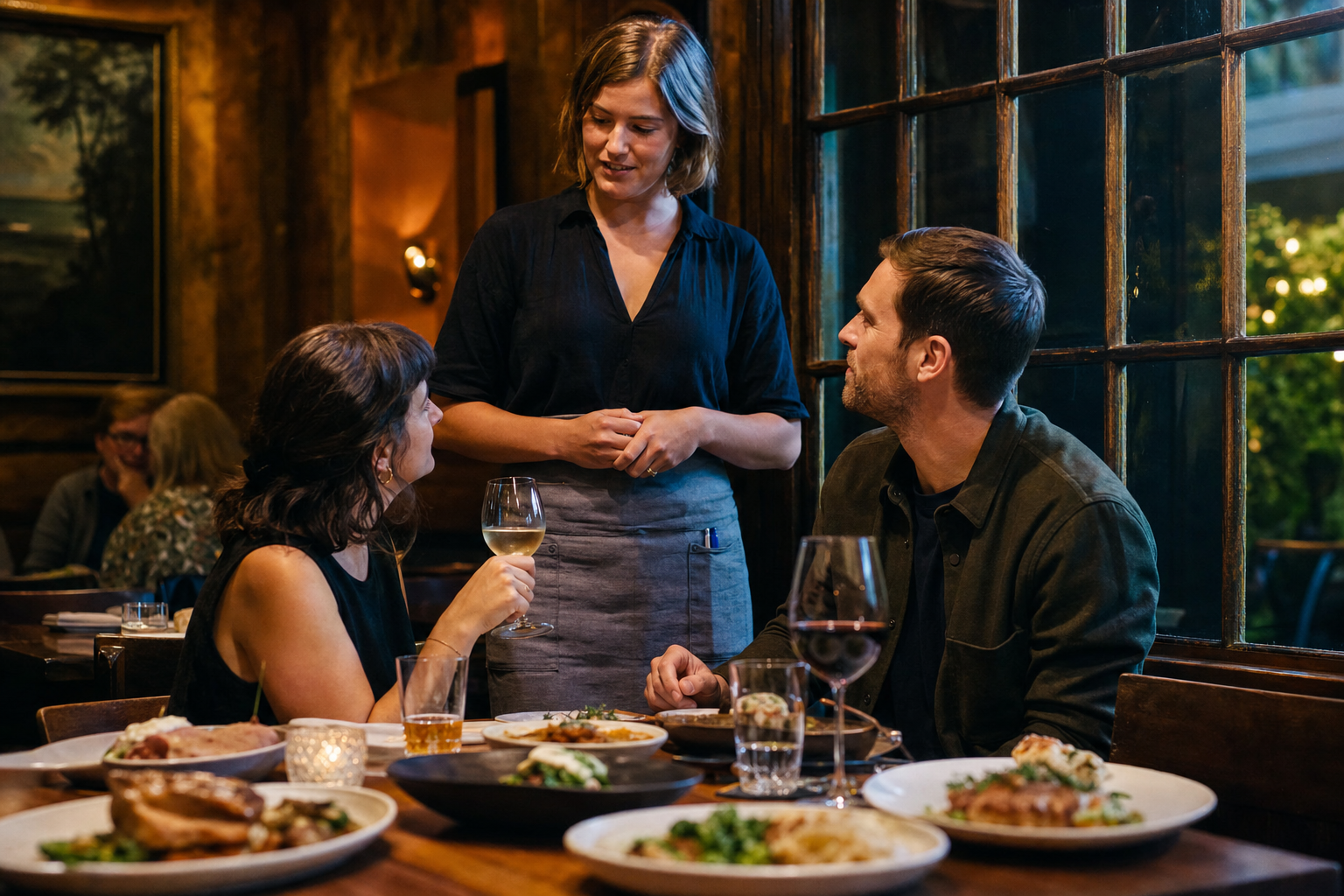
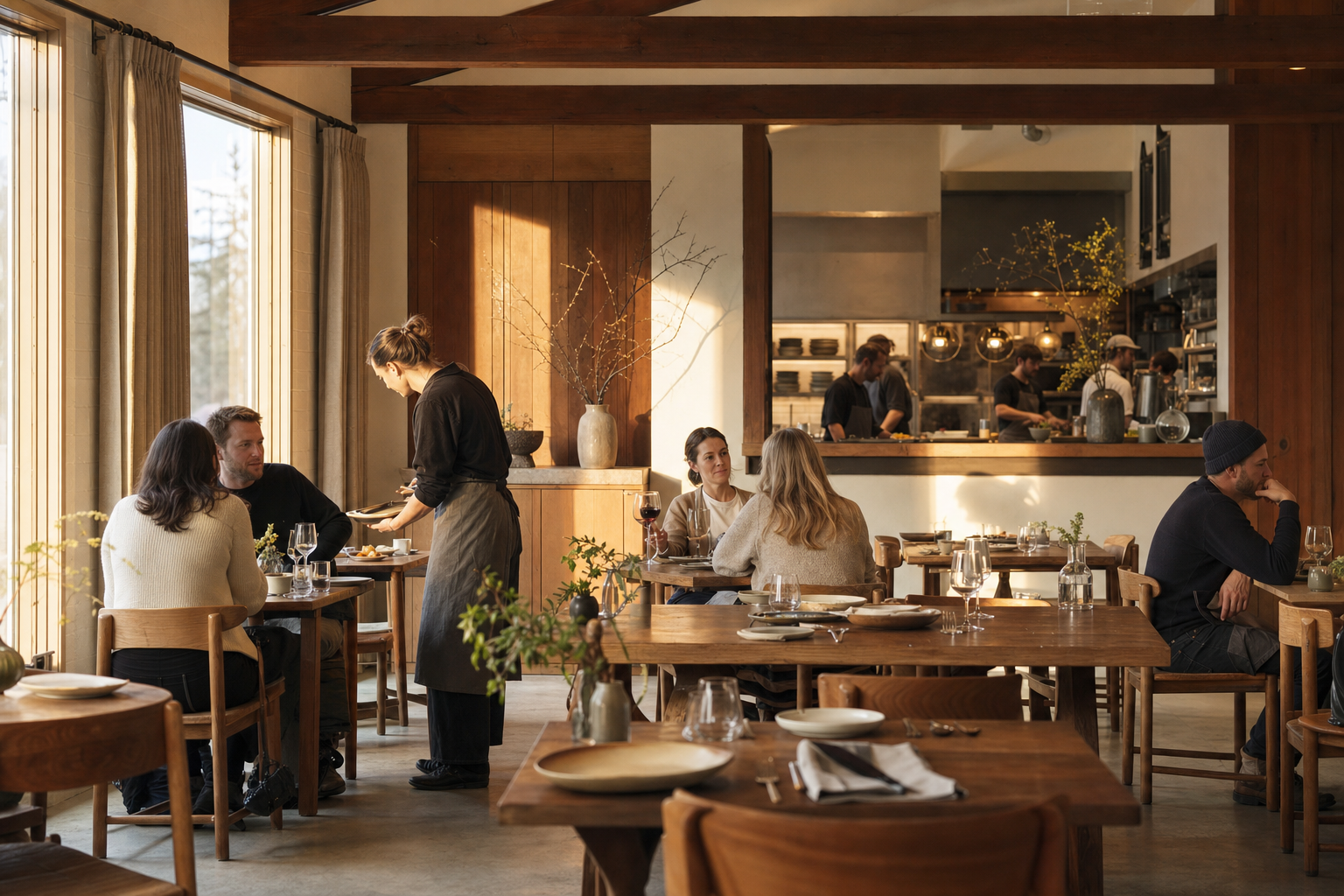
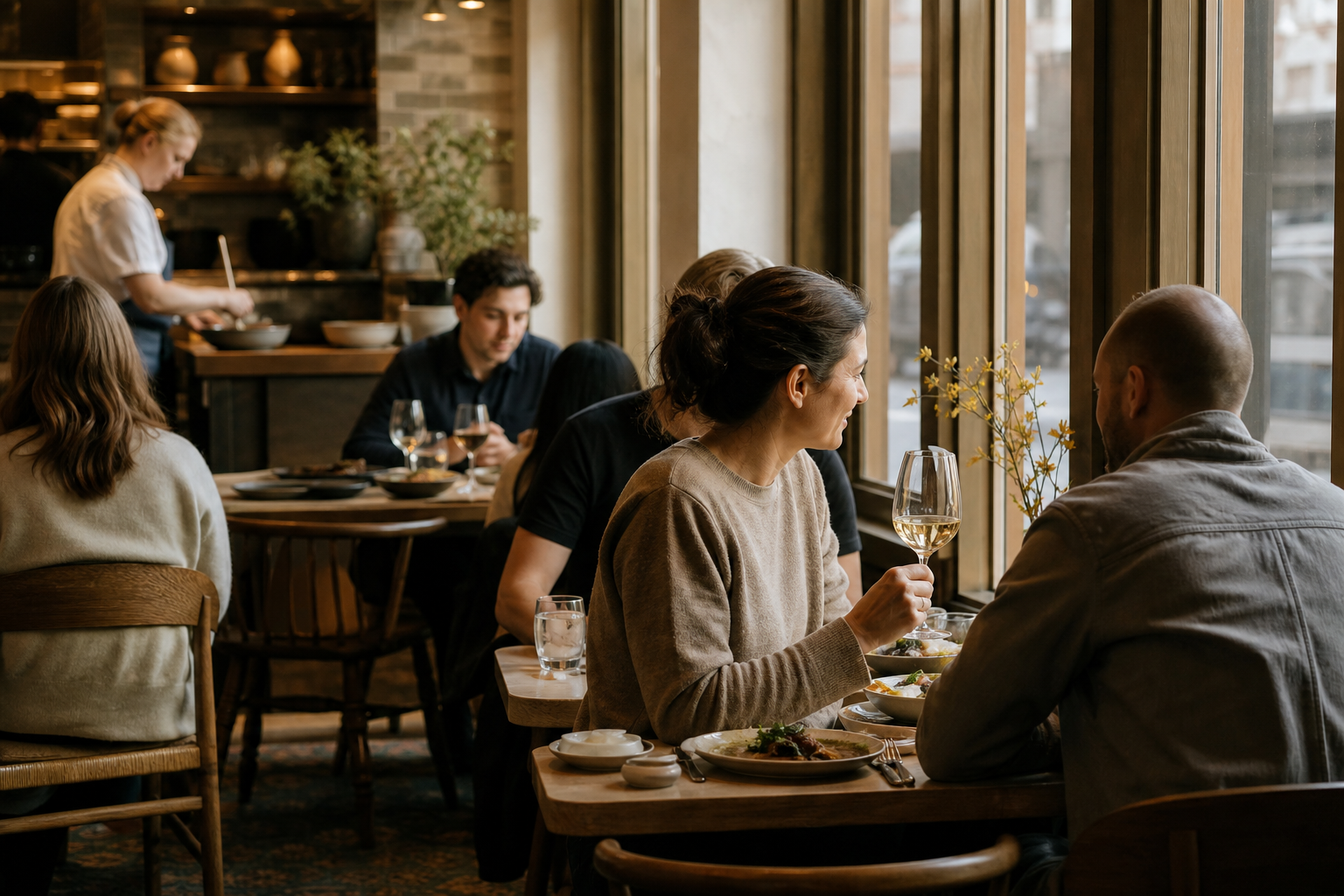
The room is the same room. The bar is in the same place. The service has the same uniforms and the same handful of regulars at the counter on a Tuesday evening. What has changed is the assurance with which the kitchen is sending out plates. The summer menu was strong in the moments and slightly uneven in the transitions between courses; the autumn menu has the rhythm of a single composition, with the small plates leading into the larger ones in a sequence that feels considered rather than assembled. The pace of the meal is governed by the food rather than imposed on it.
The Pantry on the Plate
The squash preparations are the obvious place to begin. Foundry & Field is sourcing squash from a Wright County farm that grows three varieties the kitchen has been working with for the entire year, and the autumn menu has all three on it in different applications. The delicata squash is roasted with brown butter and a chestnut crumble; the kabocha is the base for a soup that includes smoked duck and a single rye-bread crouton; the long-storage Hubbard appears as a roasted slab with a sage-and-anchovy butter that is more interesting than that combination sounds. Each preparation respects the variety's structural properties rather than treating squash as a generic ingredient that can be swapped between dishes. This is the kind of attention that requires the kitchen to have actually grown up with the produce over a full year of trying things and discarding what does not work.
The stored-root program is the menu's quiet strength. Celeriac, parsnip, salsify, rutabaga, two kinds of beet, and a black-radish variation rotate through the menu as supporting players and occasional center plates. The black-radish preparation, a thin-sliced raw application with smoked trout roe and a horseradish crème, is the most surprising plate on the menu and the most coherent argument the kitchen is making about what stored roots can do when they are treated as the lead. The salsify in beurre blanc with brown-butter breadcrumbs is the simplest of the root plates and the one that demonstrates the kitchen's discipline most clearly. The vegetable is the entire argument. The technique is restrained because the technique does not need to do more.
The protein program has shifted to lean into the cellar logic. The summer menu featured more fresh fish and lighter cuts of pork and chicken; the autumn menu has moved toward long-cooked preparations, charcuterie, and game. The braised lamb shoulder, sourced from a Cannon Falls producer the kitchen has been using since opening, is the strongest of the larger plates. The lamb is cooked overnight in a stock built from the lamb's own bones and a portion of red wine from a Minnesota producer, and the resulting braise is served over a barley risotto that uses an Upper Midwest pearled barley and stock from the same source. The plate eats as a single composition. The wine pairing — a pinot noir from a Driftless-region producer that the staff recommended without prompting — was correct in a way that the summer pairings were not always.
The Bar Has Found Its Voice
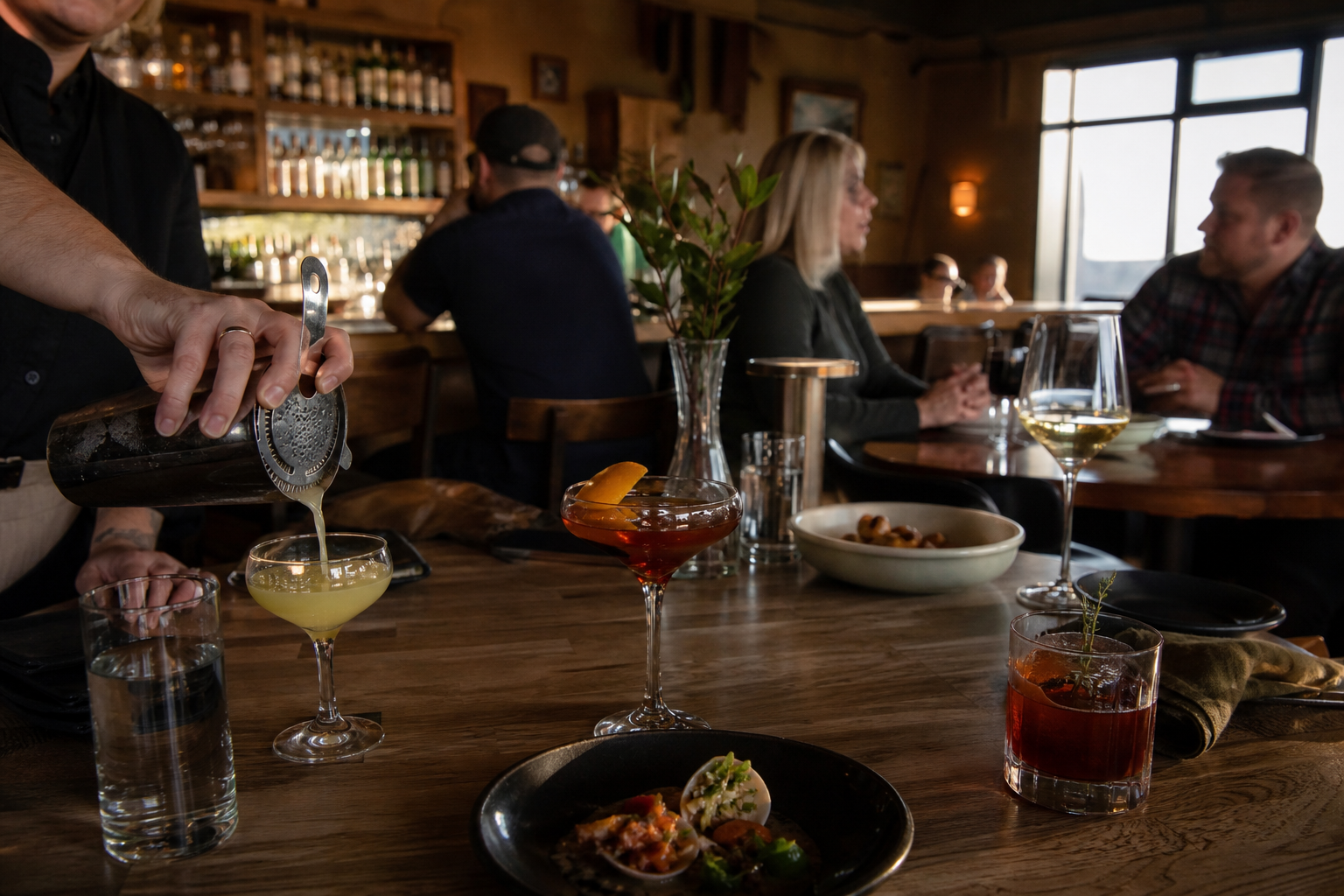
The cocktail program was the area where the first visit suggested the most room for growth. The bar was competent in summer but did not have the same point of view as the kitchen. The autumn visit finds a bar that has caught up. The cocktails are now organized around a set of core spirits that the bar has built relationships with — a Wisconsin rye, a Minneapolis-distilled gin with a sage-forward botanical profile, an aquavit from a Twin Cities producer, and a bourbon from a smaller Kentucky distillery that the bar imports in case quantities — and the drinks built around those spirits are more confident than the spirit-agnostic builds of summer. The sage-gin Negroni variation that has joined the menu in autumn is the strongest cocktail the bar has produced, and the bar staff was willing to describe how the drink had evolved through three iterations before reaching its current form. This is the kind of behind-the-scenes detail that bar staff at less confident programs do not share.
The wine list has compressed slightly and become more focused. The summer list ran to about sixty bottles across a range of regions that did not always cohere; the autumn list is around fifty bottles, with a clearer emphasis on the natural-wine producers in the Upper Midwest and Northern Wisconsin orbit and a smaller selection of European reference points. The by-the-glass program has been particularly tightened, with twelve options that all earn their place rather than fifteen with two or three that felt like obligation. This is the kind of editorial discipline that distinguishes a serious wine program from a wine list.
What Three Loons Confirms
The first visit suggested that Foundry & Field was capable of reaching three loons. The second visit confirms it. Three loons, in the Four Loons rubric, is reserved for restaurants where the food, service, atmosphere, and beverage programs are all operating at a coherent and ambitious level, where the kitchen has a clearly identifiable point of view that is executed consistently, and where the room delivers an experience that justifies the trip across the metro or beyond. Foundry & Field is doing all of these things. The autumn menu is the strongest evidence to date.
What separates this restaurant from the larger conversation about four-loon rooms is, currently, two things. The first is the wine and cocktail programs, which are now operating at a serious level but have not yet reached the precision of the kitchen. The second is the consistency of the service team's depth of knowledge — the section captains know the menu well, but the support staff at the lower tiers has not yet absorbed the same level of detail, and the difference is occasionally visible in the answers to specific questions about sourcing. Neither of these is a fatal limitation. Both are the kinds of things that a restaurant of this caliber, on its current trajectory, is likely to address within another two seasons of operation. The three-loon rating is confident. The trajectory remains upward. Fictional re-review for illustration.