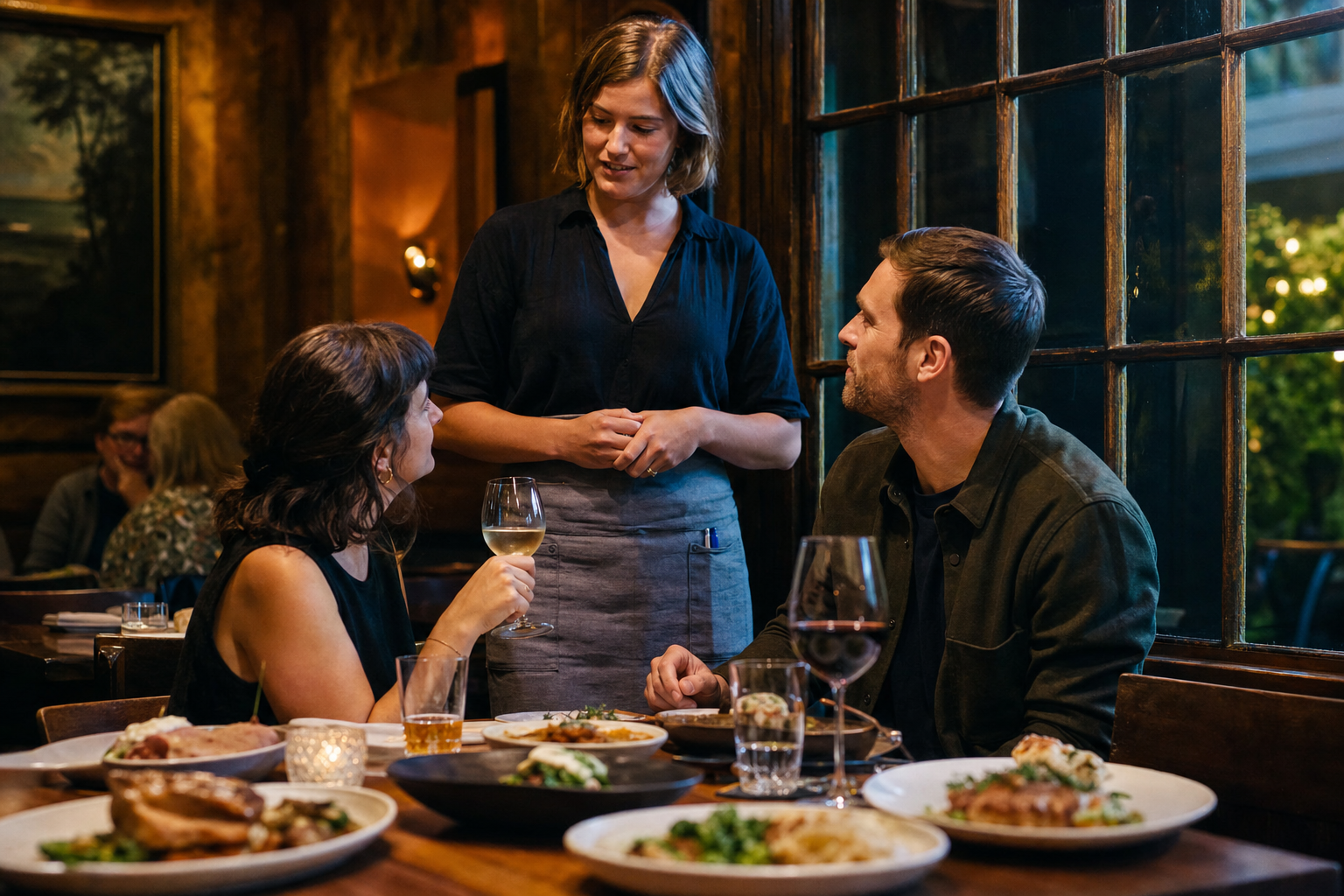
Glenwood is a small city in west-central Minnesota, about a hundred and forty miles northwest of the Twin Cities, sitting at the eastern end of Lake Minnewaska. The lake is the seventh-largest in the state and produces a particular quality of evening light when the western sky is clear — a long, low gold that arrives around eight in the summer and pulls across the water for the better part of an hour before settling into dusk. The Glenwood Supper Club, which has been operating in its current building on the south shore of the lake since 1962, was built specifically to position its dining room to receive that light, and that decision is the structural fact that has kept the supper club operating continuously for sixty years through several generations of owners and several waves of restaurant-industry change.
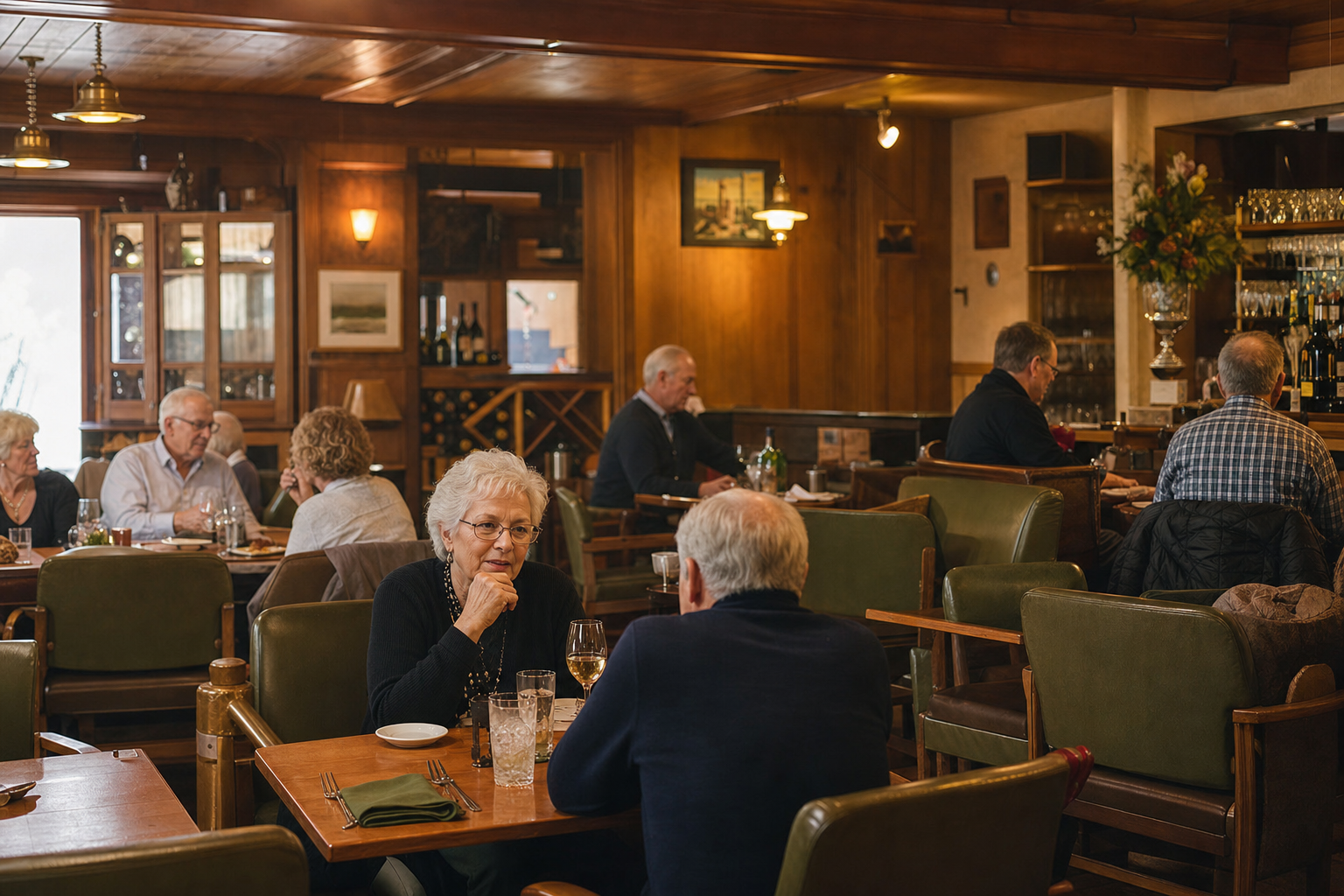
The supper club form is a Minnesota inheritance that has resisted nearly every attempt at modernization the broader restaurant industry has tried to apply to it. The form is specific: a relish tray that arrives before the menu is read, a brandy old fashioned that is the only correct cocktail to order, a salad with a single bottled dressing option, a meat-and-potato entrée served with a starch and a vegetable, a dessert that is usually some version of ice cream or sherbet. The menu does not change. The kitchen does not pursue novelty. The room is updated occasionally to address a structural failure of the building but is otherwise preserved in roughly the configuration it had when the form crystallized in the postwar decades. The supper club is a cultural practice that has accidentally also become a restaurant category, and the Glenwood Supper Club is one of the more uncompromised examples of the form still in operation.
The Relish Tray and the Form
The relish tray arrives within ninety seconds of the guests being seated, before water has been poured, before the cocktail order has been taken, before the menu has been opened. The tray includes carrot sticks, celery sticks, radishes, two kinds of pickle, three kinds of olive, a small ramekin of pickled herring, a small ramekin of cottage cheese, and a small ramekin of a cheese spread that is made in-house from cream cheese, sharp cheddar, and a small amount of beer. The tray is served on a divided ceramic dish that has been in service at the supper club since at least the 1980s; the dish has small chips at the edges that the staff has not bothered to address because the dish is the correct dish. A new dish would be wrong. The tray's contents have not changed in decades.
The menu is a single laminated card with the original 1990s layout largely preserved. The font is a serif typeface that no current restaurant would choose. The descriptions are brief and unironic. The kitchen offers a prime rib in several portion sizes, a walleye preparation, a chicken preparation, a pork chop, a ribeye, a fillet, and the Friday fish fry. The Friday fish fry is the reason to time the visit to a Friday evening. The fish is a battered cod, deep-fried to order, served with hand-cut fries, a tartar sauce that is made in-house, a small portion of coleslaw, and a slice of rye bread. The portion is large enough that no second course is required. The price is twenty-three dollars on Friday and the dining room is full from five until nine.
The prime rib is the menu's second-most-important item and the test of whether a supper club is taking its own form seriously. The Glenwood Supper Club roasts a whole prime rib daily, holds it in a warming station that is calibrated to maintain the interior temperature without continuing to cook the meat, and slices to order in portion sizes from eight to sixteen ounces. The meat arrives at the table with an au jus that is built from the roasting pan drippings and a portion of beef stock, a horseradish cream that is made fresh daily, a baked potato with the standard set of accompaniments, and a green vegetable that rotates seasonally. The plate is heavy. The meat is properly cooked. The au jus is the correct consistency. The horseradish has enough bite to clear the sinuses without overpowering the meat. This is the prime rib as it has been served at supper clubs for sixty years and the Glenwood version is among the better-executed examples.
The Brandy Old Fashioned and the Bar
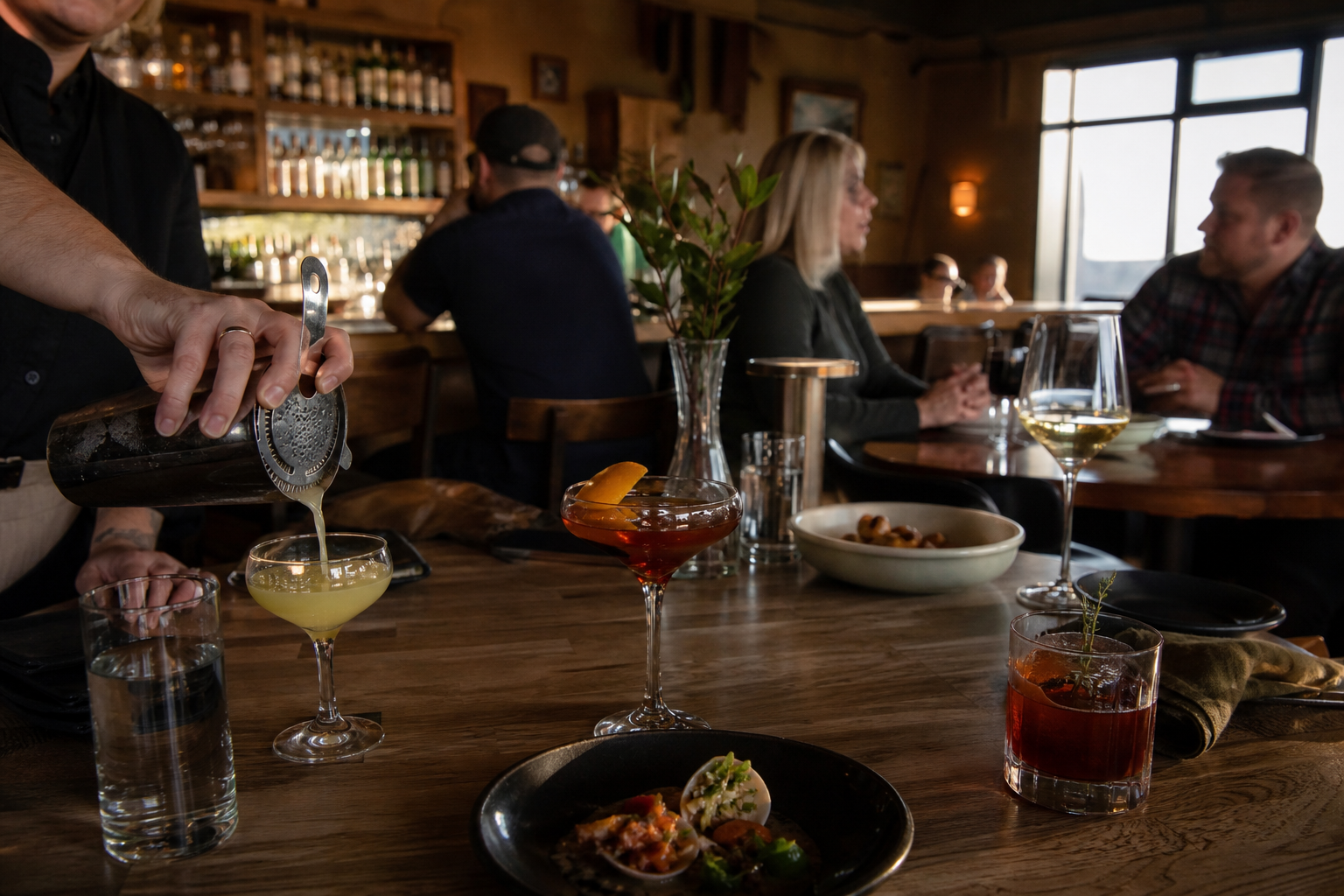
The brandy old fashioned is the supper club's structural cocktail and the only correct drink to order at the bar before being seated. The Glenwood version is made with Korbel brandy — the standard for the form, not a more interesting brandy that would be wrong for the context — and a sugar cube muddled with two dashes of Angostura bitters and a splash of seven-up. The garnish is a brandied cherry and an orange slice. The drink is served in a rocks glass over ice. This is the recipe that has been used at the supper club since the 1970s and the recipe is not subject to revision. A guest who orders an old fashioned without specifying brandy will receive a brandy old fashioned; a guest who specifies whiskey will receive a slightly puzzled look from the bartender before being given the whiskey old fashioned that is also on the menu but is not the default. The default is brandy. The default is correct.
The wine list is short, conventional, and unironic. A house red, a house white, a few additional bottles, and a small selection of after-dinner spirits. The list is not the reason to come to the supper club. The brandy old fashioned is the only drink that matters and the kitchen knows it. The cocktail score in the rubric reflects the deliberate narrowness of the bar's ambitions, which is the correct rubric treatment for a form that is not pretending to be a cocktail bar.
The Lake and the Form
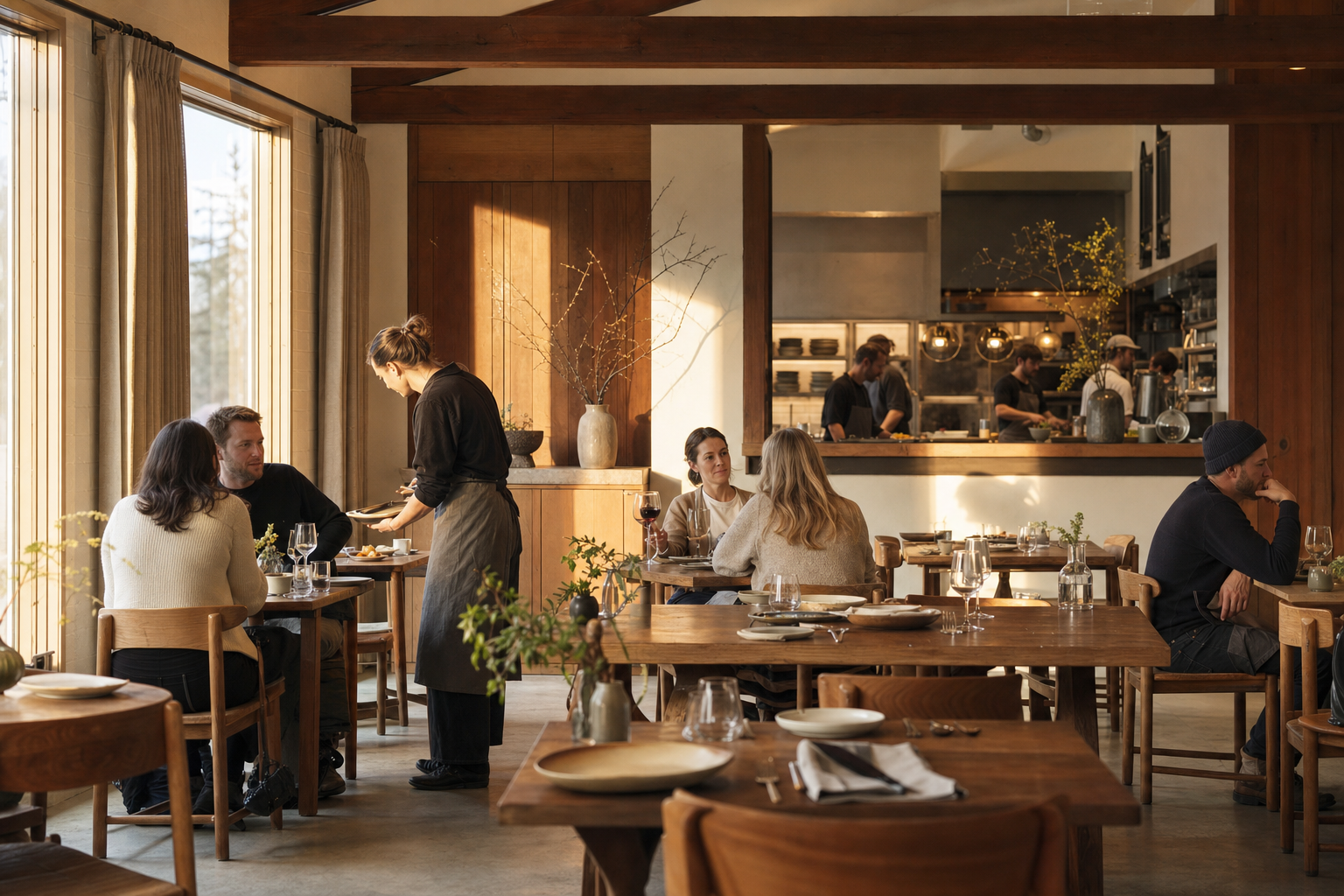
The dining room overlooks Lake Minnewaska through a wall of windows that runs the length of the west side of the building. On a clear August evening the light on the lake is the kind of free scenery that no restaurant can take credit for and that nevertheless becomes part of the meal. The supper club has not added any landscaping that would compete with the view, has not built a deck that would interrupt the sightline, and has not put a television in the dining room. The decision to leave the view alone is the most important architectural decision the building has made, and it has been re-made by every subsequent owner who has resisted the temptation to add features that would diminish it.
The atmosphere score in the rubric reaches near the top of the scale because the room is doing exactly what a supper club dining room should do: providing a sightline to the lake, holding the temperature at a comfortable level, dampening the sound enough to let conversations carry without crossing between tables, and lighting the room at a level that lets guests read the menu without anyone feeling exposed. The Minnesota Character score reaches the top of the scale because the supper club form is specifically Minnesotan, and the Glenwood Supper Club is one of the more authentic surviving examples of it.
The originality score is low. This is correct. The supper club is not original by design — its value comes from continuity rather than innovation, and the rubric should not reward the form for pursuing originality because pursuing originality would damage the form. The cocktail score is constrained by the form's deliberate narrowness, and that constraint prevents the supper club from clearing the floor required for a Tier 2 loon designation but does clear the lower floor for Tier 1. The rating, in the Four Loons rubric, is one loon awarded with the recognition that the form is being executed correctly rather than excellently. A second loon would require ambitions that the form is correctly choosing not to pursue. The first loon is honest. The drive is worth it on a Friday. The light on the lake at golden hour is the bonus. Fictional for illustration.