Wood-fire cooking is in the middle of a long American moment, and most of the restaurants that have arrived to the form in the past five years have treated the fire as an aesthetic choice rather than an organizational principle. The hearth becomes a focal point in the room. The menu adds a smoke note to several preparations. The kitchen does not actually reorganize itself around the heat source, which means the fire is decoration rather than instruction. Iron & Ember, which opened on a Hennepin Avenue corner in Uptown that has been through three previous restaurants in a decade, is the first wood-fire room in Minneapolis to read as actually organized around the fire from the first plate forward. The kitchen has clearly thought about what it means to commit to live fire as the primary heat source rather than as a feature.
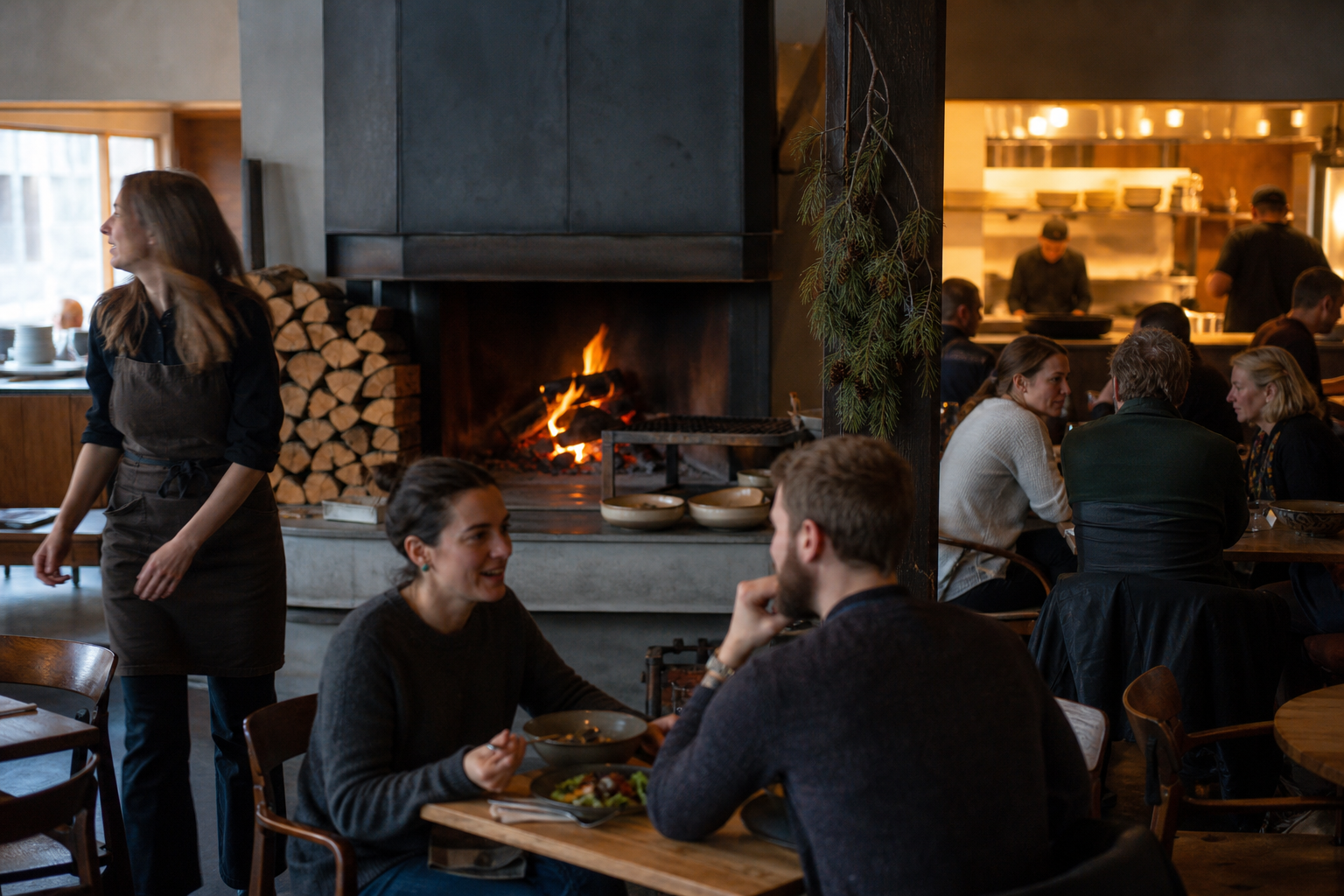
The hearth is visible from most of the dining room, occupying the back wall of the kitchen in a configuration that lets the diners see the cooks working over it. This is not unusual in current wood-fire rooms; what is unusual is the discipline of the fire management. The hearth is broken into three zones — direct flame, indirect heat from glowing coals, and a cooler zone where the ember-roasted vegetables finish — and the cooks move between them with the choreography of people who have been working this fire for long enough to know its specific behavior. There is no one hovering with a thermometer. The doneness on the beef is being read by eye and by the feel of the cut against the cook's finger, which is the right way to read fire-cooked meat and is increasingly rare in a profession that has standardized around sous-vide preliminaries.
The Beef and the Vegetables
The dry-aged beef program is the obvious anchor and the obvious test of whether a wood-fire restaurant is serious. Iron & Ember dry-ages its own beef in a glass-fronted cabinet visible from the dining room, with cuts at varying stages of age clearly labeled. The bone-in ribeye, aged thirty-five days, was the strongest item from the larger-plate section of the menu. The crust was correct — a hard sear from the direct-flame zone, transferred to the indirect zone to bring the interior to medium-rare without continuing to harden the exterior — and the interior had the slightly nutty, slightly funky character that a properly dry-aged steak carries. The accompanying bone marrow was served on a piece of grilled bread with a small handful of pickled shallots. The plate did not need anything else, which is a more difficult restraint than it sounds at a price point where many kitchens add three or four supporting elements.
The ember-roasted vegetables are where the kitchen's thinking is most visible. A whole roasted celeriac, buried in the ember zone for ninety minutes, arrived at the table split open with a brown-butter and chestnut puddle in the cavity and a small portion of sherry-and-honey jus around it. This is the kind of plate that requires the kitchen to have committed an entire piece of equipment for ninety minutes to a single guest's order, and Iron & Ember has clearly built the kitchen and the service rhythm around being willing to do that. The carrots, charred whole in the direct-flame zone and finished with a date-and-cumin paste and a yogurt dollop, were the strongest vegetable plate. The char carried the sugars in the carrots forward in a way that no oven preparation can produce. The plate ate as a complete argument for what fire does to vegetables that the oven does not.
The lamb chops, marinated in a yogurt-and-spice blend overnight before being cooked over direct flame, were the most surprising plate of the visit. Lamb is a difficult protein to handle over live fire because the fat renders quickly and creates flare-ups that can produce uneven cooking. The kitchen handled this by working the chops at a slightly higher distance from the coals than the beef and turning them more frequently, which produced an even surface char and a properly cooked interior without the burnt-edge problem that afflicts most live-fire lamb. The accompaniment — a fattoush-style salad with grilled pita and a sumac dressing — was the strongest supporting plate the kitchen produced.
The Room and the Limitations
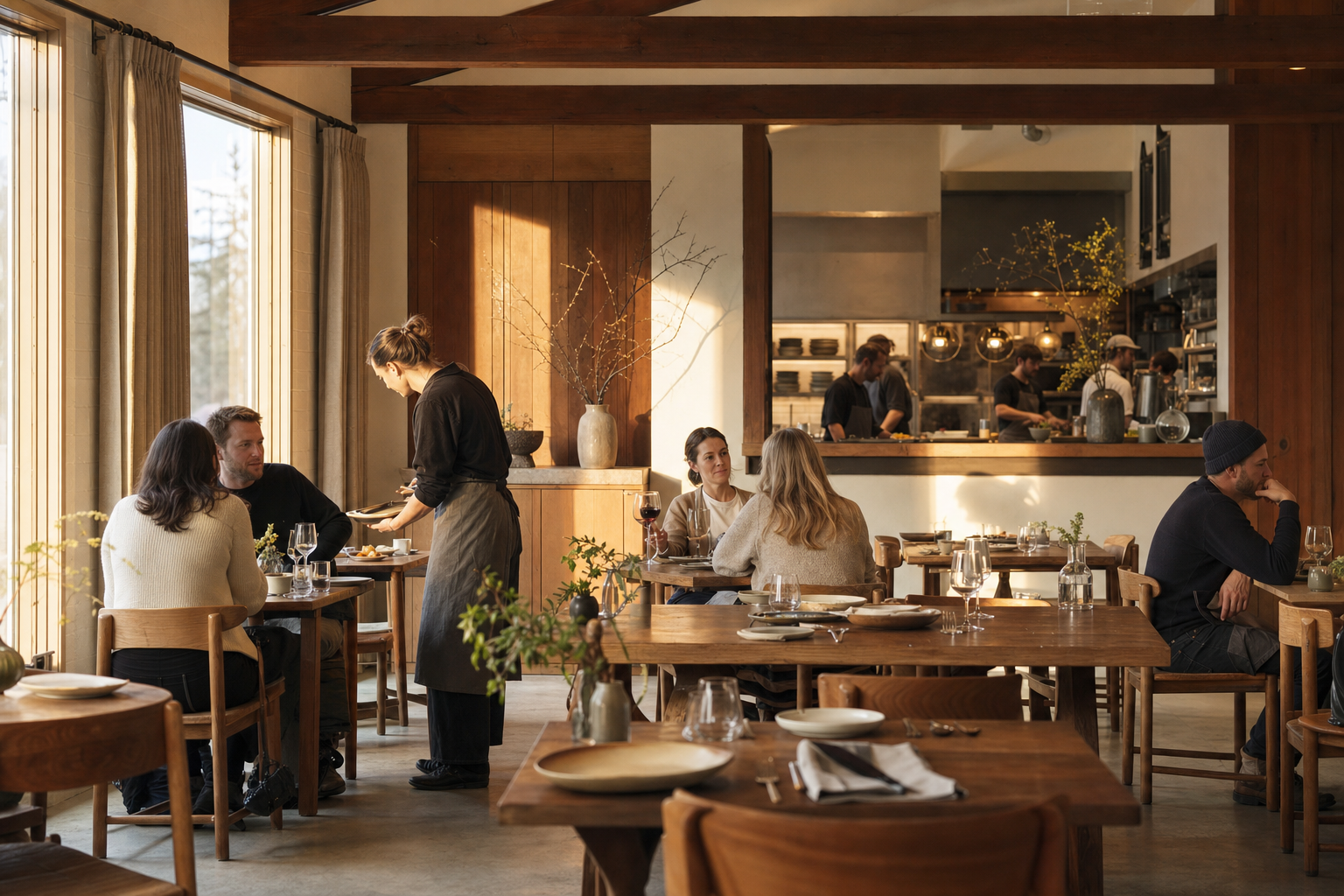
The room is large, sound-treated only adequately, and runs warm because of the proximity of the fire to the dining area. On a busy Saturday evening the sound level reached the point where conversation across a four-top required raised voices. The temperature in the section of the room nearest the kitchen was uncomfortably warm by the end of the meal. Both of these are problems that the room's architecture makes difficult to fully solve, but they are real limitations and a guest planning the visit should consider asking for a table farther from the kitchen if available.
The cocktail program is competent but does not match the kitchen's ambition. The wine list is short and leans on producers that work well with the fire-cooked menu — bigger reds, some sherry, a small Riesling section — but does not have the depth that a kitchen of this caliber will eventually require. The dessert program is the weakest link in the menu, with two of the three offerings on the visit reading as obligations rather than considered conclusions to the meal. The grilled stone fruit with mascarpone was the best of them and the only one that felt connected to the kitchen's central argument.
The service is good without being polished. The section captain was knowledgeable about the beef program and the fire management and could answer specific questions about sourcing and aging without hesitation. The support staff was less informed and occasionally misdescribed a plate when delivering it. The pacing of the meal was correct for the kitchen — the larger plates from the fire genuinely need the time between courses that the service was building in — but the wine pours sometimes lagged the food. The check arrived appropriately late.
What the Fire Is Worth
Iron & Ember is doing serious work and the kitchen has clearly thought about what live fire means as an organizing principle rather than a feature. The beef and the ember-roasted vegetables are the strongest evidence of that thinking, and the kitchen's willingness to commit a single hearth zone to a ninety-minute root vegetable order is the kind of operational decision that distinguishes a serious wood-fire program from a decorative one. The limitations — the room's acoustic and thermal problems, the cocktail program's lag behind the kitchen, the dessert program's weakness — are real and visible. They do not erase the kitchen's accomplishment. They do define the rating.
This is a restaurant that earns the trip across the metro for the beef and the vegetables. It is not yet a destination for the full meal in the way that a more developed Uptown room might be. The trajectory is plainly upward, and the kitchen is at the point where the next two seasons will tell whether the supporting programs catch up to the fire. The wood-fire form, when taken seriously, produces dishes that no other heat source can produce. Iron & Ember is taking it seriously. The rating reflects the kitchen's accomplishment and the room's current limitations in proportion. Fictional for illustration.