The first visit to Iron & Ember, in early summer, found a wood-fire kitchen with a clear point of view and a few operational issues that prevented the kitchen from clearing the threshold required for a loon designation. The room ran warm. The cocktail program lagged the kitchen. The dessert program was the weakest part of the menu. The kitchen itself was operating at a serious level — the beef program was strong, the ember-roasted vegetables were the most interesting plates on the menu, the fire management was visibly disciplined — but the supporting programs and the room's structural issues kept the overall experience below the loon threshold. The second visit, in mid-autumn, finds a restaurant that has addressed enough of those issues to clear the threshold. The one-loon rating is earned.
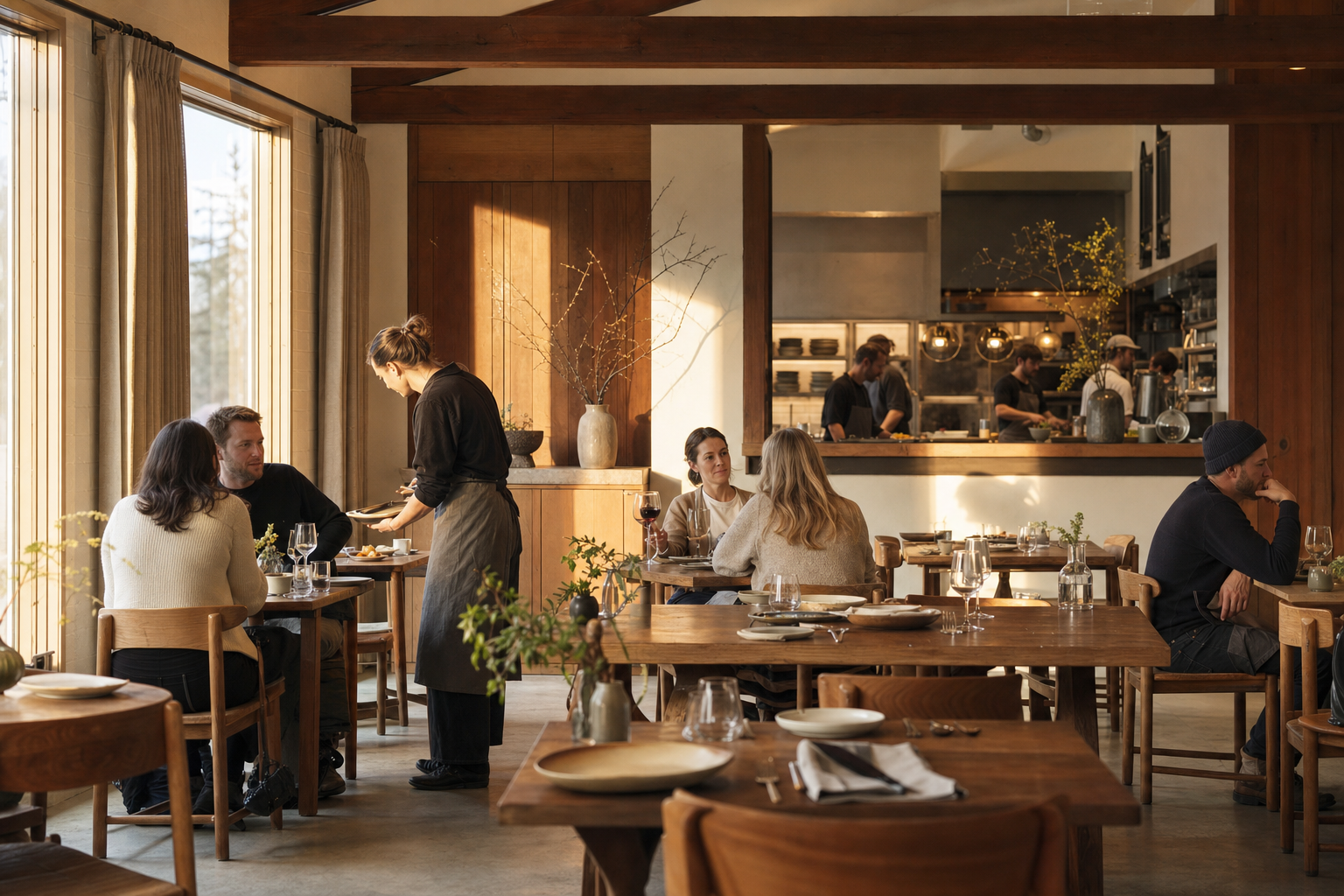
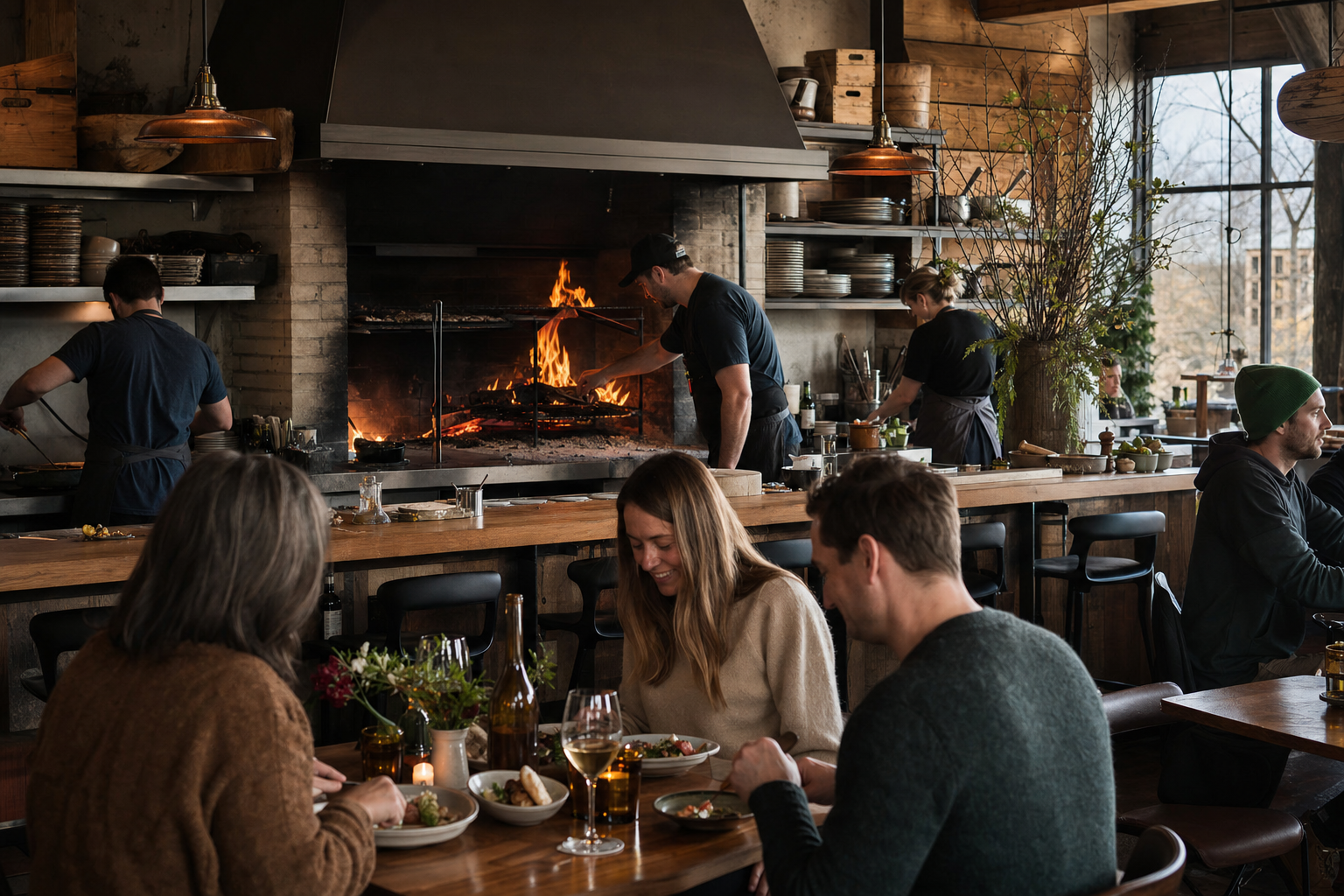
The most visible change is the room. The kitchen has installed a more aggressive ventilation system over the hearth, which has solved the temperature problem that affected the section of the dining room nearest the kitchen. The room is now comfortable throughout, including at the tables that were uncomfortably warm during the summer visit. The acoustic treatment has not been substantially improved — the room is still louder than ideal on busy evenings — but the temperature change is the more important fix and the dining experience is meaningfully better as a result. This is the kind of operational investment that distinguishes a restaurant that takes its room seriously from one that treats the dining experience as a fixed constraint.
The Kitchen at the Second Visit
The wood-fire program has continued to develop. The beef remains the obvious anchor — the dry-aged ribeye on the visit was as good as anything from the first visit and slightly better in the cooking — and the ember-roasted vegetables have expanded into a more developed category on the menu. The autumn version of the celeriac preparation, with a hazelnut crumble and a sherry-honey jus, was the strongest single plate of the meal. The charred carrots have been replaced by a charred winter-squash preparation that uses a kabocha from a Wright County farm and that demonstrates the kitchen's continued willingness to push the fire program into ingredients that less serious wood-fire restaurants would not attempt.
The lamb chops have been removed from the menu for the autumn rotation and replaced with a lamb-shoulder preparation that uses the same Cannon Falls source. The shoulder is cooked over indirect ember heat for several hours, finished over direct flame, and served sliced with a fattoush-style salad and a yogurt sauce. The preparation is less photogenic than the chops but is the kitchen's strongest argument for what extended fire cooking can do when the protein is suited to the technique. The plate is also less expensive than the chops were, which has improved the value proposition for guests who want the lamb experience without the protein-cost premium that the chops carried.
The dessert program, which was the weakest part of the menu on the first visit, has been compressed to two items and substantially improved in execution. The grilled stone fruit preparation that was the strongest dessert on the first visit has been retained in a winter version that uses pears poached in red wine with the same mascarpone preparation. The second dessert is a fire-roasted apple with brown butter and a wild-rice ice cream that the kitchen makes in-house. Both items are now serious enough to justify ordering at the end of the meal, which was not the case in summer.
The Supporting Programs
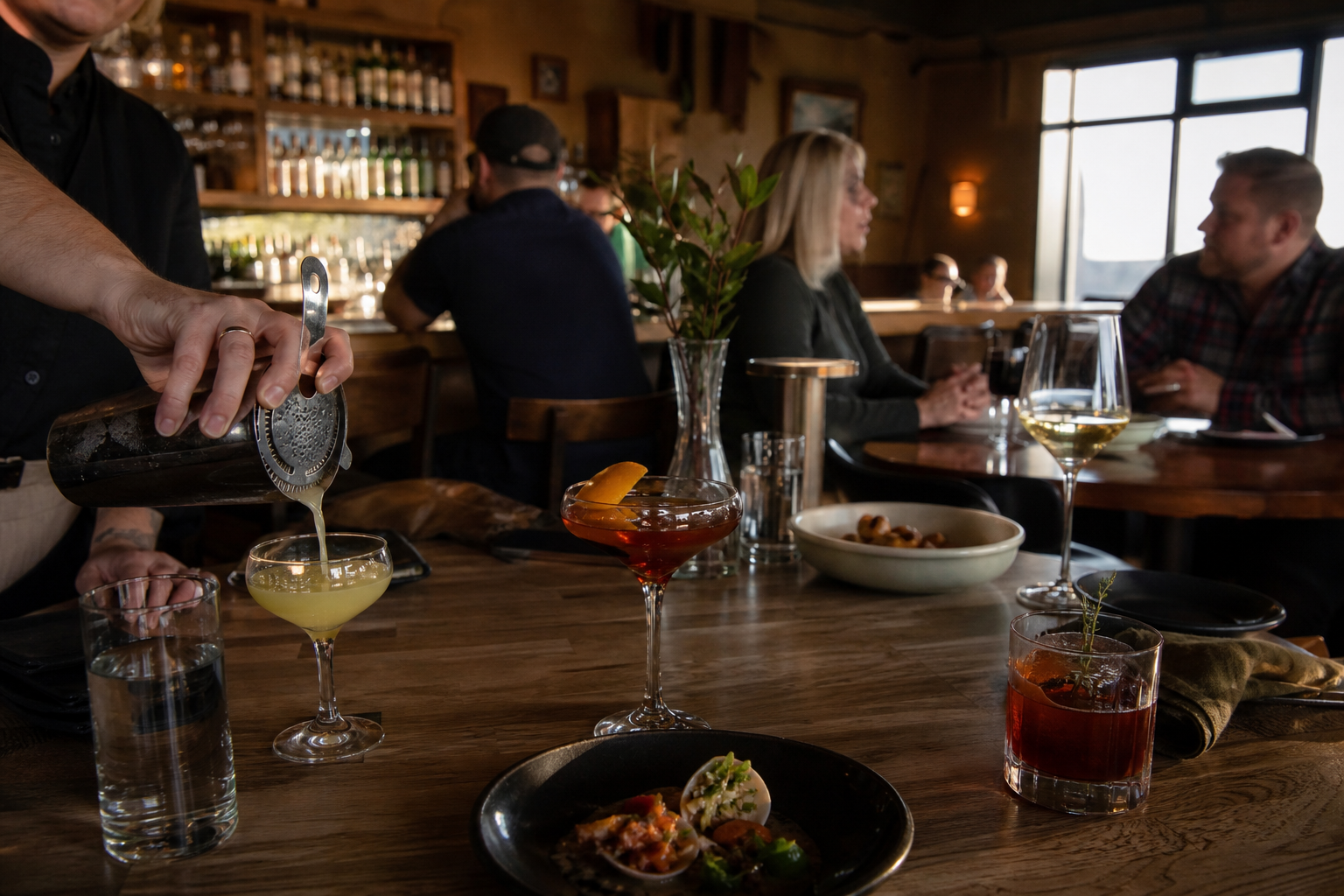
The cocktail program has not substantially improved but has not declined. The bar is still operating at a level that is appropriate for the food without matching the kitchen's ambition, and the cocktail score in the rubric reflects this. The wine list has been refined slightly, with the addition of a few more producers from the Driftless region and the removal of several bottles that did not pair well with the fire-cooked menu. The list is now shorter and more focused, which is the correct direction for a kitchen that has a strong point of view about its food.
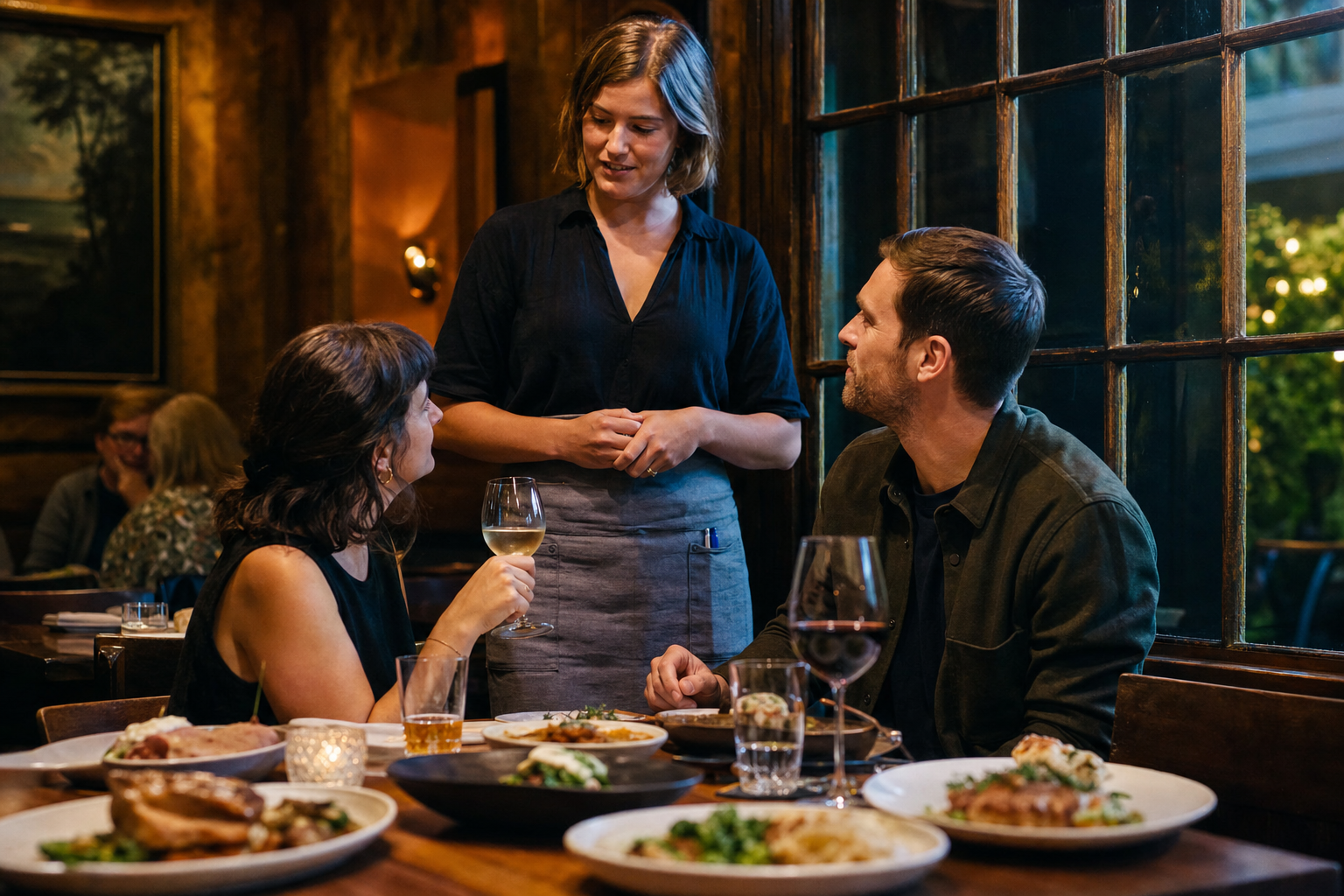
The service has improved meaningfully. The support staff that was less informed on the first visit has had several months to absorb the menu's details, and the answers to specific questions about sourcing and fire management are now consistent across the staff levels. The pacing of the meal remains appropriate for the kitchen's needs — the fire-cooked plates genuinely require the spacing that the service builds in — and the wine pours have caught up to the food, which was an issue on the first visit.
What the First Loon Means at This Level
The Four Loons rubric awards a one-loon designation to restaurants that meet the rubric's minimum thresholds across all dimensions and that are operating at a level that justifies the visit. Iron & Ember now clears those thresholds. The food score remains the strongest dimension, the service has caught up, the atmosphere has been addressed at the room level, and the cocktail and wine programs have stabilized at the level required. The weighted score sits in the Tier 1 range with room to grow.
The path to a second loon is identifiable. The cocktail program needs to develop into something that matches the kitchen's ambition. The dessert program is now serious but could be expanded. The acoustic treatment on the room could still be improved. None of these is a difficult lift for a restaurant that has demonstrated, in two visits over six months, that it can identify and address the limitations of its operations. The trajectory is upward. The first loon is honest. The kitchen has earned the rating and the room is now suited to deliver it. Fictional re-review for illustration.