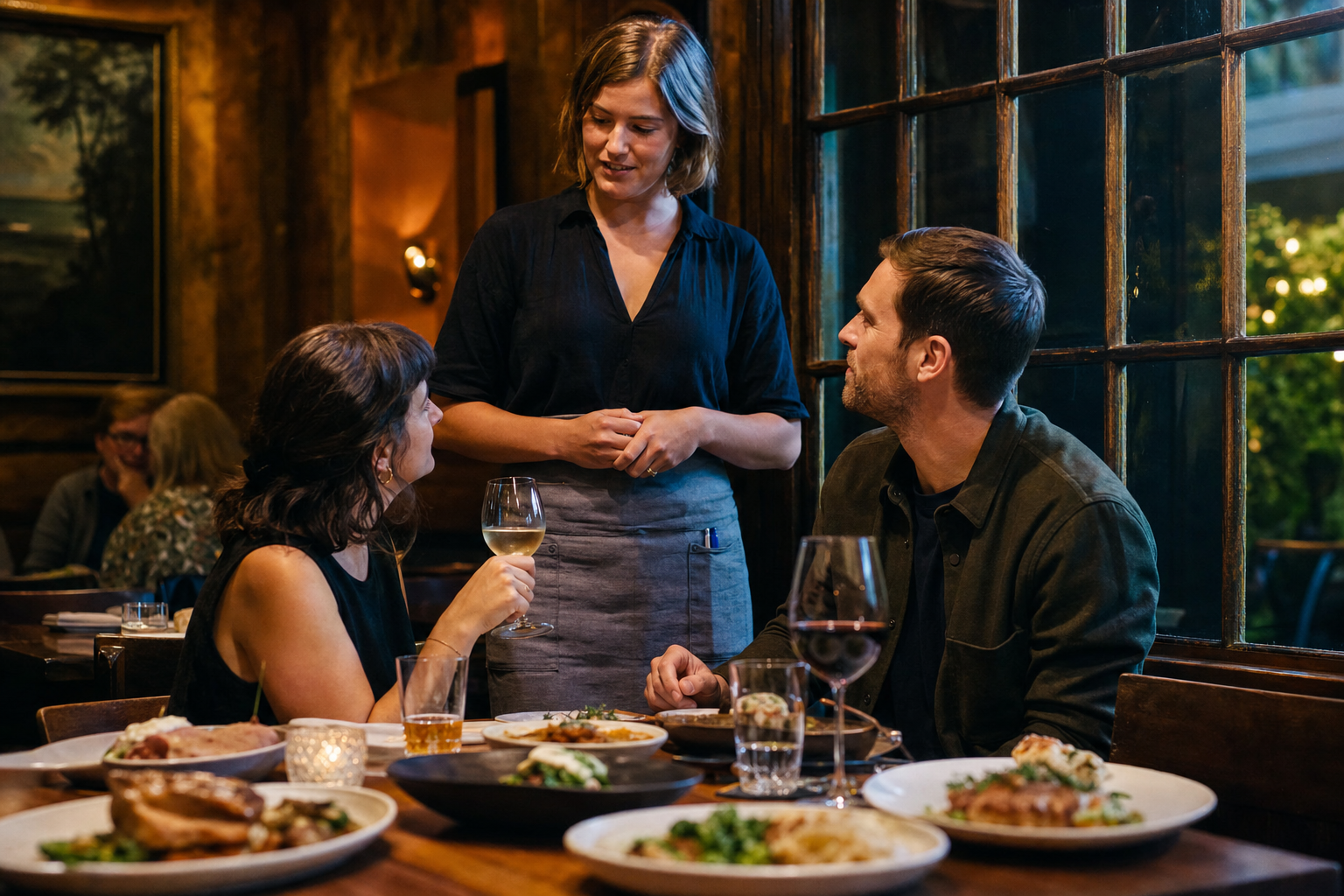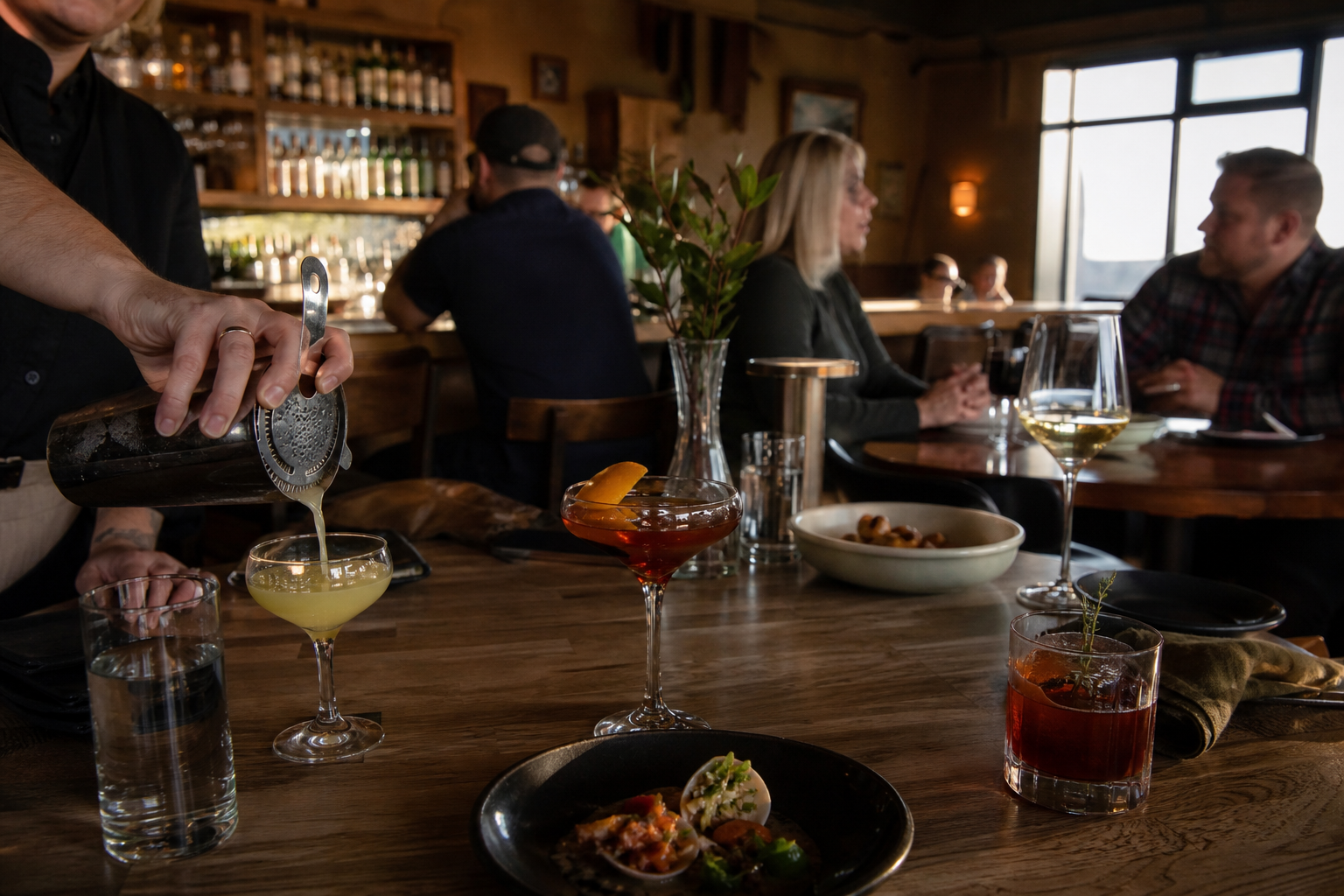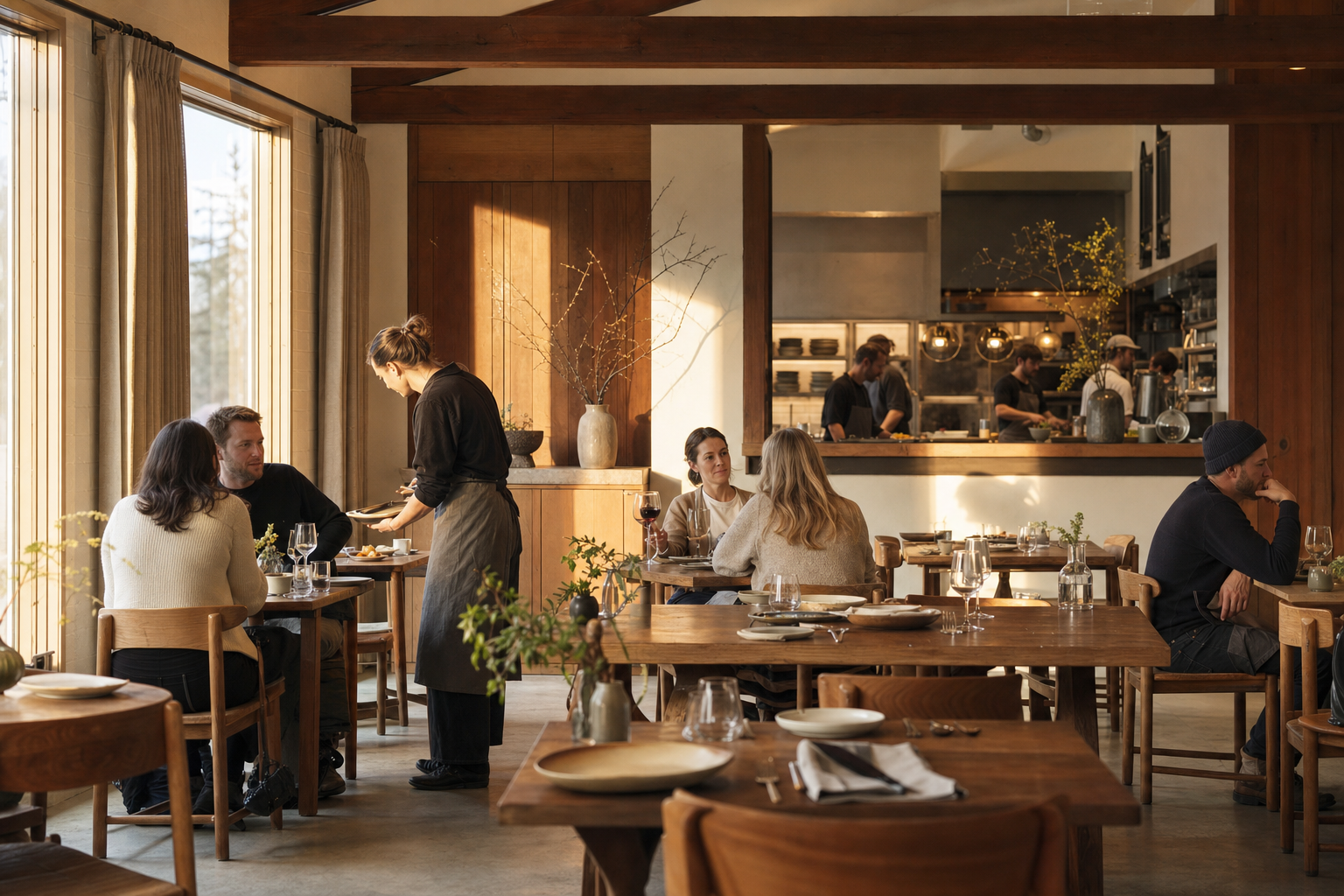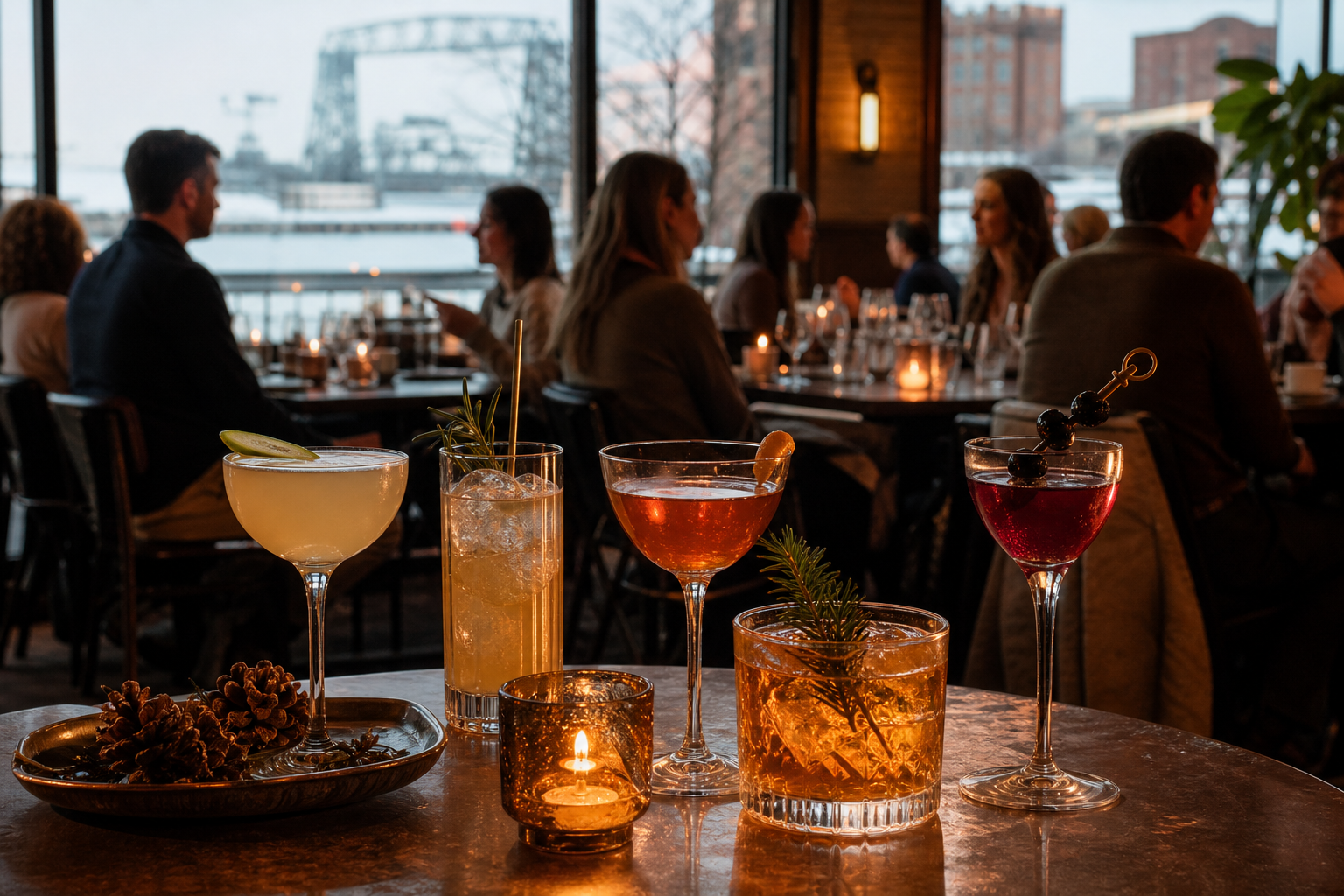
The Lake Effect Cocktail Bar in December is a different proposition than the Lake Effect of summer. The room is darker, the windows are fogged at the bottom from the temperature differential against the harbor air outside, and the patrons are dressed for the walk in from wherever they parked. The bar program has spent a season learning what its winter audience wants, and the December menu is the most assured work the program has produced in the year and a half since opening. This is not a restaurant where the kitchen has caught up to the bar — the food remains the limiting factor, and the rating reflects that — but it is a bar that has put its drinks at the center of its identity and is now executing on that argument with more precision than any other cocktail program in Duluth.
The winter menu shows the bar's editorial discipline at its strongest. The opening menu in spring was eight drinks. The summer menu was twelve. The autumn menu compressed back to nine, and the December menu is back to seven. This pattern — expanding and then compressing in response to what the bar has learned about what people actually order at a cocktail bar in Duluth in late fall — is the sign of a program that is paying attention to its own data rather than expanding indefinitely toward an imaginary ceiling. Each drink that has stayed on the menu has earned its place. Each drink that has been removed has been replaced or absorbed by something on the remaining list rather than left as a gap.
What the Bitter Builds Have Become
The bitter-forward stirred drinks have been the bar's strongest category since opening, and they are now demonstrably better. The Negroni variation that anchored the spring menu was correctly proportioned but slightly under-bittered for the cocktail's own structure; the December version has pushed the bitter side further and added a barrel-aged element that gives the drink an additional layer without disturbing the central balance. The amaro-and-rye drink that has been on the menu since opening is the most layered build the bar produces — three Italian amari, a rye whiskey from a Wisconsin distillery, a single dash of orange bitters, and an orange peel expressed and discarded — and the December version stirred a beat longer than the summer version, which has the right effect on the texture without diluting past the point of structural integrity.
The new winter additions are not novelty drinks. A hot-buttered rum variation built with a long-aged dark rum from a Caribbean producer, brown butter prepared on the bar with attention, and a maple-sugar-and-spice blend that uses a Cambridge-area maple syrup as its base — this is a drink that takes the hot-cocktail category seriously rather than treating it as an afterthought. The presentation is in a small ceramic mug that holds heat better than glass and feels correct in the hand on a December evening. The drink itself avoids the cloying sweetness that ruins most hot-buttered rum preparations because the butter is browned past the point of pure dairy and carries an actual nut-forward character that balances the maple.
The new fortified-wine cocktail — a Cardamaro-and-sherry build with a single dash of saline solution and an orange peel — is the most interesting drink on the menu and the one that signals where the bar is going. Cardamaro is not a difficult ingredient to source but is surprisingly rare to see at the center of a cocktail in this market. The build is structurally a low-ABV drink that drinks like a higher-ABV one because the bitter and the saline tension hold the palate's attention. The decision to put this drink on the December menu rather than waiting for it to be a summer offering is correct. It works in winter precisely because the lower alcohol allows it to be the second or third drink of the evening rather than a session-ender.
The Service Has Settled
The bar staff has been mostly consistent over the year and a half, with one departure and one addition in the kitchen-adjacent role that handles the small-plates pickup. The bar tenders are now operating at the rhythm of a long-established bar rather than a new one. The hand-off between drink construction and service to the guest is faster than it was in spring without feeling rushed. Recommendations are offered in the right register — specific, brief, willing to redirect a guest away from a drink that will not match their stated preferences. The pacing between rounds is calibrated for the room's actual flow rather than the bar's preferred flow, which is a more subtle accomplishment than it sounds.
The small-plates program remains the constraint. The food at Lake Effect is not the reason to come, and the kitchen continues to operate at a level that is below what the bar program deserves. The cheese and charcuterie boards are properly assembled and the smoked-fish dip is genuinely good, but the warm small plates are uneven. The seasonal addition of a hot crab dip in December was the strongest warm-plate Lake Effect has produced, but the supporting items — a roasted vegetable plate, a small portion of meatballs, a flatbread with cured pork — were inconsistent in execution across the visit. The food score has not moved up. It is unlikely to move up substantially until the kitchen receives the investment that would let it match the bar's ambition.
The Honest Rating
This is where the second-visit assessment requires an honest acknowledgment of the rubric. The Four Loons rating system gates the loon awards on minimum scores across all dimensions, and the food score at Lake Effect — 2.5 in this revisit, unchanged from the first visit — falls below the floor required for a one-loon designation. This is not a punishment. It is a recognition that the rubric is designed to identify restaurants that meet a minimum threshold across the full guest experience, and Lake Effect's food program does not currently clear that threshold even though the bar program comfortably would on its own.
The recommendation, in the language the publication uses for sub-loon rooms, is strongly recommended for the bar program. The cocktails are the most precise stirred-drink work in Duluth, the winter menu is the strongest work the bar has yet produced, and the service rhythm has absorbed the cold-weather pace that makes a cocktail bar worth the trip on a December evening. Eat before you go or eat after. The drinks are the reason. Fictional re-review for illustration.