Lake Harriet has not historically been a serious restaurant address. The bandshell anchors a summer Sunday concert tradition that is one of the better unironic Minneapolis institutions; the parkway hosts joggers and stroller traffic in roughly equal density; the band of residential streets immediately around the lake is among the most expensive in the city. None of this has produced a restaurant culture. The neighborhood eats elsewhere — driving north to Linden Hills, east to Lyndale, or south to Lyn-Lake — and the buildings facing the lake have historically been residential or vacant. Lakeview Brasserie, which opened in late spring in a converted single-family house on a corner two blocks back from the water, is the first serious attempt in a long time to put a real restaurant on this side of the lake. The early signs suggest the attempt is justified.
The brasserie form is a defensible choice for the address. Brasserie cooking is by definition a translation problem — the French original was a working-class beer-and-meal hall in Alsace, and the American adaptations have wandered through various registers — and a brasserie in Linden Hills-adjacent Minneapolis has to decide what it is translating to. Lakeview Brasserie has made a clear decision: the form is being adapted to the Upper Midwest pantry, with French technique applied to ingredients that are sourced from within two hundred miles of the dining room. This is not a French restaurant. It is a restaurant that has chosen brasserie discipline as the frame for an Upper Midwest sourcing argument.
The Menu in Practice
The steak frites is the form's structural test, and Lakeview Brasserie's version is the strongest argument on the menu for the kitchen's approach. The beef is a hanger steak from a Wright County producer, butchered in-house and aged briefly in a service cooler that is not visible from the dining room but was described in some detail by the section captain when asked. The cooking is over a flat-top rather than live fire, which is the correct choice for a hanger steak at this scale, and the resting time before plating was correct enough that the steak arrived medium-rare rather than the medium-well that hurried kitchens often produce. The frites were hand-cut, double-fried in a beef tallow rather than a neutral oil, and salted at the correct moment with a flaked sea salt rather than the iodized salt that the casual French restaurants tend to use. The bordelaise sauce was the kind of small touch that distinguishes a serious kitchen from a competent one — built from the steak trimmings and a portion of red wine reduced to a thin glaze, served on the side in a small ramekin rather than poured over the plate. The decision to serve it on the side rather than under the steak preserves the crust on the meat and lets the guest choose the proportion. This is a small detail and it matters.
The charcuterie program is the menu's most ambitious area. Lakeview Brasserie cures its own meats in a facility off-site and brings them in cured and ready to slice; the board on the visit included a duck rillette, a country-style pâté with pistachios and cognac, a saucisson sec made from a Wright County pig, and a coppa cured by a partner producer in Stearns County. The board arrived with the meats at correct temperature — slightly cool but not refrigerator-cold, which is the temperature at which cured fats release their character properly — and with three small mustards, a portion of cornichons, and a baguette baked on-site that morning. The pâté was the strongest item on the board. The duck rillette was correctly textured but slightly under-seasoned, which the kitchen could correct without difficulty.
The fish course was the area where the menu's ambitions exceeded its execution. A trout almondine, made with a Lake Superior trout sourced through the same Knife River supplier that several Twin Cities restaurants use, was correctly cooked but the brown-butter-and-almond sauce had broken slightly by the time the plate arrived at the table. The trout itself was good. The sauce should have been re-emulsified at the pass before plating. This is a small criticism but it is the kind of thing that distinguishes a brasserie at full stride from one that is still working on its service rhythm.
The Room and Its Two Seasons
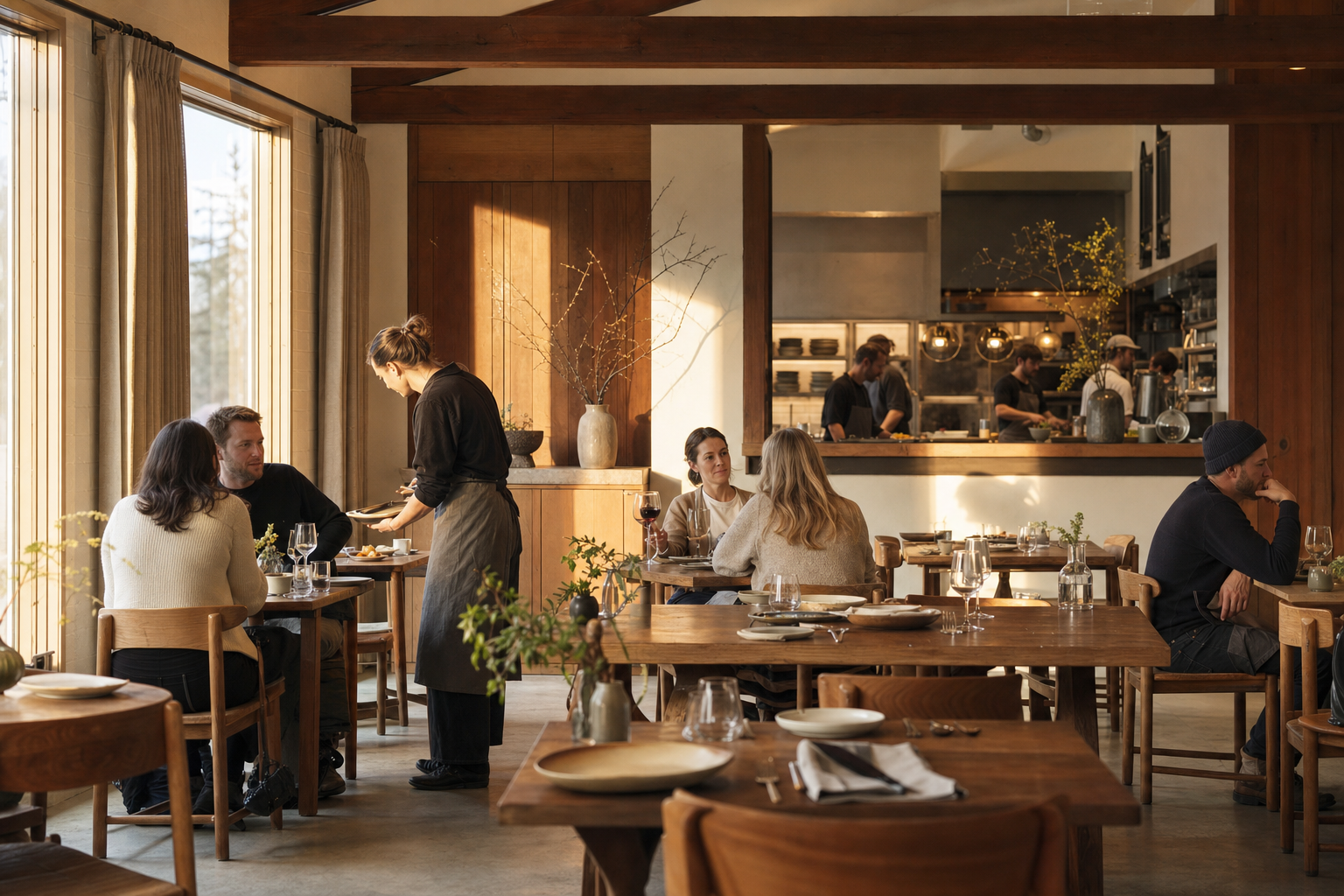
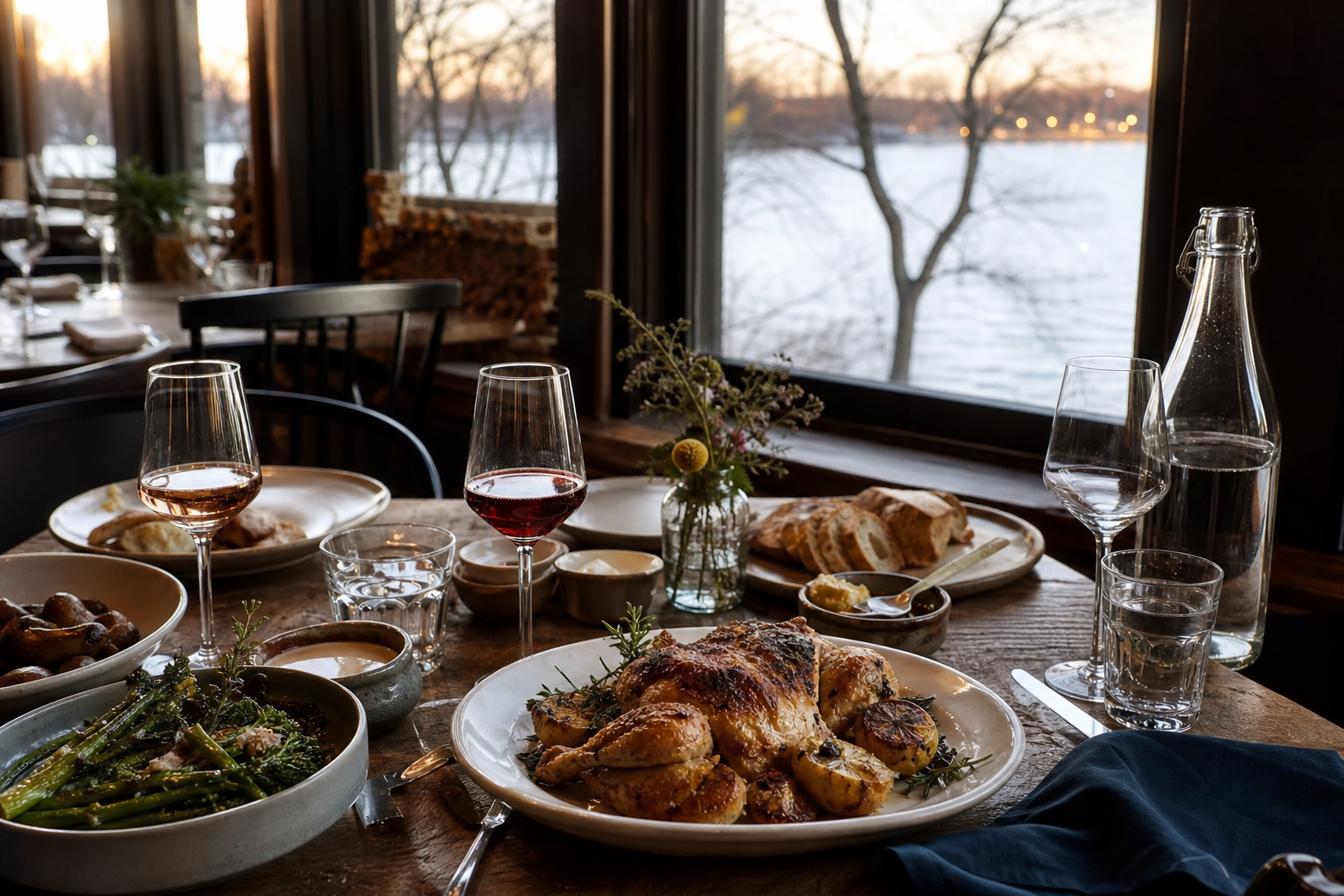
The room itself is divided between an interior dining area and a patio that wraps around two sides of the converted house. The interior is sound-treated competently and lit with a warmer color temperature than the standard restaurant lighting, which makes the room read as smaller and more residential than it actually is. The patio, which seats roughly twenty at full capacity, is the obvious summer draw. The view of Lake Harriet from the patio is not actually direct — there are two blocks of residential streets and a band of trees between the patio and the water — but the lake is visible in flashes and the summer-evening light off the water reaches the patio in a way that justifies the address. On a Friday evening in July the patio is the reason to make the reservation.
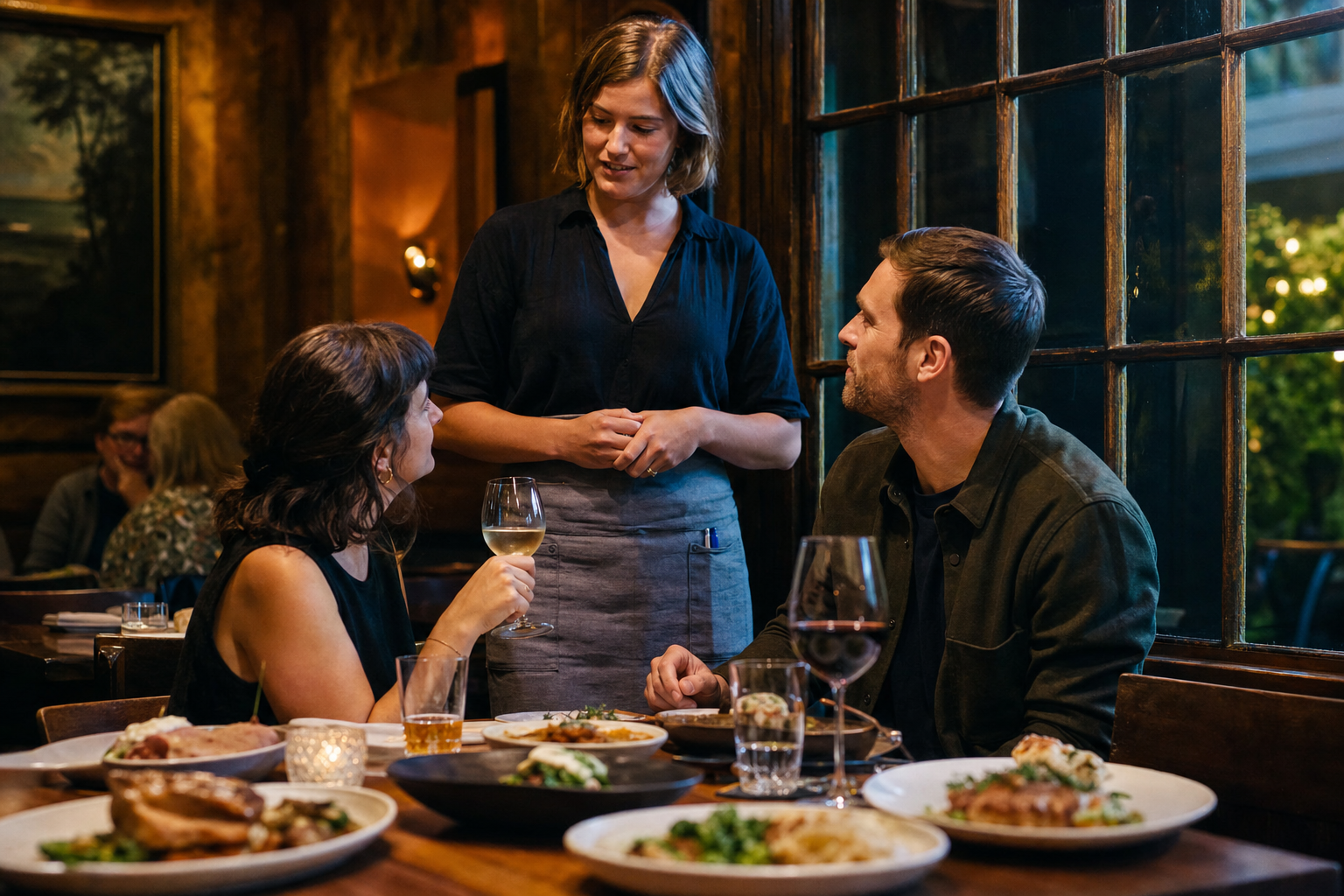
The interior room in October has a different argument to make. The light coming through the front windows is the deep blue of an early-fall evening, the candles on the tables read as the primary light source, and the proximity of the surrounding houses on the street produces a sense of the restaurant being inside a neighborhood rather than at a destination. This is the version of the room that suggests Lakeview Brasserie can sustain a year-round audience rather than depending on a summer-patio season. The autumn visit found the room about two-thirds full at seven on a Thursday, which is the correct occupancy for a brasserie of this size on a midweek night.
What the Address Will Bear
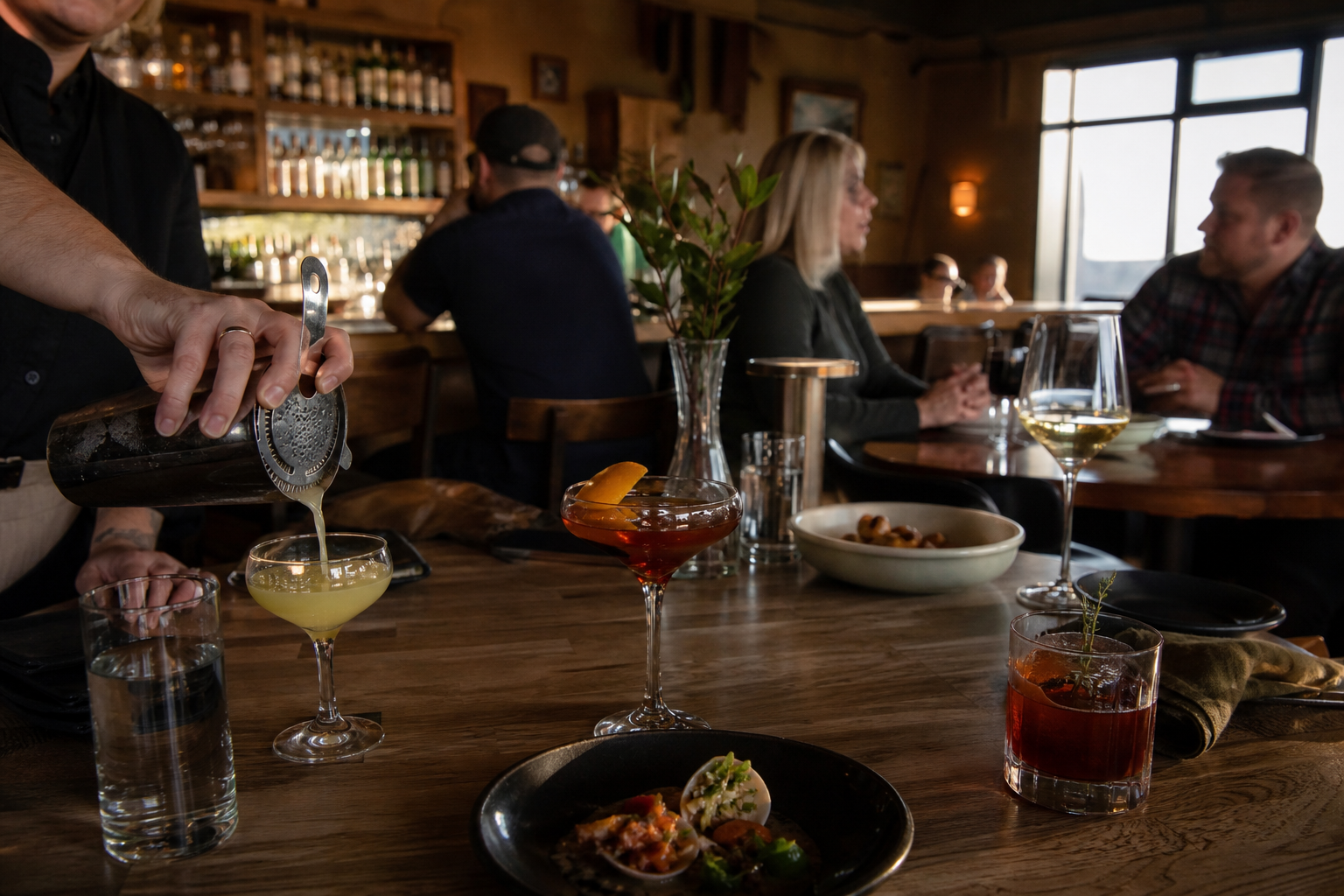
The cocktail program is competent without distinction. The wine list is reasonably chosen, with a French section that is appropriate for the form and an Upper Midwest section that includes producers from the Driftless region across the Wisconsin border. The service is friendly without being polished. The pace of the meal is correct for what brasserie service should be — slower than a Minneapolis chain restaurant, faster than a tasting-menu room — and the section captain on the visit was knowledgeable about the menu and the sourcing without being rehearsed.
Lakeview Brasserie is a one-loon room in the Four Loons rubric, which is the rating that says: this is a place worth going to, the kitchen has a clear and defensible point of view, the service and beverage programs are doing what they need to do without yet matching the ambition of the kitchen, and the room delivers an experience that justifies its address. The address itself is the interesting part. Lake Harriet has needed a serious restaurant for a long time, and the question of whether Lakeview Brasserie can sustain itself through several seasons rather than becoming the latest in a series of attempts at this corner is the question worth watching. The early signs suggest the kitchen has the discipline to last. The patio in summer is the obvious draw. The room in winter is the actual test. Fictional for illustration.