The Midtown Global Market occupies the ground floor of a building that was, for most of the twentieth century, a Sears department store anchoring the Lake Street corridor in South Minneapolis. The building was vacant for nearly a decade after Sears closed in the early 1990s, and the conversion to a multi-vendor market hall in the early 2000s was one of the more interesting adaptive-reuse projects in the city. The market currently houses about forty independent food vendors representing a range of cuisines — Mexican, Somali, Vietnamese, Indian, Ethiopian, Korean — alongside specialty grocers, bakeries, and a few small craft producers. The market is the daily food infrastructure for the surrounding neighborhood, which includes one of the densest concentrations of recent immigrant communities in Minneapolis, and the building's commercial mix reflects the food cultures of those communities directly.
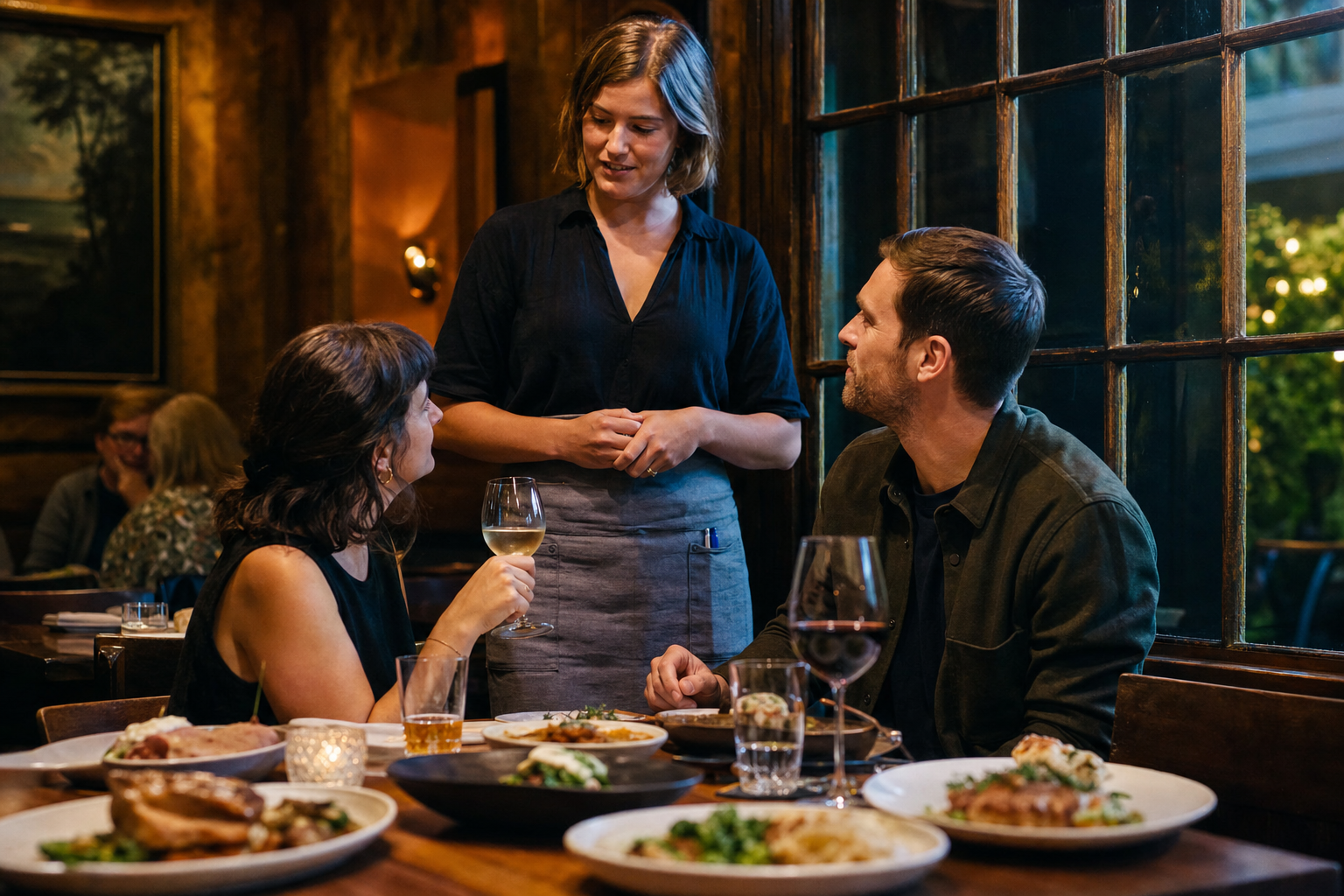
Midtown Market Kitchen is a different kind of operation than the surrounding vendors. The kitchen is a full-service restaurant occupying a permanent space at the eastern end of the market hall, with seating for about forty across the dining room and the small patio that opens onto the market's central concourse. The kitchen has been operating in this space for about three years and is the only full-service restaurant in the building. The structural challenge that the kitchen has chosen to take on is one of the more interesting restaurant problems in the city: how do you build a restaurant that is in conversation with the market without competing with the vendors, that uses the market's ingredients without appropriating any single vendor's cuisine, and that reflects the neighborhood's food culture without trying to flatten that culture into a single coherent menu?
The Sourcing as the Argument
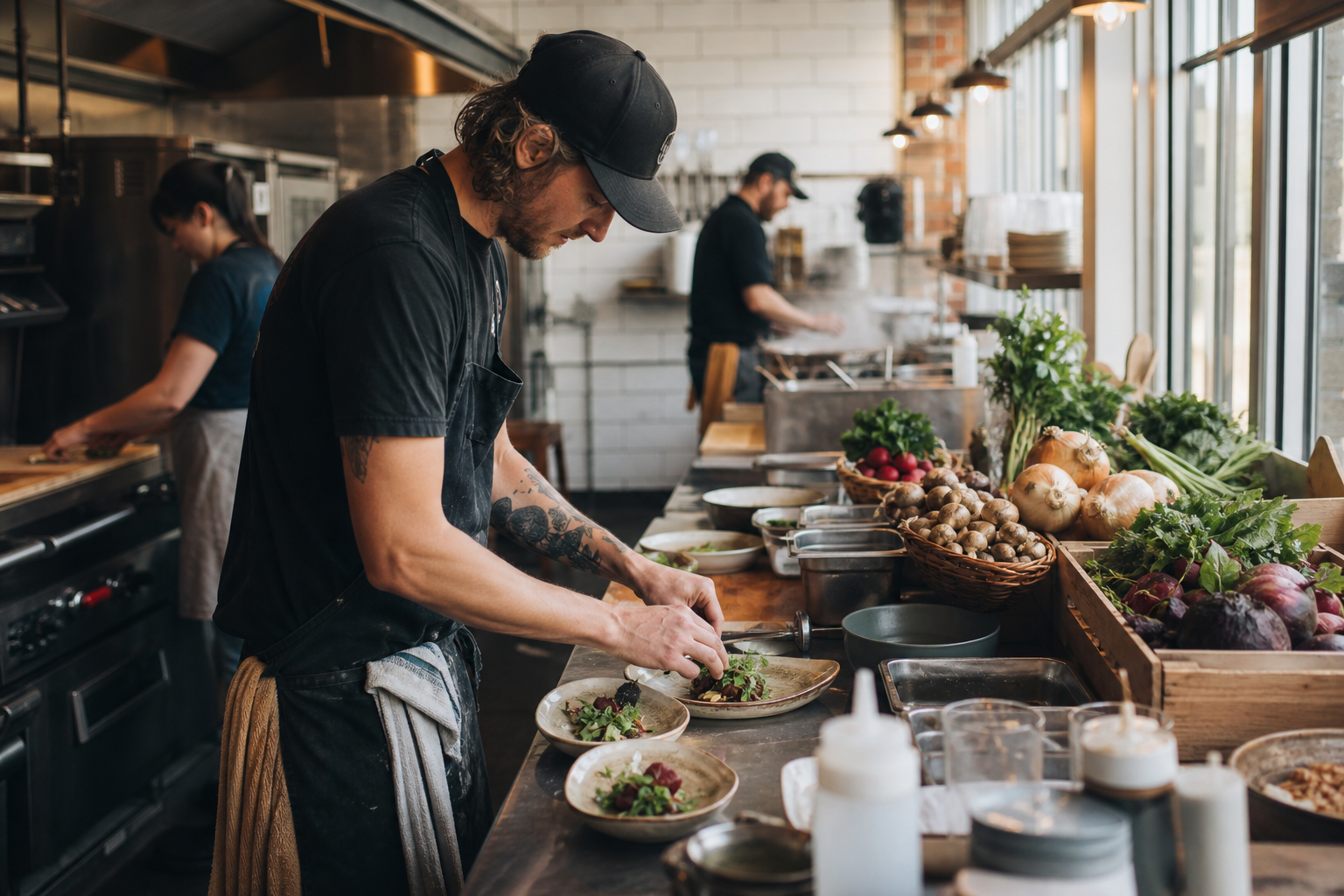
The kitchen has solved this problem by treating the market itself as the pantry and the menu as a record of what is happening in the building on any given day. The menu changes frequently, sometimes daily, in response to what the surrounding vendors are selling and what produce has arrived from the small farms that supply several of the market's stalls. The chef walks the market most mornings before service to see what is available, and the menu is built from those observations rather than from a pre-planned weekly cycle. This is the kind of operational discipline that takes time to develop and that requires a kitchen team willing to operate without the security of a fixed menu.
The Somali-inflected lamb shoulder is the most distinctive plate on the menu and the one that demonstrates how the kitchen handles cultural sourcing without appropriation. The lamb is sourced from a halal butcher two stalls away in the market, the spice blend is provided by a Somali spice merchant at the western end of the building, and the slow-cooking technique is one that the chef has learned over multiple years of working with the Somali home cooks who frequent the market. The dish is not pretending to be authentic Somali cooking; it is plainly the work of a chef who has spent time in the building and has developed enough familiarity with the regional traditions to honor them without claiming them. The plate is served with a wild-rice pilaf that uses Minnesota-sourced wild rice and incorporates spices that bridge the Somali and Upper Midwest traditions in a way that reads as honest rather than fusion-for-its-own-sake.
The tamales that appear as a Thursday side are sourced directly from the Mexican vendor two stalls over rather than made in the restaurant's kitchen, and the menu credits the source. This is the operational decision that distinguishes the restaurant from a kitchen that would attempt to make its own tamales as a way of demonstrating range. The acknowledgment that the Mexican vendor is making better tamales than the restaurant could make, and that featuring those tamales on the menu is more honest than producing inferior versions in the restaurant's own kitchen, is the kind of editorial judgment that demonstrates a kitchen that knows what its scope should be. The tamales sell out before the dinner service ends every Thursday.
The Menu as a Record of the Building
The remaining items on the menu reflect similar sourcing decisions across the market's range. The produce comes from the small farms that supply the produce stalls; the bread comes from the bakery at the western end of the building; the cheeses come from the specialty grocer two stalls north of the restaurant. The kitchen's job is to combine these ingredients into composed plates rather than to source independently. This is a different kind of restaurant operation than most, and it requires the kitchen to relinquish some of the control that a more traditional sourcing program would provide. The trade-off is that the menu has an immediacy that is difficult to produce in a restaurant that orders through traditional wholesale channels — the produce is at maximum freshness because it was harvested the morning of service, the bread was baked that day in the building, and the meats and cheeses are at the same quality level that the surrounding vendors are selling to retail customers.
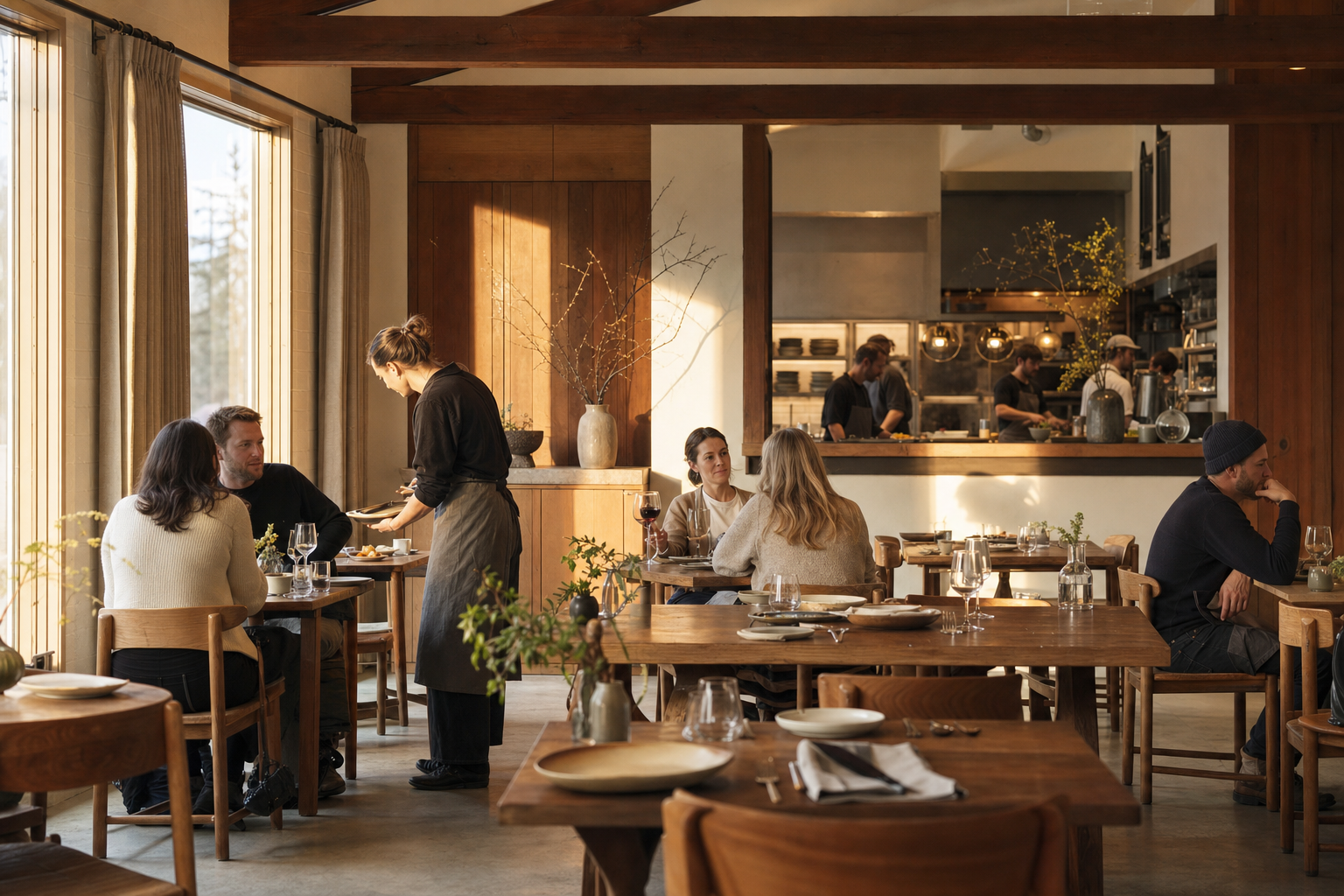
The dining room reflects the market's aesthetic without imitating it. The lighting is bright enough to read by during the day and dimmed appropriately for evening service. The sound level is conversational at most hours, with some additional ambient sound from the surrounding market hall that the restaurant has not tried to dampen because the market sound is part of the room's identity. The seating includes a mix of small tables, a small counter facing the open kitchen, and the patio that opens onto the concourse during warmer months. The patio is the most distinctive seating option — it lets guests eat the restaurant's food while being inside the market hall, which is the structural experience that the restaurant is trying to deliver.
What the Building Earns
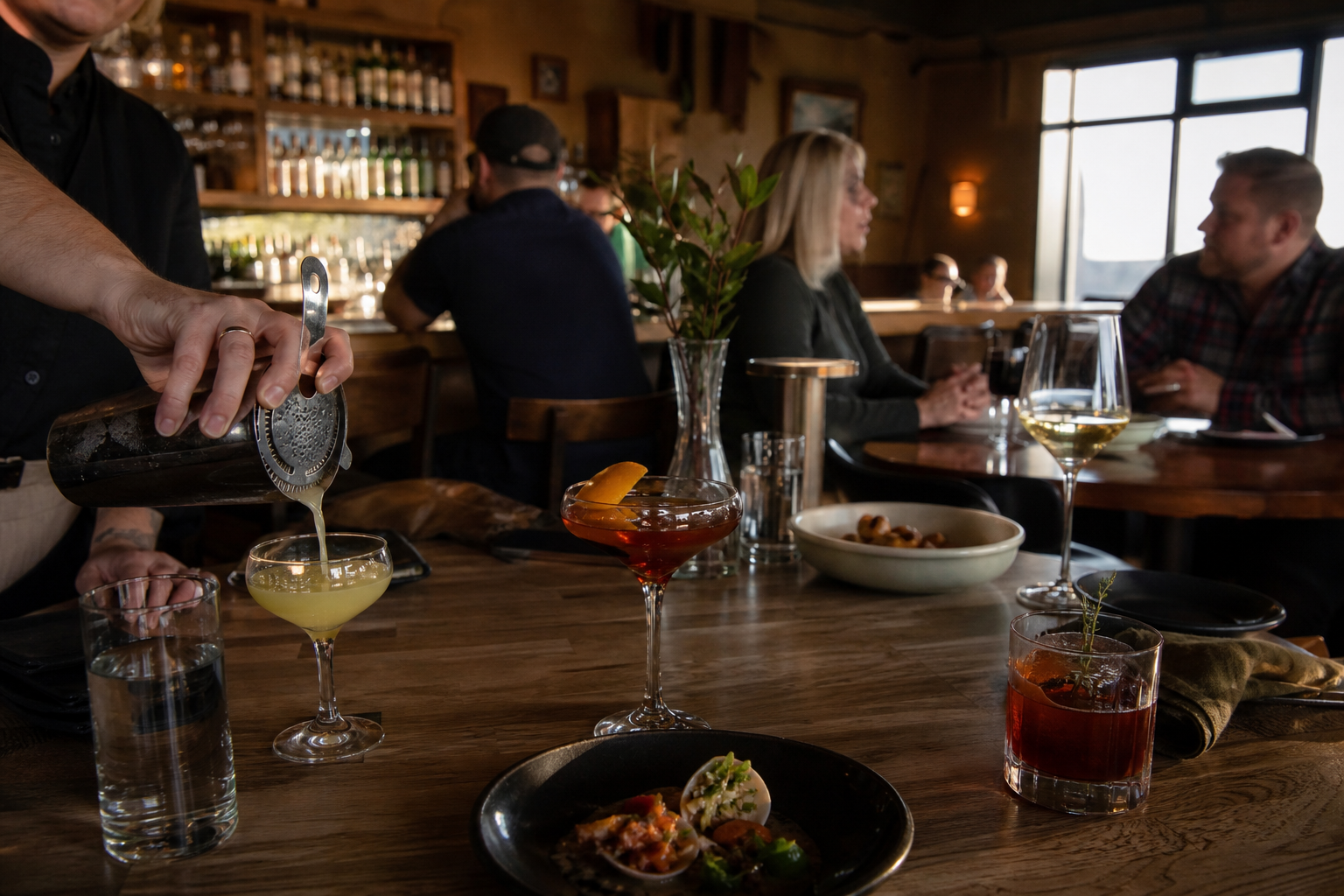
The cocktail program at Midtown Market Kitchen is modest and not the reason to come. The wine list is short. The beer list includes a few local craft options and a couple of relevant imports. The food is the structural argument for the meal, and the food is operating at a serious level. The service is friendly without being polished, and the section captains can describe the day's sourcing in some detail when asked. The pricing is fair for what the plates contain — generally in the eighteen-to-twenty-eight range for entrées, with the small plates in the eight-to-fourteen range — and the value proposition is correct given the quality of the ingredients.
The Four Loons rubric awards Midtown Market Kitchen a Tier 1 loon designation. The food score is high enough to clear the Tier 2 food floor, but the cocktail score — appropriate to the restaurant's deliberate scope — sits at the lower edge of the all-dimensions floor that the rubric requires for Tier 2 and prevents the restaurant from clearing that gate. This is the correct rubric outcome. The restaurant has chosen not to operate a serious cocktail program because the restaurant's argument is about the market and the food, not about the bar, and that scope decision is appropriate to the operation.
The Minnesota Character score is high because the restaurant is genuinely specific to its location in a way that few restaurants in the city are. There is no version of Midtown Market Kitchen that could exist anywhere other than inside the Midtown Global Market. The restaurant's relationship to its building is its identity, and the kitchen has built that identity through operational decisions rather than through marketing language. The loon is earned. The restaurant is in the right place. The market is in the right place. The building is doing the work it was converted to do. Fictional for illustration.