Saint Cloud sits roughly seventy miles northwest of the Twin Cities, on the Mississippi River, with a population of about seventy thousand and a regional service economy that extends across several counties of farm country in every direction. The city has historically not been considered a serious food destination. The restaurant economy has been dominated by chains, regional family-owned operations of varying quality, and a small handful of independent restaurants that have struggled to sustain themselves through the seasonal swings of a city this size. Prairie Root Cellar, which opened a year and a half ago in a converted feed-and-seed store on the south side of the downtown core, is the first restaurant in Saint Cloud in recent memory to make a substantive argument for the city as a food destination in its own right, and the argument is being made through a relationship to the Central Minnesota growing calendar that few restaurants in the metro have attempted at this level of seriousness.
The restaurant's name is operational rather than decorative. The kitchen has a working root cellar in the building's basement, with a temperature and humidity control system that has been engineered to mimic the storage conditions that traditional root cellars provide. The cellar holds produce that has been purchased in volume from Central Minnesota farms during the harvest season and that the kitchen draws on through the winter and into the early spring months when fresh local produce is not available. This is the kind of infrastructure investment that signals a restaurant that intends to operate inside the constraints of its geography rather than around them, and it is the kind of investment that most farm-to-table restaurants do not actually make even when they claim a similar sourcing commitment.
The Calendar in Practice
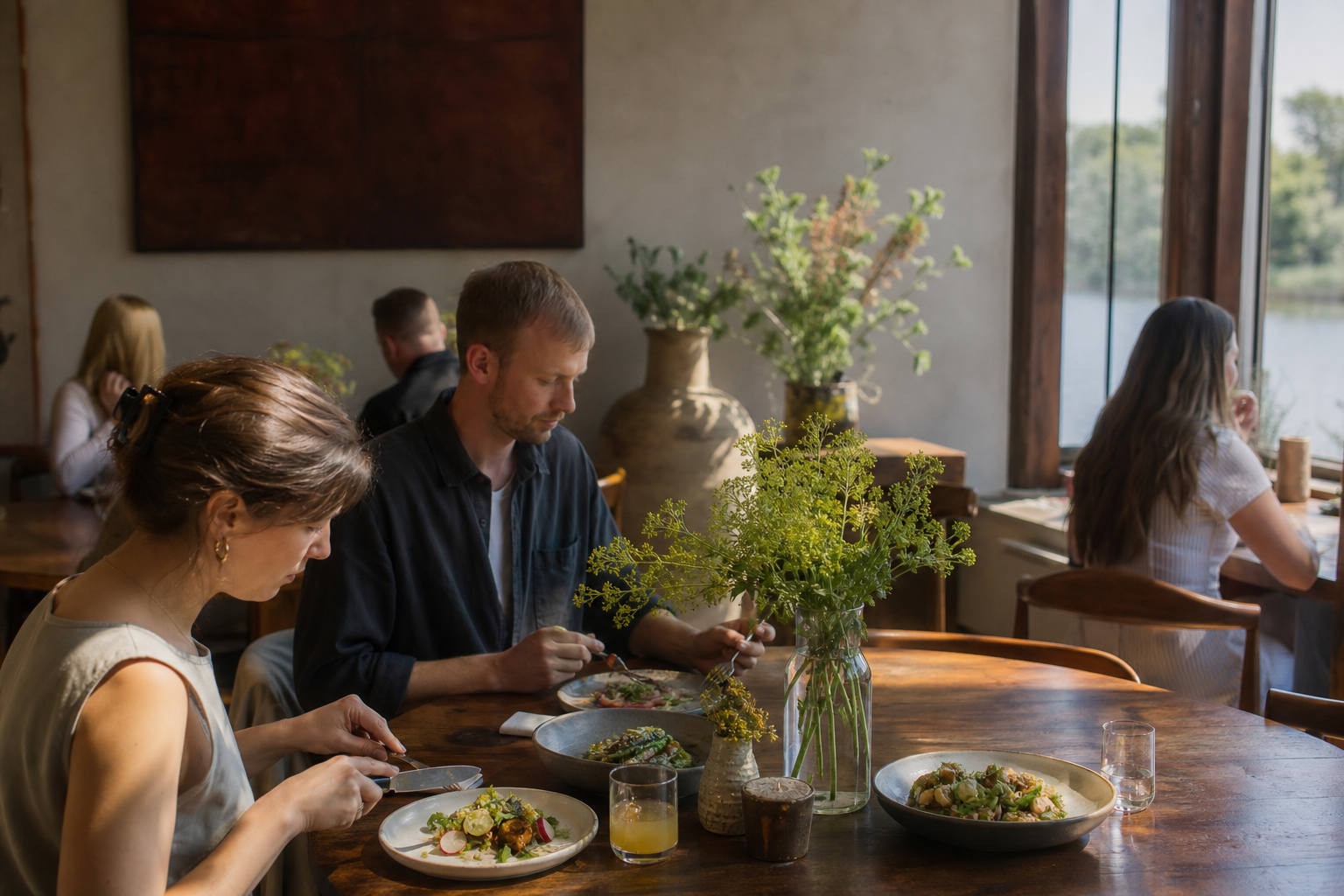
The menu in March reads like a celebration of what cold storage can do when the kitchen takes it seriously. The current March menu — visited on a midweek evening with light snow falling outside — included a celeriac preparation that used the vegetable in three different forms on a single plate (a roasted slab, a confit, and a raw shaved component), a rutabaga-and-cream gratin that was the most surprising plate of the meal, a dried-bean cassoulet using a Wisconsin-grown borlotti bean and a confit of duck leg from a farm thirty miles south of Saint Cloud, and a stored-apple preparation with brown butter and walnut that was the dessert. The plates were structurally complete; none of them read as a restaurant making do with limited ingredients. The constraint was the argument, and the kitchen had treated it as a creative discipline rather than a hardship.
The June menu, which was reviewed in a return visit during the same year, was a different restaurant in some respects. The cold-storage items had largely disappeared. The plate compositions had moved toward snap peas, ramps, early greens, and the first asparagus from the surrounding farms. The duck leg cassoulet had been replaced with a duck breast preparation that paired the meat with the early-season produce in a way that suggested the kitchen had been waiting for the menu to turn rather than treating the cold-weather menu as the primary statement. This is the operational reality of cooking inside a Central Minnesota growing calendar — the kitchen has to be willing to be two different restaurants across a single year, and the staff has to be willing to learn new dishes every few months as the menu transitions through its phases.
The rabbit and the duck are the proteins that anchor the menu year-round, both sourced from Stearns County farms that the restaurant has been buying from since opening. The rabbit appears in different preparations through the seasons — a braise in winter, a confit in shoulder seasons, a rillette as a charcuterie item — and the kitchen handles the animal with the care that a small-scale protein supplier deserves. The duck has similar versatility. Both proteins are local in a way that the restaurant does not need to explain, because the farms are close enough that the staff has actually visited them and the relationships are visible in the way the menu is composed around what the farms are producing rather than what a generic Upper Midwest restaurant menu would feature.
What the Saint Cloud Address Means
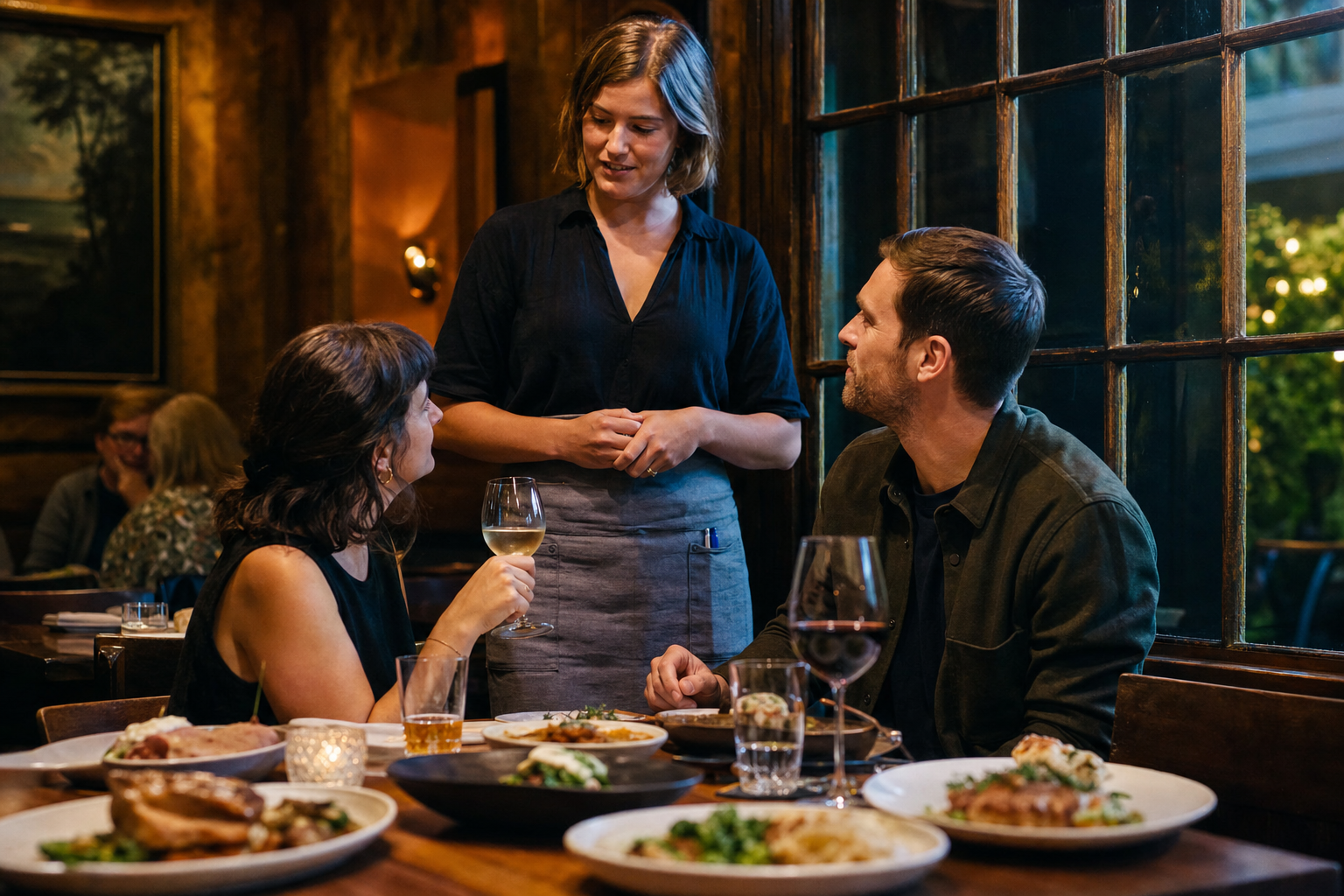
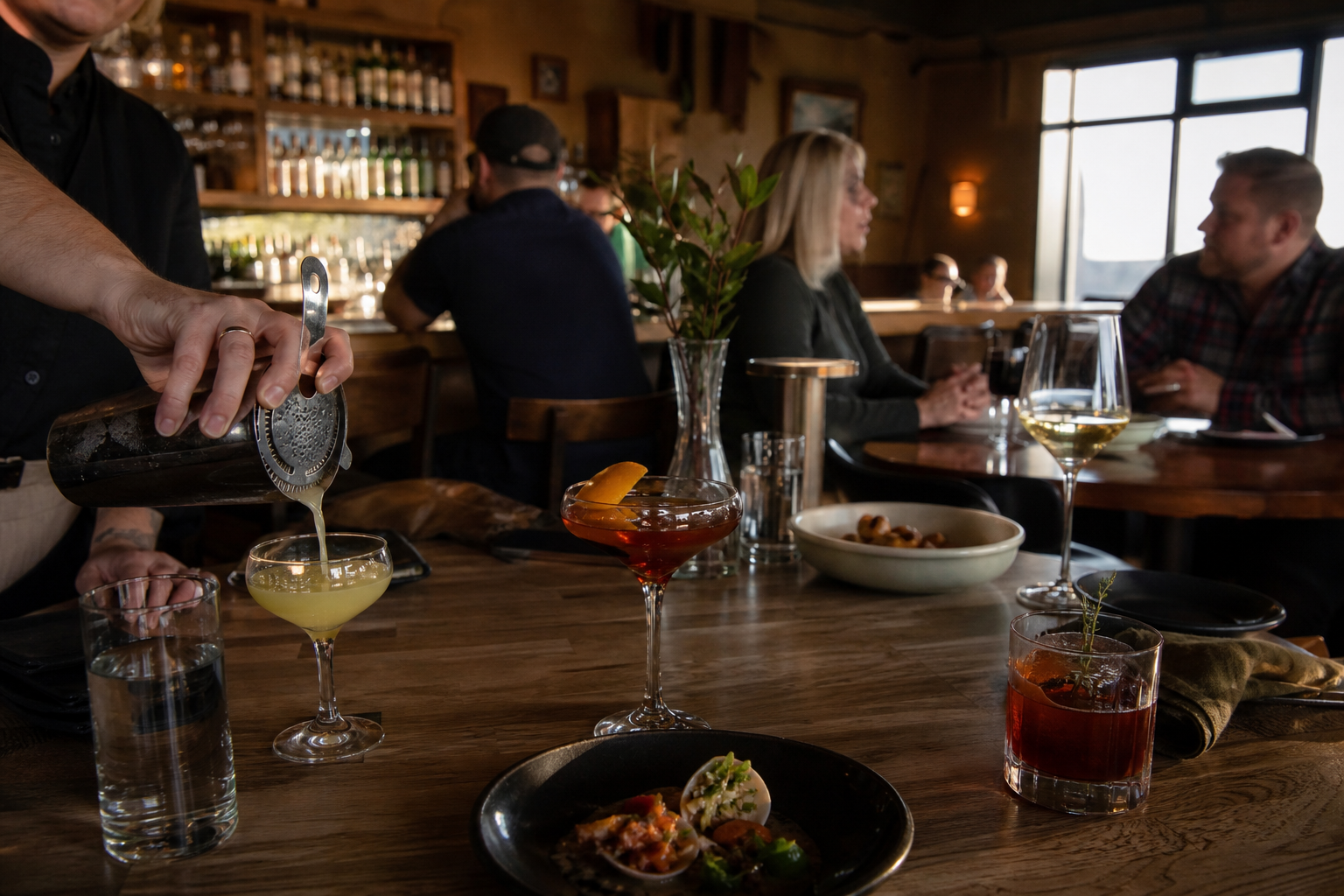
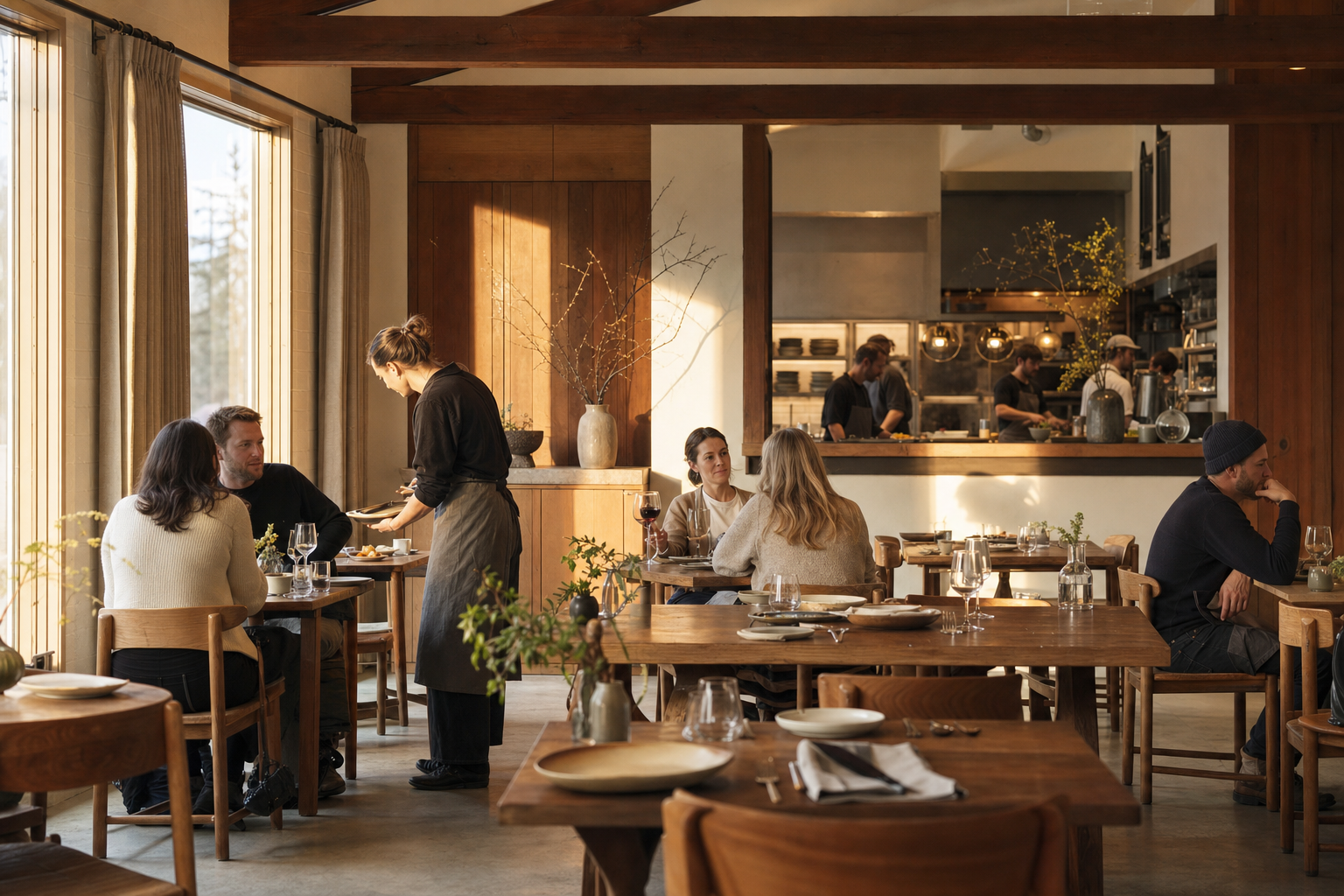
The room itself is small — about forty seats — with the kitchen visible through a pass at the back. The lighting is warm without being dark, the sound level is conversational at most hours, and the room reads as deliberate rather than improvised. The wine list is short and chosen with apparent care, with an emphasis on natural-wine producers from the Driftless region and a small selection of European reference points. The bar program is intentionally modest — a few stirred classics, a draft cocktail that changes seasonally — and the food is the structural argument for the meal rather than the bar.
The service is the area where the restaurant's commitment to its sourcing becomes most visible. The staff has been mostly stable since opening, and the section captains can describe the menu in some detail, including the specific farms that supply each item and the harvest or storage details that determine when an item will be available. This is the kind of institutional knowledge that takes time to build and that is at least as important as the kitchen's own execution in delivering the experience that the restaurant is trying to create. A guest who asks about the rutabaga in the gratin will learn which farm grew it, when it was harvested, how long it has been in the cellar, and what variety it is. The information is offered without being recited.
The pricing is fair for the work. The plates run between twenty-two and thirty-six dollars for the entrées, with the small plates and starters in the twelve-to-eighteen range. This is comparable to what a similar restaurant in Minneapolis would charge for comparable plates, and the value proposition is correct — the ingredients are at the high end of what is available regionally, the execution is at a serious level, and the room is comfortable. The portion sizes are appropriate. The wine pours are correct.
The Tier 1 Rating and the Trajectory
The Four Loons rubric awards Prairie Root Cellar a Tier 1 loon designation on this first-look visit, which is the appropriate rating for a restaurant that meets the rubric's threshold across all dimensions but does not yet clear the higher floors required for Tier 2 or above. The cocktail score is the limiting factor — the bar program is appropriate for the restaurant but does not match the kitchen's ambition, and that gap prevents the restaurant from clearing the Tier 2 cocktail floor. The food score is at a Tier 3 level on its own, the service is at a Tier 2 level, and the atmosphere is at a Tier 1 level. The weighted score sits in the upper end of the Tier 1 range.
The trajectory matters more than the current rating. This is a restaurant that has been open long enough to demonstrate that its commitment to the Central Minnesota growing calendar is real rather than marketed, and the depth of that commitment suggests that the restaurant will continue to refine its menu and its operations across multiple seasons. The bar program is the area most likely to develop into a stronger statement, and the kitchen's continued refinement of its cold-storage cooking is the area where the next significant growth is likely to appear. Saint Cloud has needed a restaurant of this seriousness for a long time. Prairie Root Cellar has provided it. The loon is earned. Fictional for illustration.