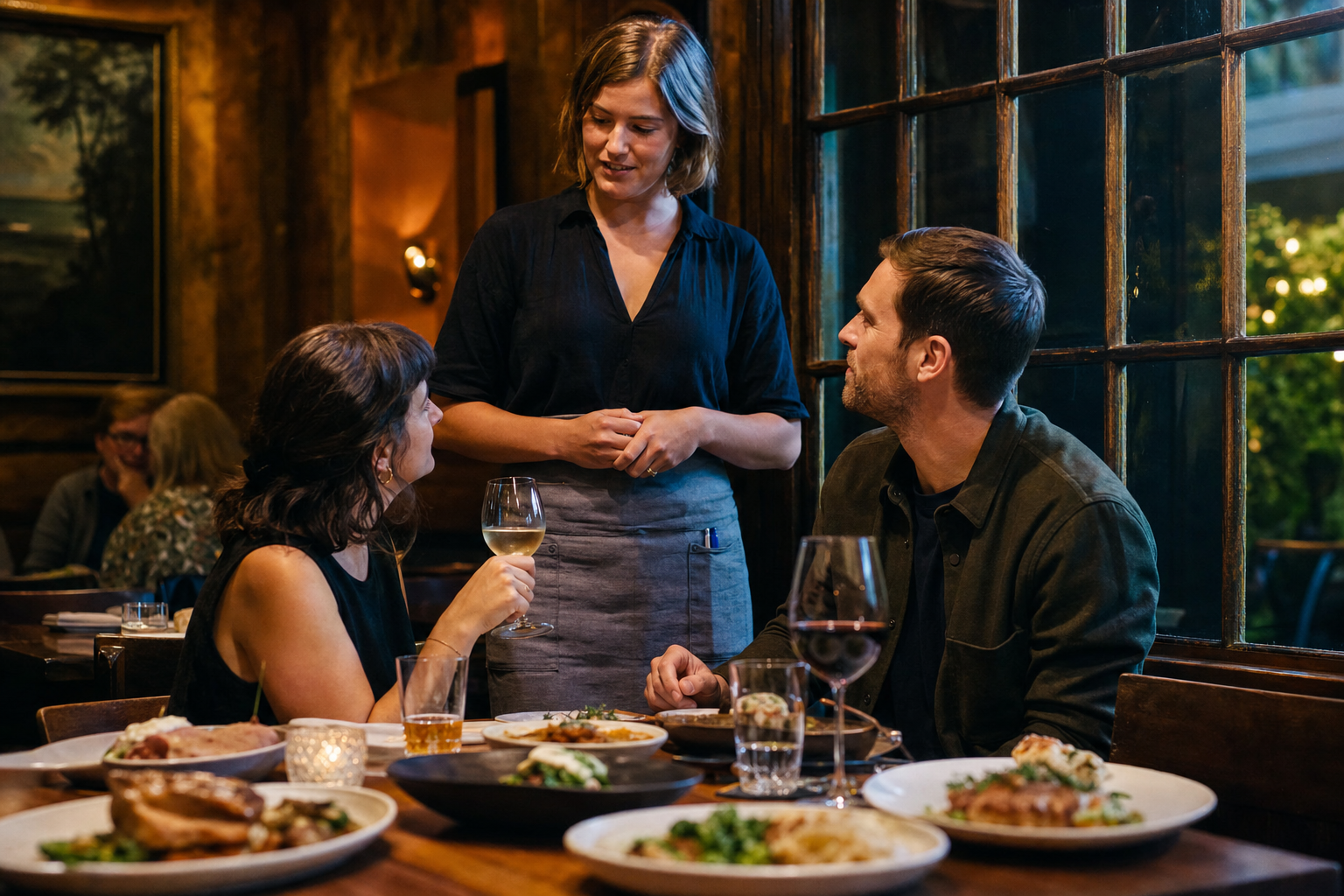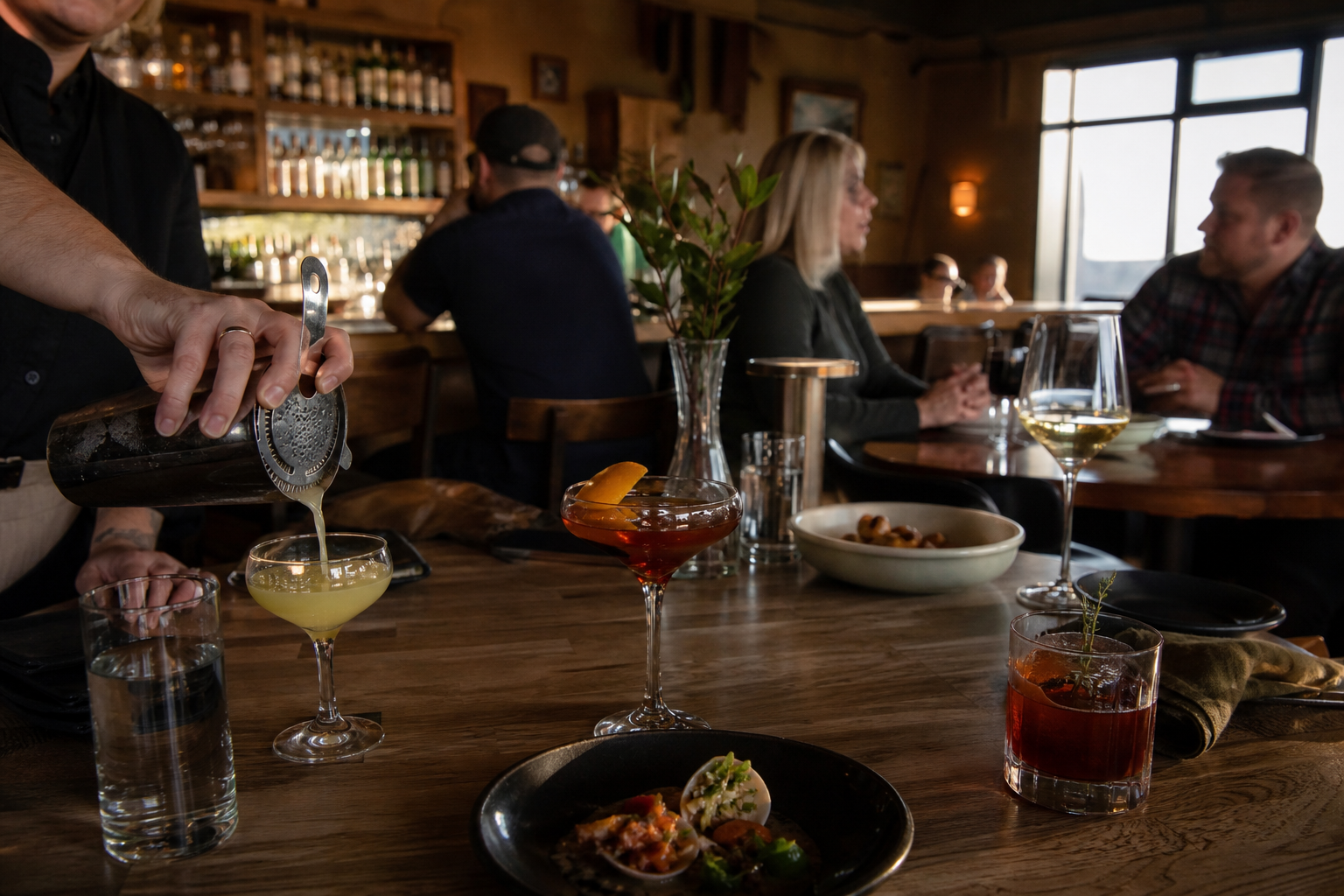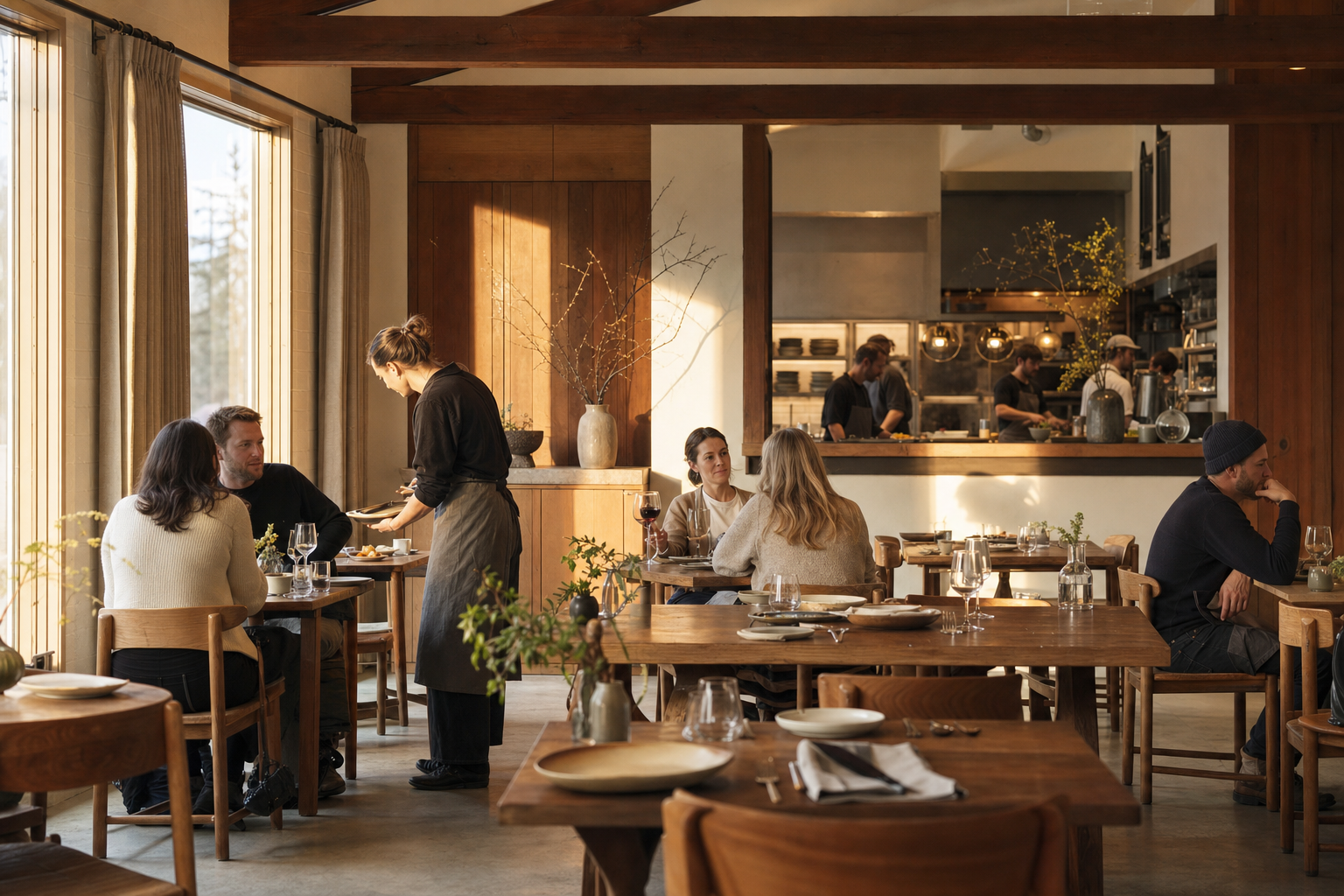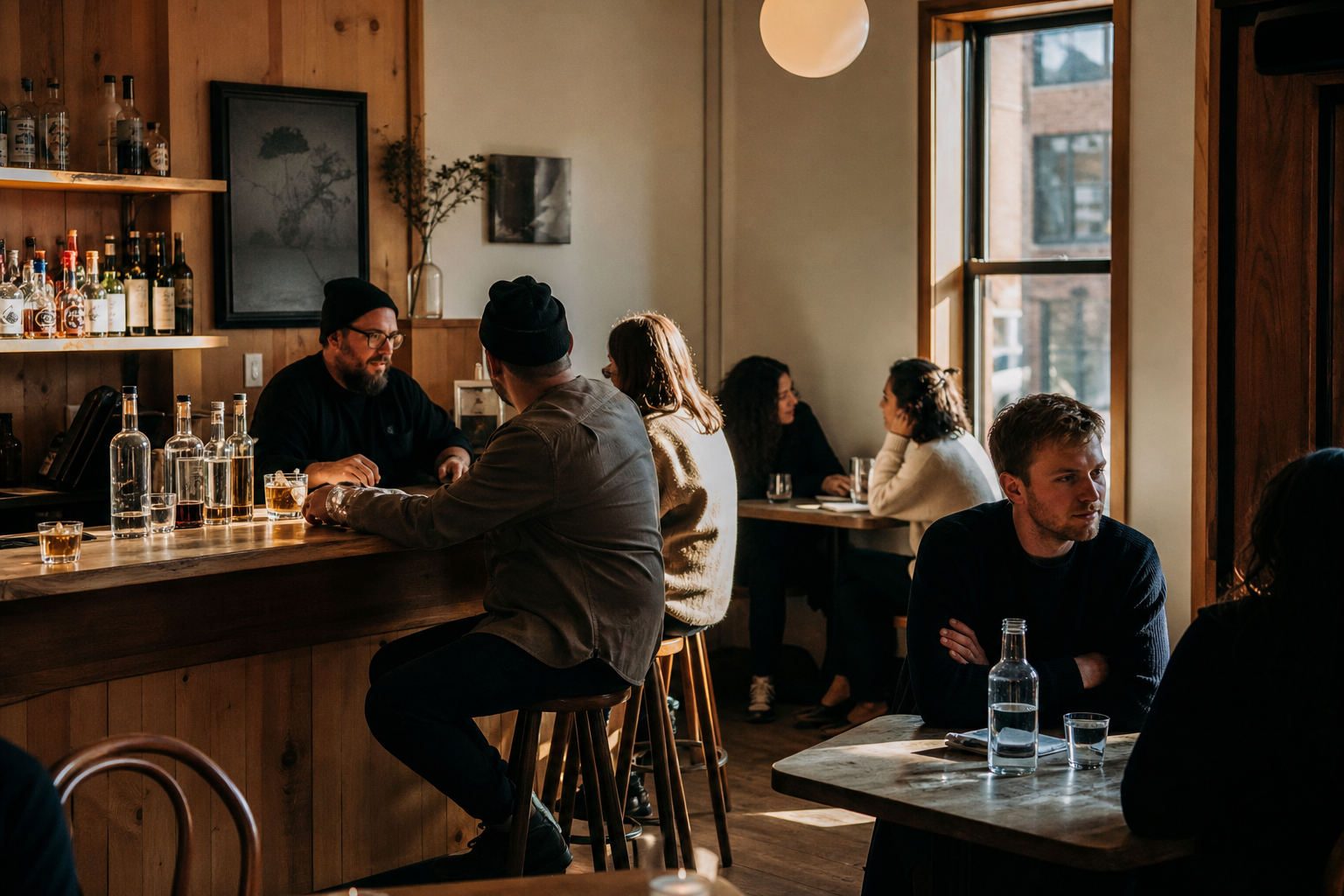
Summit Hill Spirits occupies a single-story building on a Saint Paul block that sits between Cathedral Hill's restaurant density to the north and the residential quiet of Summit Avenue to the south, and it operates as though aware of both neighborhoods without needing to serve either one directly. The room holds perhaps thirty people at capacity, with a bar counter running the length of the east wall and a small seating area against the opposite wall that is genuinely comfortable rather than decoratively functional. The lighting is low in the way that a cocktail bar's lighting should be: not atmospheric theater but practical acknowledgment that the work happening at the bar is the center of attention.
The back bar is half occupied by bottles with Minnesota addresses. This is not a gimmick. Summit Hill Spirits has built its program around a specific argument: that the Minnesota distilling industry has matured to the point where a serious bar can anchor its cocktail list in local spirits without apologizing for the quality ceiling. The rye whiskey from a Stearns County distillery — a wheated rye, drier than most — goes into a Manhattan variation that earns the comparison. The aquavit from a metro-area producer anchors a stirred Scandinavian riff on the old fashioned that is not a novelty drink for people curious about aquavit but a serious cocktail that happens to use a local spirit as its primary argument.
The bar menu is eight drinks. This is the correct number for a room this size and a spirit program this focused. More drinks would require more bottles that the bar does not have room for or would dilute the specificity of the local-spirits emphasis. Fewer drinks would make the bar feel underdeveloped. Eight is the number that signals intention without strain.
The Drinks in Practice
The stirred drinks are where Summit Hill is strongest. A Negroni variation using a Minnesota gin — botanical-forward, less juniper-driven than a London dry — stands alongside a standard Campari and sweet vermouth, and the Minnesota gin makes it something different enough to justify the ordering choice. The difference is in the nose: the Minnesota botanical profile skews toward local plants rather than the traditional Mediterranean palette, which gives the drink a slightly more herbal, slightly less citrus-driven character. Whether you prefer it to a standard Negroni is a matter of preference. That it is coherently different is a fact.
The aquavit old fashioned is the signature drink and it deserves the designation. Caraway aquavit, dark amber maple syrup, and two dashes of celery bitters, stirred until cold and poured over a single large cube. The caraway's savory edge sits against the maple's sweetness in a way that a bourbon-based old fashioned simply cannot produce, and the result is a drink that tastes specifically of Minnesota in autumn in a way that the cocktail tradition has rarely managed to document. We ordered it twice.
The food menu is a limitation. A short list of charcuterie boards, cheese plates, and a few preserved items — the kind of small-plates program that a cocktail bar assembles when it knows that food is not its point but acknowledges that some guests need something to eat. The sourcing is local and the execution is competent, but the food at Summit Hill will not be the reason you return. The drinks will be.
The Room and the Service
The bar staff at Summit Hill operates with the unhurried competence of people who have been making these specific drinks for long enough to have opinions about them. Questions about the local spirit producers are answered with something that approaches enthusiasm — not performance enthusiasm but the kind that comes from actually having visited the distilleries and understood what they are trying to do. This is a form of hospitality that is more valuable than a rehearsed description, and it elevates the experience of a focused drinks list from a curiosity to a conversation.
The room is not quiet enough for a long conversation, but it is not loud in the way that Minneapolis cocktail bars can be. The sound level is calibrated for a group of two to four people who want to talk between drinks. The pacing is appropriate for a bar that wants you to stay for the second and possibly third round. Summit Hill has figured out that a cocktail bar's hospitality is primarily temporal — how long it makes you want to be there — and the room, the service, and the drinks have all been calibrated toward that end.
The Scope of the Argument
Summit Hill Spirits is making a specific argument about Minnesota spirits, and it makes that argument clearly and without overreach. The bar does not claim that every local spirit is the equal of its best imported equivalent. It claims that the best local spirits are worth building a serious cocktail list around, and it demonstrates the claim with eight drinks that use those spirits intelligently. The argument holds. The execution is more careful than most cocktail bars at this price point, and the local-spirits emphasis adds a coherence to the menu that a spirit-agnostic list at the same scale would not have.
The food will not be the reason you come back. The cocktails will be. The room is well-suited to staying for two rounds. The prices are fair for what the drinks require in sourcing and labor. Summit Hill Spirits has found its scale and its identity, which puts it ahead of most bars that open with a specific concept and then spend two years figuring out what it is. Fictional for illustration.