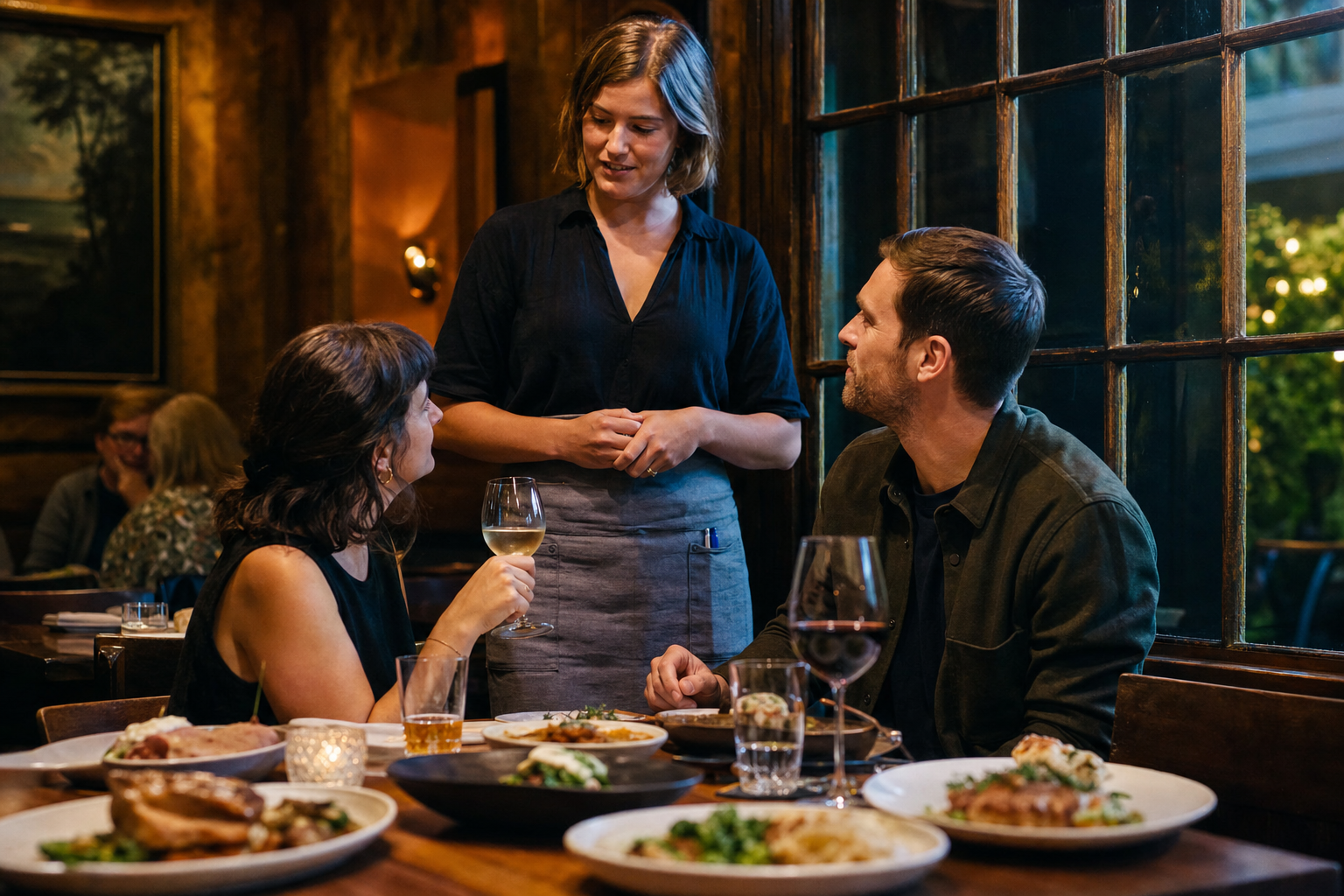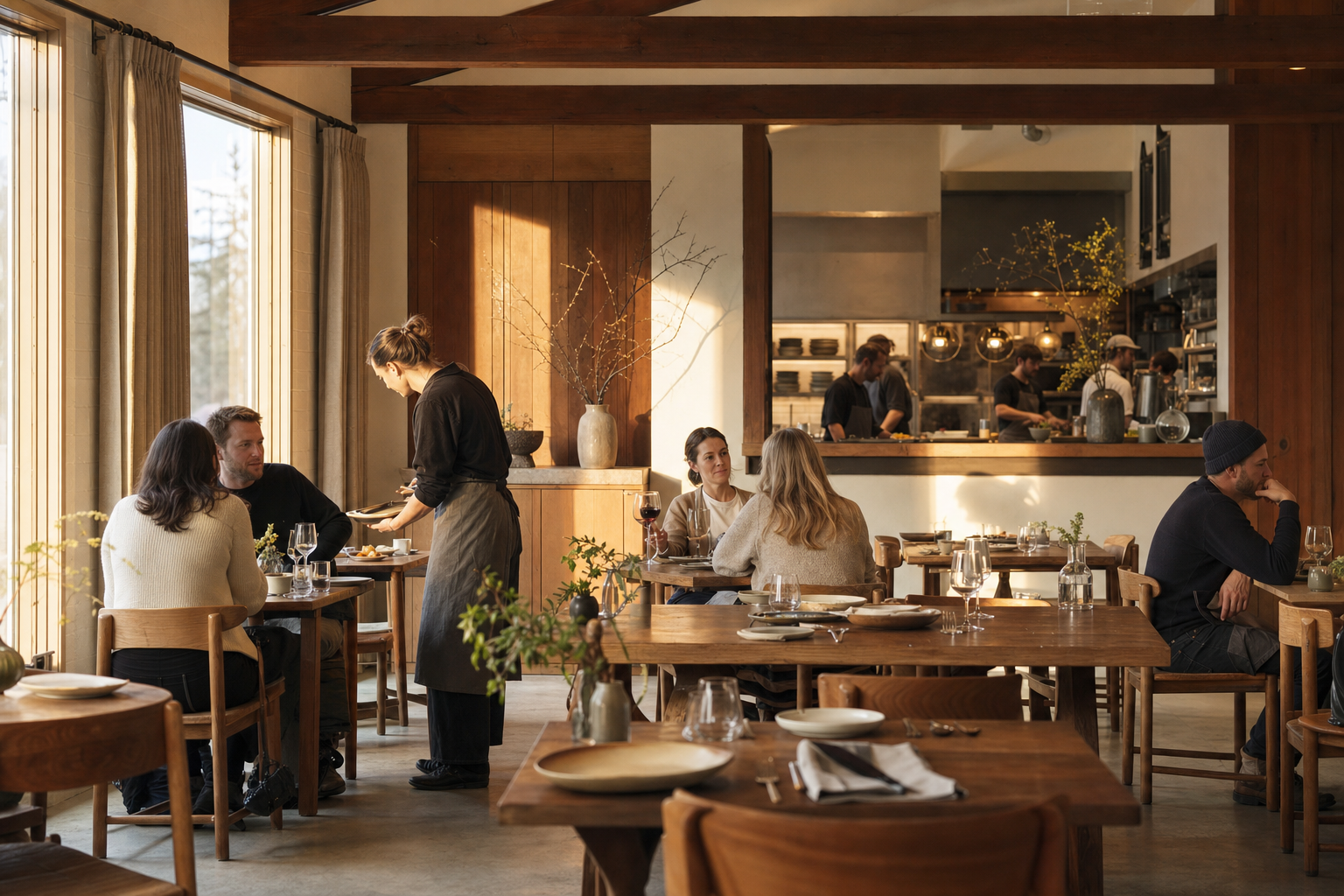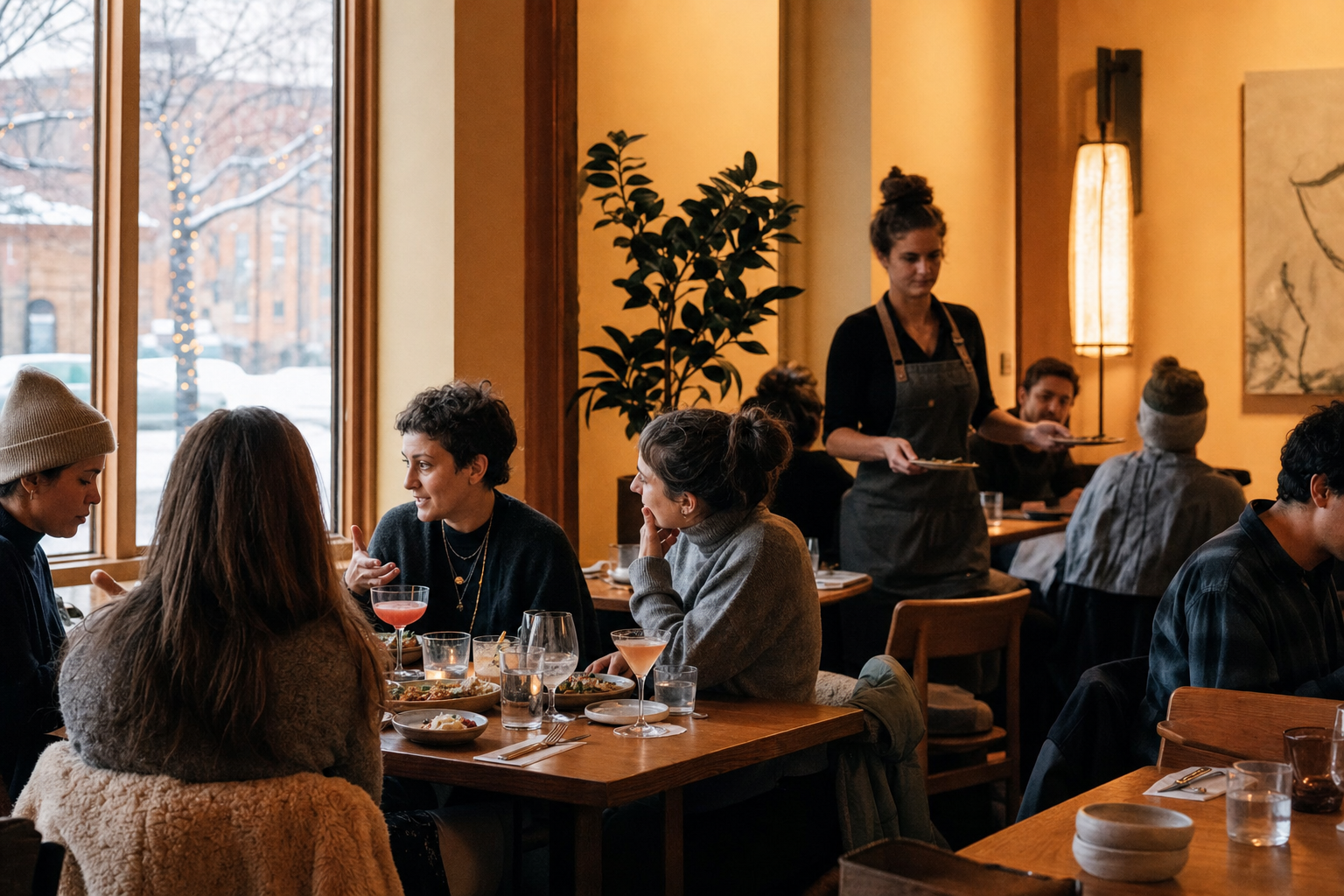
Six months after the first visit, The Heron & Hawthorn is recognizably the same restaurant and recognizably more settled. The summer opening was promising in the way that careful openings often are: a kitchen with a clear point of view, a service team still finding the seams between sections, a menu still negotiating the difference between what the cooks wanted to do and what the room could absorb. The January visit found a restaurant that has had two seasonal turns to think about itself, and the difference is not in the ambition but in the calibration. Things that read as careful but tentative in July read as confident in January. The room itself has changed registers with the season — warmer in the literal and the figurative sense, more candle than skylight, with the front windows showing nothing but the deepened blue of Northeast Minneapolis at five in the afternoon.
The menu has compressed. The summer card had eighteen items across small and large plates, which was at the upper end of what a kitchen of this size should attempt during an opening season. The current card lists twelve. The pruning has happened in the right places: the larger plates that depended on summer produce have been put away until the produce returns, and the cold-weather preparations have been allowed to expand into the space those plates vacated. This is the kind of editorial discipline that signals a kitchen with a long-term plan rather than a kitchen trying to be everything to everyone in the first six months. The result is a menu that does fewer things and does them more completely.
The Winter Menu in Practice
The root-vegetable preparations are where the kitchen's growth is most visible. The summer treatment of vegetables tended toward the bright and acidic — quick pickles, raw applications, sherry vinegar appearing in places that may not have benefited from it. The winter menu reverses the polarity: roasted celeriac with a brown-butter and hazelnut application; rutabaga prepared three ways on a single plate (a confit, a purée, a roasted wedge) with a thyme-and-cider reduction; salsify in a beurre blanc with smoked trout roe that arrived at the table at the correct temperature, which is a more specific accomplishment than it sounds. These are not preparations that require difficult sourcing. They require attention to what root vegetables become when they are treated as the center of the plate rather than the accompaniment, and the kitchen has clearly spent the autumn working on that question.
The smoked-protein program has tightened similarly. In July the smoked-trout preparation was good but slightly under-seasoned, as if the kitchen was worried about competing with the smoke. The January version is balanced: a longer cure has carried more salt and sugar into the fish, the smoke is still present but no longer the dominant note, and the cold-smoked elk that has been added to the cured-and-smoked board is treated with the same care. The board itself has been simplified — fewer accompaniments, larger portions of the proteins themselves, and the same in-house mustard that has been on the menu since opening but is now made in a sharper formulation that holds up against the cured meats rather than getting lost between them.
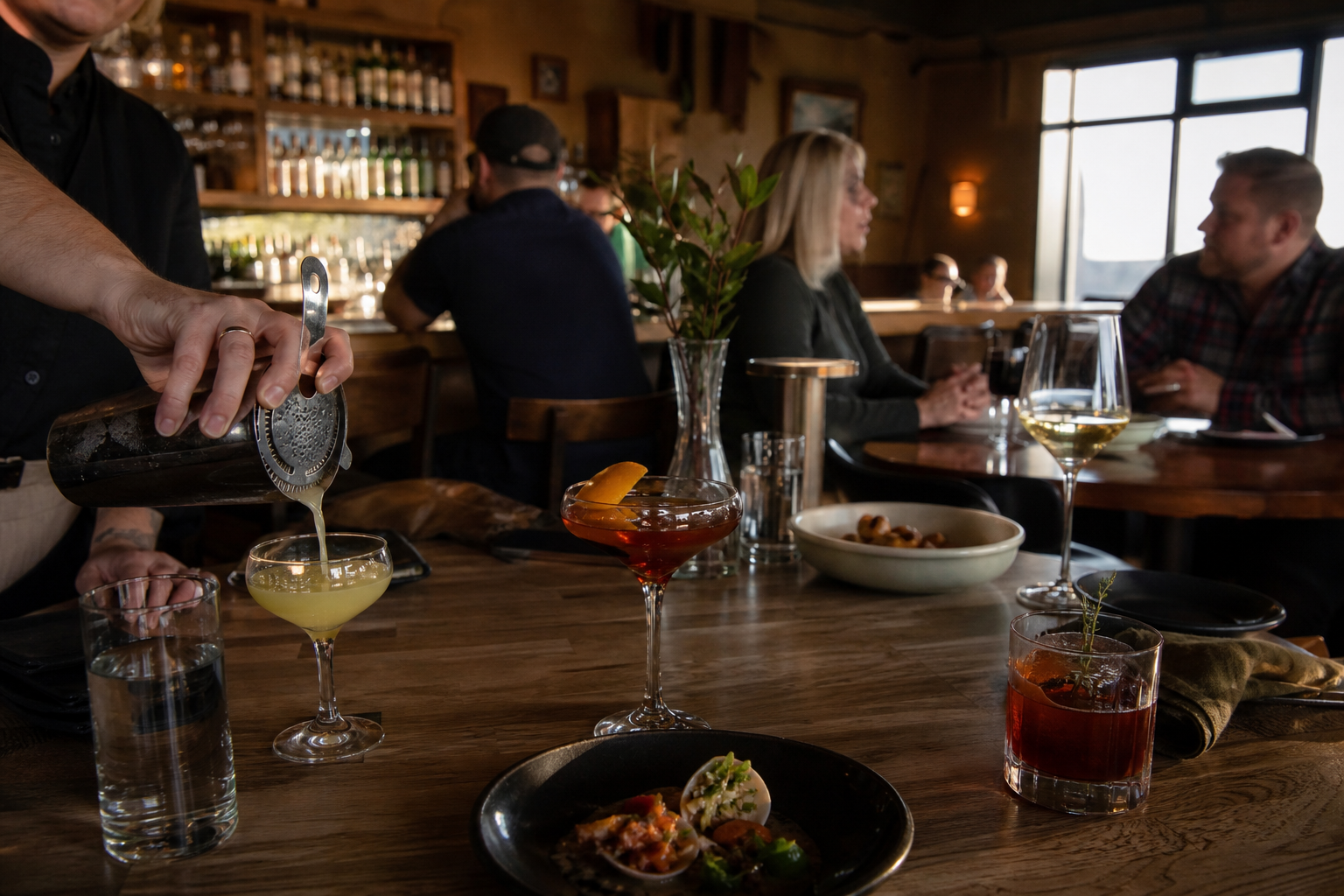
The cocktail program has not changed in approach but has gained precision. The bar's commitment to amaro-forward stirred drinks was clear from opening night; what has improved is the consistency of the execution. The dilution and temperature on the stirred drinks now register the same across multiple orders, which is a sign that the bar has settled into a rhythm rather than improvising. The new winter house drink — a rye, dark amaro, and apple-brandy combination with a flamed orange — is the strongest house cocktail the bar has yet produced, and it is the kind of drink that will probably stay on the menu in some form through next winter.
The Service at Six Months
Service is the area where the second visit shows the most quantifiable improvement. The summer service had the right instincts but uneven timing — courses arriving in clusters, wine pours that lagged the food, a front-of-house team that knew the menu well enough to describe it but not yet well enough to anticipate. The January service has the cadence right. The pacing between courses on a five-plate progression was within a five-minute window each time. Wine recommendations arrived without being prompted, were specific to the table's apparent preferences, and were offered in a register that suggested the staff knew which questions to ask rather than reciting from a script. The check arrived after coffee had been finished, not before. These are small operational things, individually, and collectively they are what a guest is paying for in a room at this price point.
The room itself is more comfortable in winter than in summer, which is partly a function of the building and partly a function of choices the kitchen has made. The summer service ran the room slightly too warm, which meant that the smoked preparations sometimes arrived after sitting in a warmer-than-ideal pass. The winter service has the temperature calibrated correctly. The sound level is also different — warmer in winter because the room is fuller and the patio doors are closed, but not louder, because the acoustic treatment that was added at the back wall during the autumn dampens the extra density of voices. Whoever decided to invest in that treatment after opening made the correct call.
What Two Loons Means Here
The first visit suggested a restaurant that was very likely heading toward a one-loon rating with the potential to grow into something more. The second visit confirms the trajectory and adjusts the rating upward. Two loons, in the Four Loons rubric, is the rating that says: this is a place worth driving across the metro for, the kitchen has a coherent point of view, the service is operating at the level the food requires, and the room has settled into a version of itself that is recognizably itself. The Heron & Hawthorn has gotten to that point faster than most restaurants do, and the rate of progress between July and January suggests that the third visit, if conducted in late spring or summer when the patio reopens and the menu turns, may well prompt another adjustment.
What it would take to reach three loons is not difficult to identify: a slightly tighter wine list with more specificity in the by-the-glass program, continued growth in the cocktail program's ambition rather than just its consistency, and a continued willingness to compress the menu when compression is the right answer. The kitchen and the front-of-house team have demonstrated, in two visits over six months, that they can identify and execute on those kinds of refinements without being told to. The two-loon rating is awarded with confidence. The trajectory matters more than the number. Fictional re-review for illustration.