The Vermilion Cocktail Lounge occupies the main floor of a former bank branch on a downtown Duluth block, with the original 1920s marble counters and the bank-vault door at the back of the room preserved as architectural features rather than removed during the conversion. The bar runs along the wall where the teller line once stood, and the seating area occupies what was formerly the lobby. The conversion was done with the kind of restraint that distinguishes a serious adaptive-reuse project from a renovation that papers over the building's original use. The marble has been polished but not replaced. The vault door is functional. The original bronze light fixtures have been kept and re-wired. The room reads as a bank building that is now a bar, rather than as a bar that happens to be in a bank building, and the distinction matters because the room's gravitas is doing some of the work that the cocktail program then has to live up to.
The cocktail program does live up to it. Vermilion has been operating for the better part of two years and has become, in that time, the most technically precise bar program in Duluth and one of the better cocktail programs in the state outside the Twin Cities. The precision is the structural fact of the bar. The ice is hand-cut from a clear-ice production system that the bar runs in its basement, with the resulting cubes correct in shape, density, and clarity for the specific drinks they are used in. The stirred drinks are stirred for an actual measured period that the bar staff treats as a non-negotiable specification rather than as an approximation. The dilution on the resulting drinks lands at the correct level for the cocktail's intended structure, which means the drinks taste the way they were designed to taste rather than the way the bartender's mood produced them on a given evening.
The Drinks and the Discipline
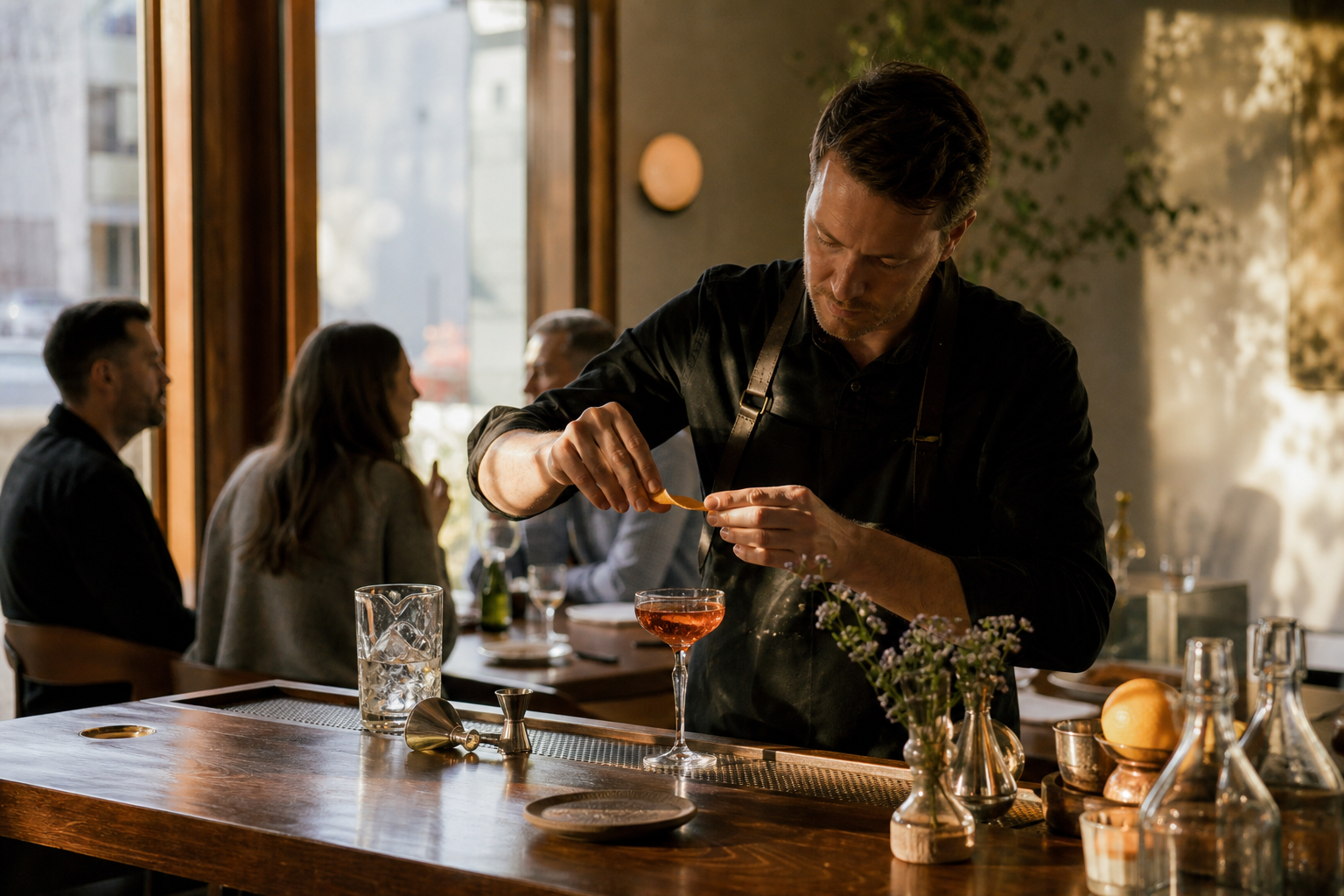
The bar menu lists ten cocktails, organized into three categories — stirred, shaken, and what the bar calls long-format (highballs, spritzes, and other extended-format drinks). The list is rotated quarterly, with one or two drinks holding through multiple rotations because they have become house standards. The current house standard is a Negroni variation made with a rye whiskey from a Wisconsin distillery, an Italian aperitivo from a Modena producer, a sweet vermouth from a small Italian house, and a single small dash of celery bitters. The drink is stirred for the appropriate length, served in a rocks glass over a single large hand-cut cube, and garnished with an orange peel that is expressed and then placed across the rim rather than dropped into the glass. The drink is the strongest cocktail on the menu and the one that demonstrates what the bar is capable of when it has fully thought through a variation on a classic.
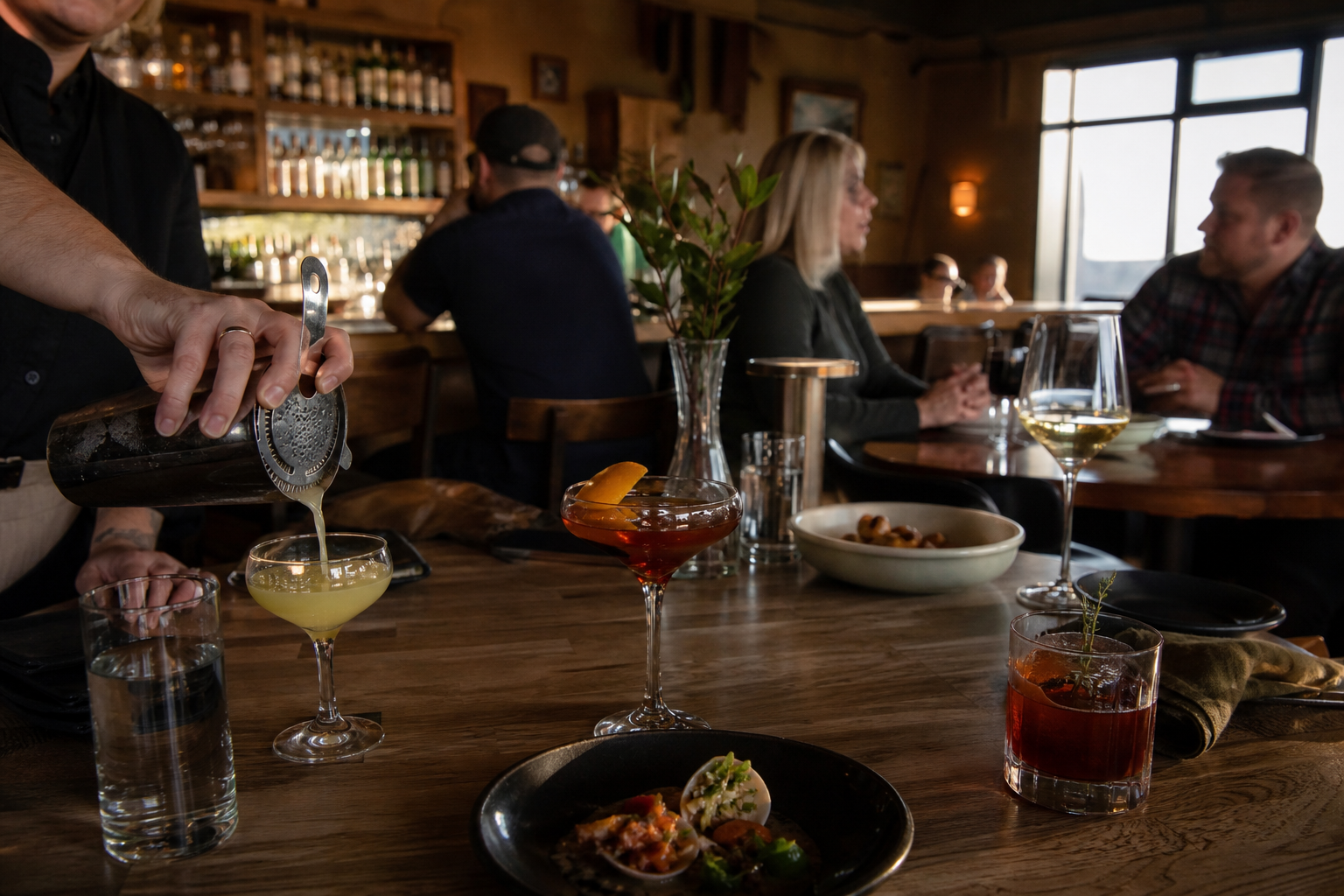
The shaken drinks are the area where the bar's technique is most visibly different from less serious bars. The sours are properly shaken — long enough to produce the appropriate foam, with the correct ratio of egg white to the other ingredients — and the resulting drinks have the texture and the temperature that a sour should have. A whiskey sour with a Minnesota-distilled rye, lemon, simple syrup, egg white, and a single dash of Angostura on the foam was the strongest shaken drink on the visit. The drink was served at the correct temperature, with the correct foam, in the correct glassware. None of these specifications is particularly difficult to meet. Most American bars do not meet them. Vermilion does.
The long-format drinks are the bar's most playful category. A highball built on a Japanese whisky and house-charged soda — the bar maintains its own carbonation rig at higher pressure than the standard commercial soda — was a small revelation. The drink is simple in construction but the small operational decisions about ice, soda pressure, and glass temperature combine to produce something that drinks substantially differently from the same construction at a less careful bar. A spritz built on a domestic aperitivo, prosecco, and a house-made citrus syrup was the bar's seasonal highlight on the visit and the kind of drink that would justify ordering a second round.
The Snack Program and the Service
The food program at Vermilion is intentionally limited to snacks. The bar does not pretend to be a restaurant and has not built the kitchen capability that a restaurant ambition would require. The snack menu includes a few items — cheese-and-meat boards, olives, popcorn with a custom seasoning, a small selection of pickled vegetables — and the food is appropriate for what a cocktail bar's food should be: something to keep guests at the bar for the second round without competing with the drinks for attention. The food score in the rubric reflects this scope limitation, and the limitation prevents the bar from clearing the food gate required for a loon designation. The rubric is doing what the rubric should do.
The service is the supporting evidence for the bar's argument. The bar staff includes three primary bartenders who have all been at the bar for the entire two years it has been open, and the consistency of the staff produces the consistency of the drinks. The service register is appropriate for a serious cocktail bar — warm without being effusive, knowledgeable without being lecturing, willing to recommend a specific drink for a specific guest's preferences without making the recommendation feel like a lecture. The bar staff can describe each ingredient in each drink, can speak in some detail about the producers behind the spirits the bar features, and will direct a guest to a different drink if the recommended one is unlikely to match the guest's stated preferences. This is the kind of bar hospitality that builds repeat traffic in a way that no marketing program can.
The Duluth Cocktail Decade
Duluth has been quietly developing a cocktail culture over the past decade in a way that has not received much attention from the Twin Cities food press. The Lake Effect Cocktail Bar opened in the harbor district several years before Vermilion. Several smaller bars in the Lincoln Park and Canal Park neighborhoods have added serious cocktail programs in the past five years. The cocktail scene in Duluth is not large by Minneapolis standards but it has become serious, and Vermilion is the most technically precise example of what the scene is now capable of producing.
The food score in the rubric prevents Vermilion from clearing the food gate required for any loon designation, which is the correct outcome for a venue that has deliberately chosen not to operate a full kitchen. The recommendation, in the language the publication uses for sub-loon rooms, is strongly recommended for the cocktail program. This is the bar to recommend to a guest visiting Duluth who wants to understand what the city is now doing with cocktails. The Negroni variation is the drink to order. The room is the architectural argument. The bar staff is the operational argument. The precision is the structural argument. Duluth has earned this bar. The bar has earned its place in Duluth. Fictional for illustration.