Winona sits on the Mississippi River about a hundred and twenty miles southeast of the Twin Cities, in the band of southeastern Minnesota known as the Driftless region — the area that the last glaciation missed and that as a result retained the deep river valleys, limestone bluffs, and creek-cut terrain that the rest of the upper Midwest lost under ice. The city has a population of about twenty-six thousand, a small public university with about seven thousand students, a working freight rail line that runs along the river, a historic downtown that has been intermittently restored over the past forty years, and a particular kind of light that comes off the river in the morning and evening that residents of inland Minnesota cities tend to comment on when they visit. The city is not a major restaurant destination but has supported a few serious restaurants over the years, and Winona Riverside Bistro, which opened three years ago in a converted warehouse on the riverfront edge of the downtown core, is currently the best of them.
The building was originally a grain warehouse serving the riverboat trade in the late nineteenth century, sat vacant for several decades after the riverboat economy collapsed, and was converted to a series of other commercial uses through the twentieth century before being renovated in the early 2020s for the current restaurant. The conversion preserved the original brick exterior, the wood-beam ceiling structure, and the wide-plank flooring; the dining room sits on the river-facing side of the building with a wall of windows looking out over the working harbor and the bluffs on the Wisconsin shore beyond. The view is real and substantial. The risk for a restaurant in this position is to let the view do all the work, and most restaurants in similar positions on similar rivers across the country have made exactly that mistake. The Riverside Bistro has not.
The Kitchen and the Driftless Pantry
The kitchen has organized its sourcing around the Driftless region as a working concept rather than as a marketing reference. The region — which extends across southeastern Minnesota, southwestern Wisconsin, northeastern Iowa, and northwestern Illinois — has a particular agricultural character that distinguishes it from the surrounding glacial plains. The deep valleys produce microclimates that support crops and livestock varieties that do less well in the surrounding flatland; the limestone substrate produces particular water characteristics that affect cheese and beer production; the wooded slopes support a forager economy that has been operating quietly for generations and that supplies several of the region's better restaurants. The Riverside Bistro's menu is composed from this regional pantry in a way that suggests the kitchen has invested in the relationships with the regional producers rather than ordering through generic wholesale channels.
The duck confit is the strongest plate on the menu and the structural test of whether the kitchen is operating at the level its ambitions suggest. The duck is sourced from a farm in the Driftless region on the Wisconsin side of the river — the menu credits the farm by name — and the legs are cured for forty-eight hours before being slow-cooked in their own rendered fat for the better part of a day. The confit is held in the fat at proper temperature until service, then crisped on the skin side over high heat just before plating. The resulting dish has the correct combination of yielding interior and crisp exterior, with the fat properly rendered and the meat properly seasoned throughout. The plate is served with a stone-ground polenta from a Mille Lacs supplier, a small portion of braised greens, and a cherry-and-vinegar reduction that uses Door County cherries preserved in the kitchen during the previous summer. The plate is a complete proposition and reads as the kitchen's clearest statement of what it is trying to do.
The river-fish preparation is the menu's second-strongest item and the one that demonstrates the kitchen's relationship to the immediate geography. The Mississippi River produces walleye, sauger, drum, catfish, and several other species that are commercially fished by a small remaining group of operators based out of Winona and the surrounding river towns. The bistro buys directly from one of these operators and the menu reflects what has been caught on a given week. On the visit the preparation was a pan-fried walleye with a brown-butter sauce, served with the stone-ground polenta and a small portion of foraged sumac-and-shallot relish that gave the plate a brightness that the brown butter alone would not have produced. The fish was correctly cooked and the plate ate as a serious treatment of an underrated regional protein.
The Wine List and the Service
The wine list is short — about thirty bottles — and chosen with more judgment than most lists twice its length. The list emphasizes producers from the broader Driftless and Upper Midwest regions, with smaller selections of European reference points that complement the kitchen's central argument. The by-the-glass program is twelve options that all earn their place; the bottles are organized to support the menu rather than to demonstrate the breadth of the cellar. The wine pricing is fair, with the by-the-glass options in the twelve-to-eighteen range and the bottles starting at thirty-six. This is the kind of wine program that takes time to build and that depends on the wine director's willingness to maintain ongoing relationships with the regional importers and distributors rather than ordering from a master catalog.
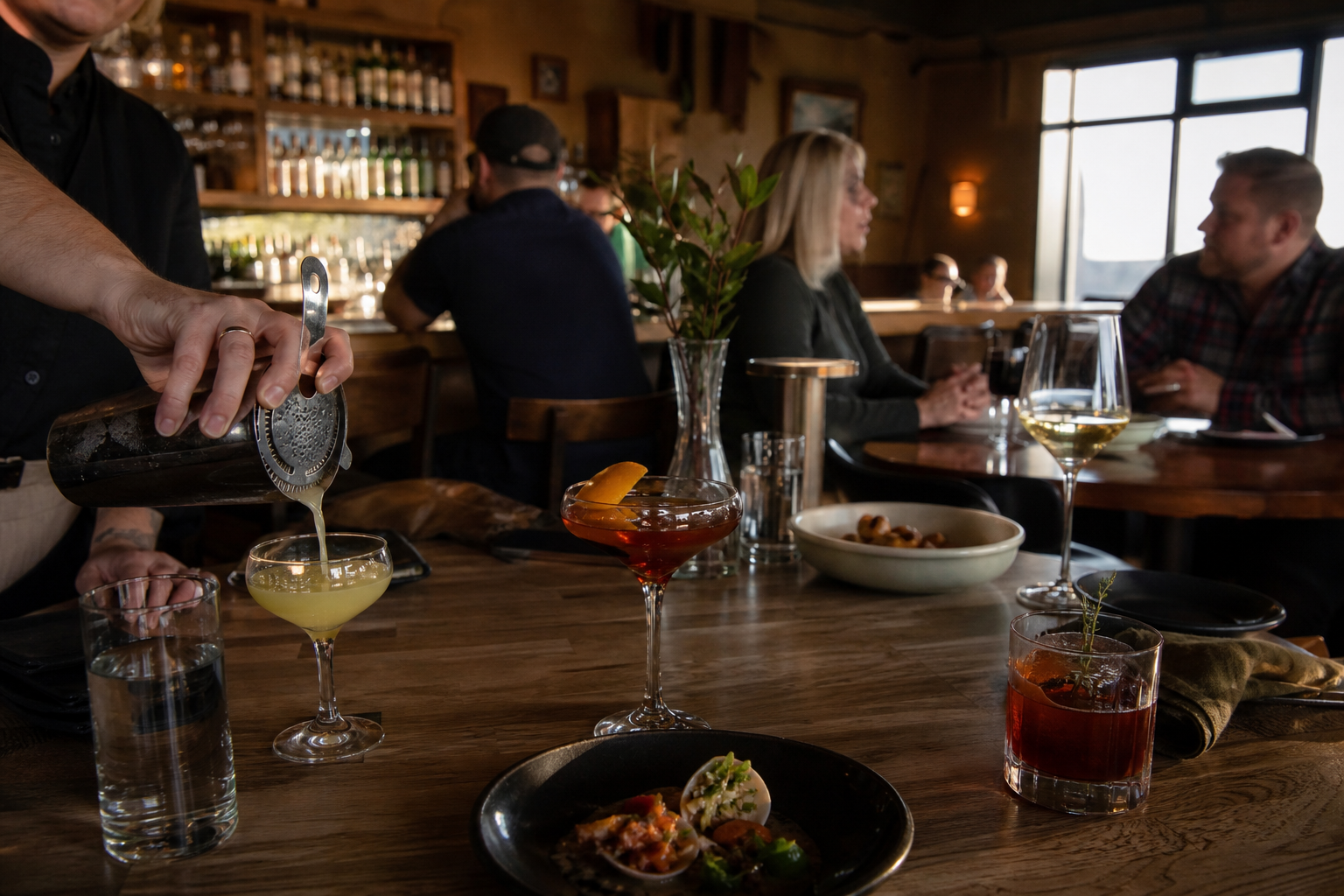
The cocktail program is competent without being the focus. A short list of stirred and shaken drinks built on locally available spirits, with the cocktail score in the rubric appropriate to the program's deliberate scope. The bar is not pretending to be a destination cocktail bar and the rating reflects this honestly. The service is unhurried in the way that river towns are unhurried — pacing calibrated for guests who have driven from the Cities or from across the river and who want the meal to occupy the evening rather than fitting into a tight window before another commitment. The section captains know the menu and the sourcing in some detail and can answer questions about the regional producers without rehearsal.
The Atmosphere and the Bluffs
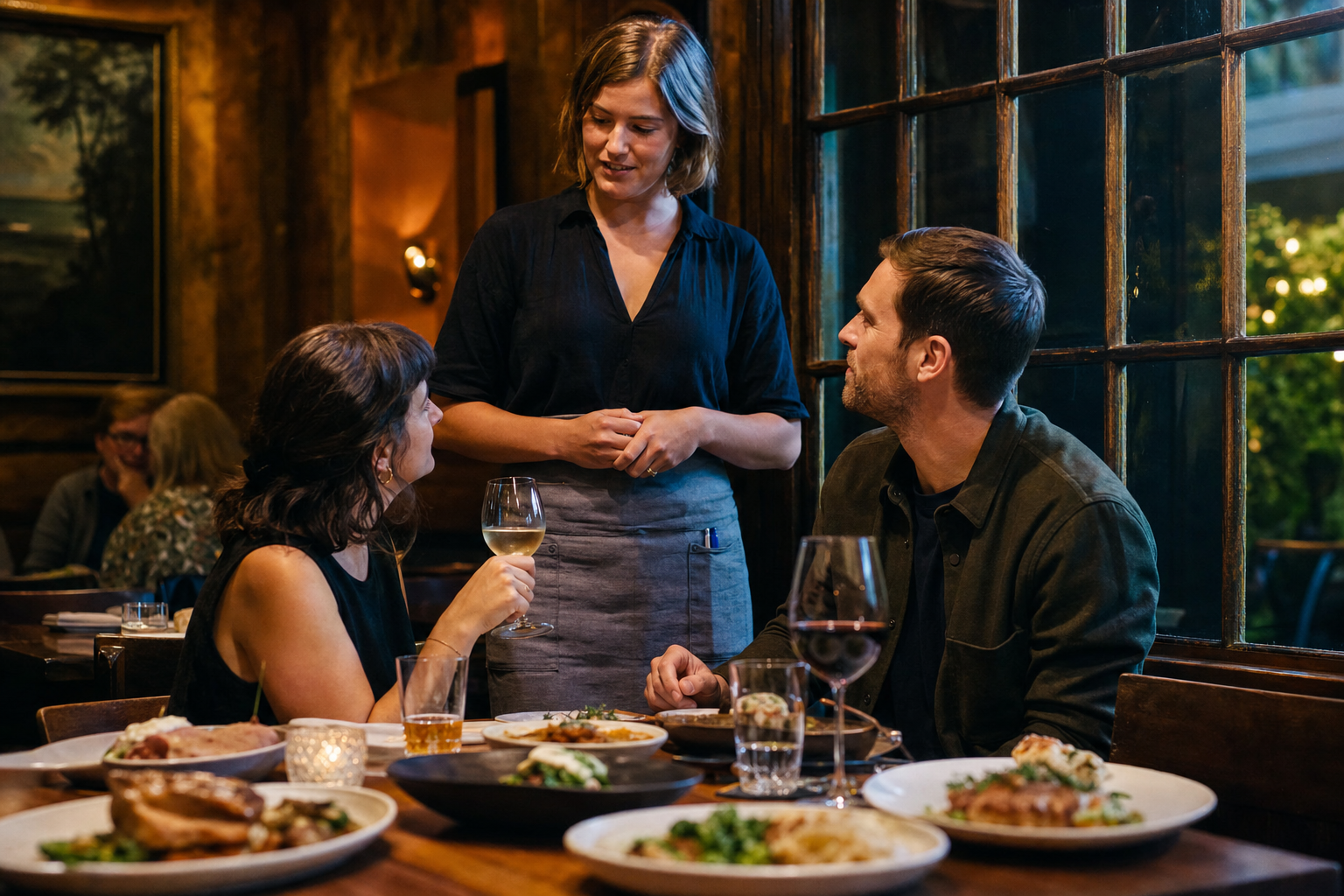
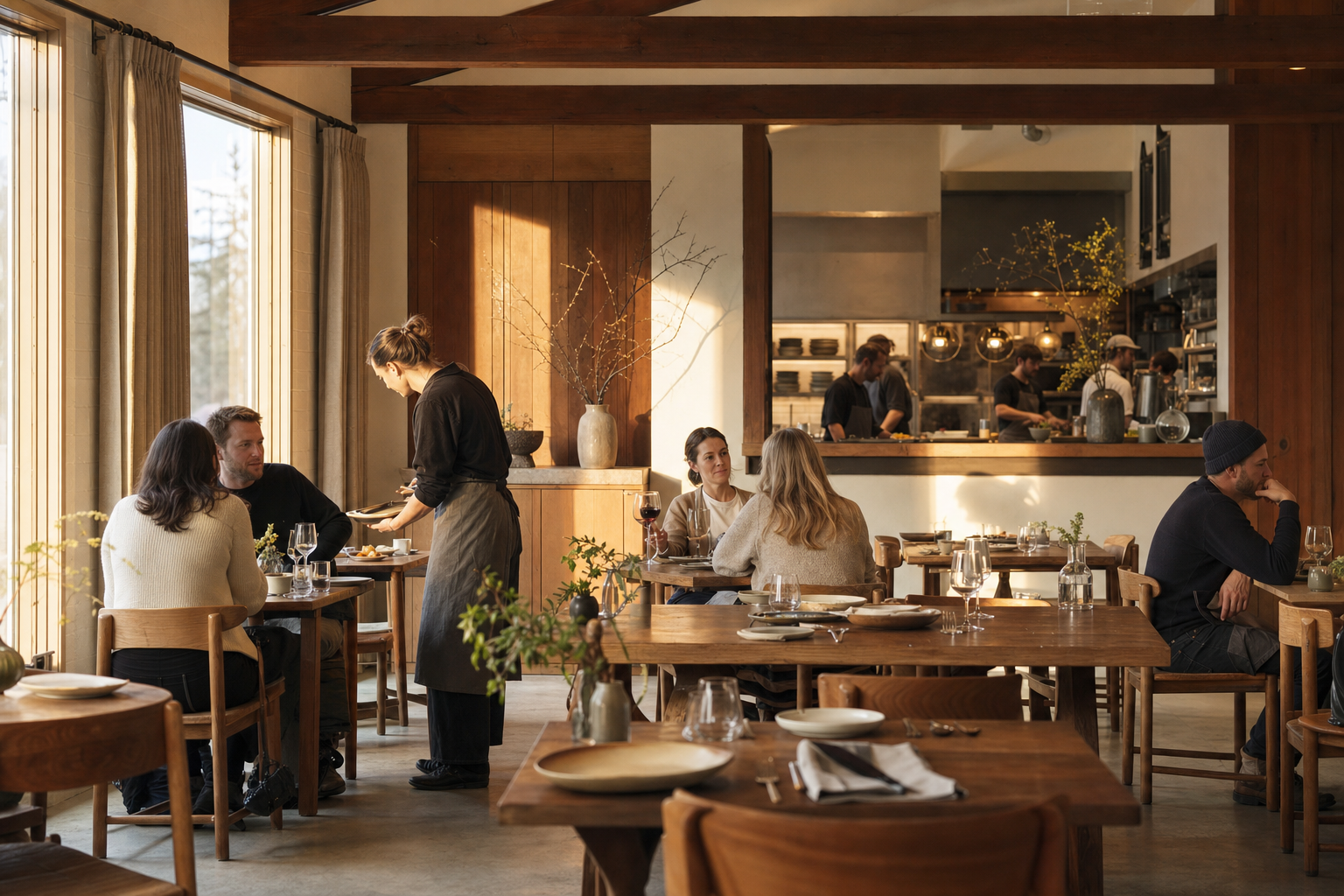
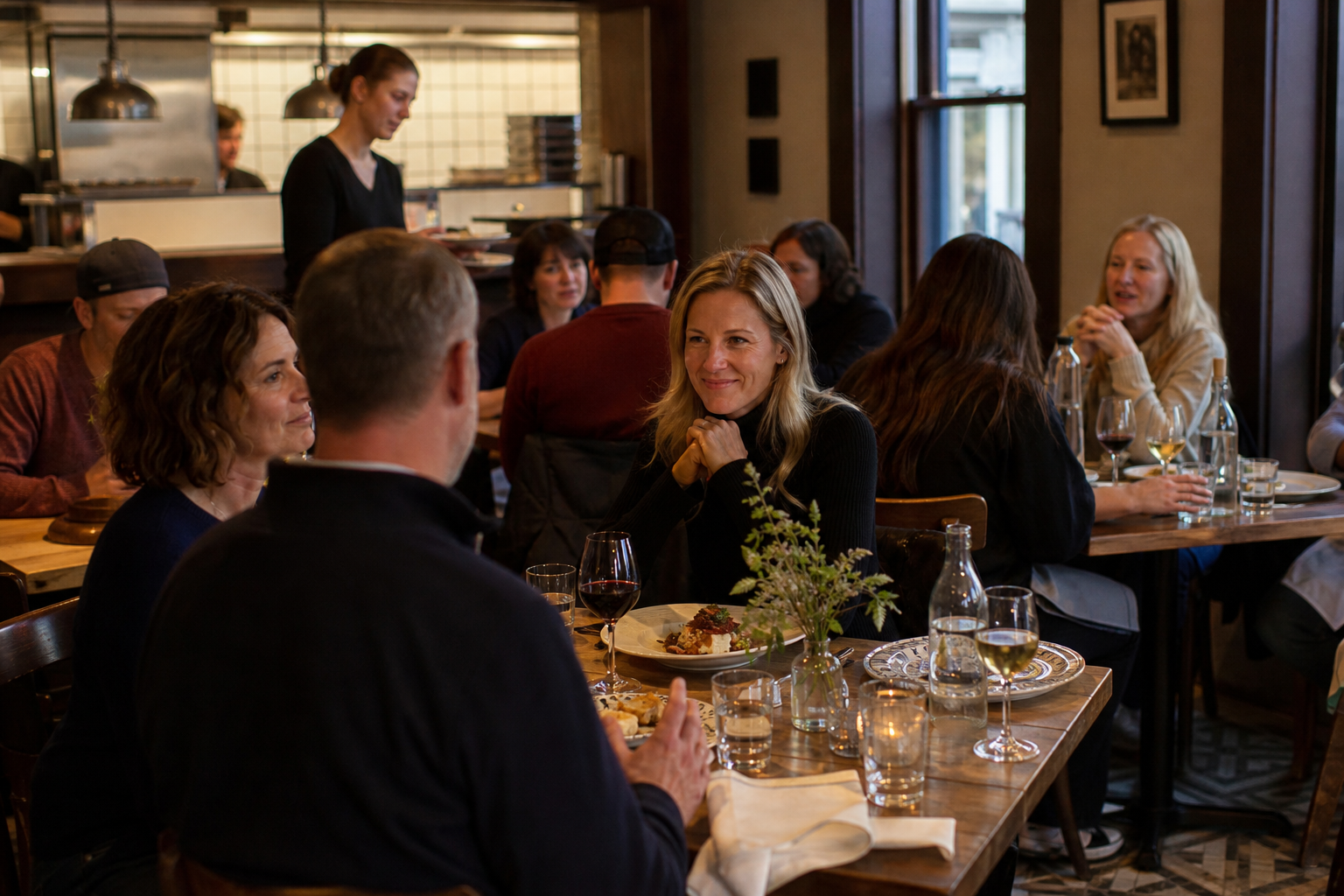
The room's atmosphere is the most distinctive aspect of the bistro after the kitchen. The dining room runs along the river-facing wall with the windows providing the primary visual interest, but the room has been designed so that the view is the bonus rather than the structural feature. The lighting is warm and dim enough that the candles on the tables and the architectural lighting on the wood beams provide the room's primary illumination during evening service. The sound level is conversational at most hours and the river's working sounds — the freight rail line, the occasional barge horn — are audible without dominating the room. The bluffs across the river are visible in the late afternoon and evening when the light is right, and on a clear day in October the colors on the Wisconsin side are the kind of thing that makes the meal worth timing to the season.
The Four Loons rubric awards Winona Riverside Bistro a Tier 2 loon designation on this first-look visit. The food score is high enough to clear the Tier 2 food floor, the service is operating at the Tier 2 service level, the atmosphere clears the relevant floor, and the cocktail and value scores both exceed the all-dimensions threshold that Tier 2 requires. The weighted score sits comfortably in the Tier 2 range. This is the kind of restaurant that makes the case for the two-hour drive from Minneapolis without needing to oversell the case. The duck confit is the structural argument. The river is the bonus. Fictional for illustration.